
Archived: 13 October 2026
Abstract
In 1724, opposition to William Wood’s London-authorised copper coinage transformed a dispute over halfpence into a national argument about economic trust, political consent and Irish interests. Jonathan Swift’s anonymous Drapier’s Letters, printed by John Harding, encouraged householders, merchants and bankers to refuse the coins, despite official assurances of their quality. Dublin declarations, grand jury support and Harding’s prosecution threats demonstrated print’s political power, while Lord Lieutenant Carteret confronted mounting resistance. The patent remained valid until 1725, but could not circulate effectively. The year also saw Hugh Boulter’s primacy, the Neal brothers’ landmark Irish tune collection, and a total solar eclipse.
Read Article
Archived: 13 October 2026
Abstract
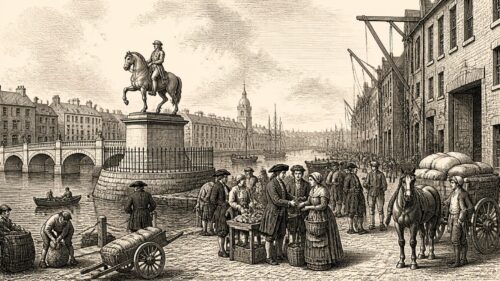
In 1722 George I authorised English ironmaster William Wood to mint up to 360 tons of copper halfpence and farthings for Ireland, initiating a controversy over currency, trade and political authority. Issued in London without Irish parliamentary consultation, the fourteen-year patent alarmed critics amid Ireland’s restricted autonomy following the 1720 Declaratory Act, although Swift’s attacks and parliamentary condemnation came later. Ireland’s rural economy, unequal imperial trade and unreliable small change formed its background. Executive government, policing proclamations and penal restrictions demonstrated state power. Dublin simultaneously celebrated Hanoverian rule with George I’s statue, while print culture widened constitutional unease more widely.
Read Article


