Archived: 26 September 2026
Abstract
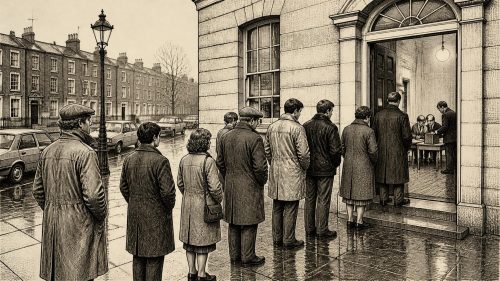
In 1982, Ireland endured two general elections, the collapse of governments and changes between Charles Haughey and Garret FitzGerald amid recession, unemployment, borrowing and tax protests. Haughey’s precarious minority relied on Tony Gregory’s inner-city development agreement before losing confidence; the MacArthur affair and telephone-tapping allegations further damaged public trust. Northern Ireland elected a Stormont Assembly, but nationalist boycotts limited its legitimacy as violence continued, including fatal bombings in London and Ballykelly. Social change included abolition of school corporal punishment and Dublin’s first crematorium. Constitutional debate on abortion intensified, while cultural, neutrality and Falklands issues underscored unresolved political divisions across Ireland.
Read Article

Archived: 8 October 2026
Abstract
In 1972, violence and constitutional change reshaped Ireland. Bloody Sunday in Derry, when British soldiers killed fourteen civilians, intensified nationalist anger and accelerated Northern Ireland’s political crisis. Westminster suspended Stormont in March, imposing direct rule, while paramilitary violence, Bloody Friday and Operation Motorman deepened insecurity. The Republic strengthened emergency powers after violence spread south, including Dublin bombings. Simultaneously, Jack Lynch’s government pursued European integration. Voters overwhelmingly approved the constitutional amendment enabling EEC accession, due in 1973. December referendums also lowered the voting age to eighteen and removed constitutional recognition of the Catholic Church’s special position, signalling a more pluralist State.
Read Article
Archived: 8 October 2026
Abstract
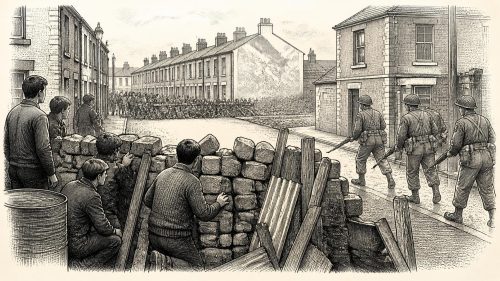
In 1969 civil-rights protests against discrimination in Northern Ireland escalated from the Burntollet attack into communal violence. Reform measures, including universal local-government suffrage, failed to restore confidence, while O’Neill resigned and Chichester-Clark succeeded him. August riots produced the Battle of the Bogside, killings, arson and displacement in Derry and Belfast. British troops deployed, initially welcomed by some Catholics, and Belfast’s peace line embodied deepening segregation. Inquiries urged policing reform and abolition of B-Specials, but loyalist resistance continued. Dublin, strengthened by Fianna Fáil’s election victory, addressed the crisis while pursuing development and EEC membership. The IRA split, confirming a political landscape.
Read Article

Archived: 8 October 2026
Abstract
In 1968, Northern Ireland’s civil-rights movement mobilised grievances over housing, employment, gerrymandering, policing and restricted local voting. Austin Currie’s Caledon protest, marches at Dungannon and Derry, and police violence against the banned 5 October Duke Street demonstration brought televised images to audiences across Ireland and Britain. Student activism produced People’s Democracy, while Terence O’Neill’s government offered reforms, though divisions within unionism and campaigners’ dissatisfaction persisted. In the Republic, voters rejected constitutional changes to electoral arrangements. Educational grants and student protests reflected wider social change, while Humanae Vitae intensified debate over contraception, conscience and Church authority in Irish society and politics.
Read Article
Archived: 10 October 2026
Abstract
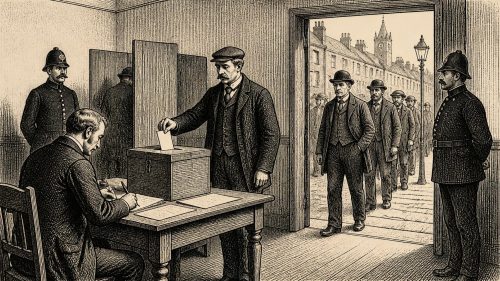
In 1872, the Ballot Act introduced secret voting for Irish parliamentary and municipal elections, first tested at Londonderry City, where Conservative Charles Lewis won a four-cornered by-election. Franchise restrictions and local religious, social and political influence nevertheless persisted. Isaac Butt’s Home Rule movement expanded through contested elections, linking constitutional reform with tenant grievances. Repeal of the Party Processions Act enabled nationalist demonstrations: Derry’s passed peacefully, but Belfast’s Hannahstown procession preceded severe sectarian rioting, deaths and displacement. Religious education, Church affairs, agricultural change, urban institutions and literary publication reflected pressures. Lord Mayo’s assassination in India highlighted Ireland’s connections to imperial government.
Read Article
Archived: 11 October 2026
Abstract
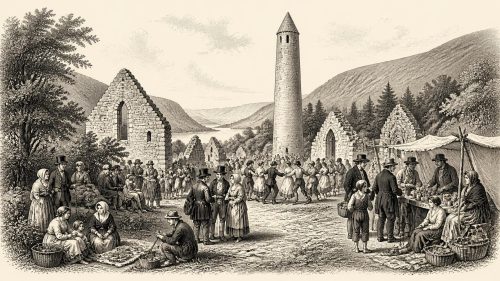
In 1813, Catholic emancipation dominated Irish politics as Henry Grattan’s relief bill advanced at Westminster before collapsing over parliamentary admission and proposed state influence on episcopal appointments, opposed by bishops and Daniel O’Connell. Sectarian tension erupted at Garvagh, County Londonderry, where armed Protestants and Orangemen repelled Ribbonmen during a fair. An unsuccessful census initiative reflected administrative uncertainty, while observations of poverty, fever and education highlighted social pressures. Cultural life included Hugh Porter’s poetry and Glendalough’s patron festival. In September, the Limerick meteorite fell near Adare, becoming Ireland’s largest recorded meteorite fall and was preserved for scientific study as material evidence.
Read Article
Archived: 13 October 2026
Abstract
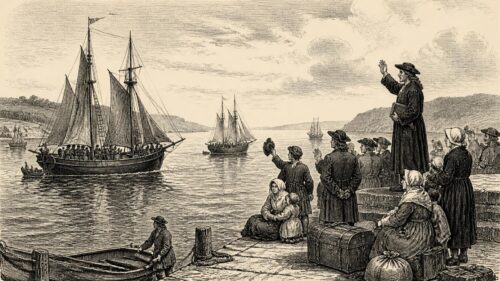
In 1718, Ireland’s significant developments centred on migration, religion and voluntary institutions rather than rebellion. Five vessels carried Presbyterian emigrants from Ulster to Boston, beginning a durable Atlantic movement driven by tenancy insecurity, economic pressures, religious disabilities and colonial opportunity. Ireland’s Protestant ruling order continued to disadvantage Catholics and dissenters, while Sherlock v Annesley highlighted contested Irish autonomy. Six surgeons founded Dublin’s Cook Street infirmary for injured poor, precursor to Jervis Street Hospital. A Ballybough cemetery lease recorded Jewish life. Church appointments and Catholic diocesan administration demonstrated competing authorities, while Thomas Parnell’s death connected Irish culture with British literary networks.
Read Article

Archived: 14 October 2026
Abstract
In 1689, deposed James II made Ireland the central theatre of his struggle against William of Orange, supported by Tyrconnell, Catholics and French aid. While Jacobite forces advanced, Protestant resistance at Derry and Enniskillen endured. James’s Dublin parliament funded war, asserted Irish legislative independence, repealed land settlements and passed an extensive Act of Attainder, alongside liberty of conscience. Naval relief ended Derry’s 105-day siege, while Enniskillen’s victory at Newtownbutler weakened Jacobite control in Ulster. Schomberg’s multinational Williamite army landed in August, but its autumn camp at Dundalk suffered devastating disease, exposure and supply failures, leaving the war unresolved that winter.
Read Article

Archived: 14 October 2026
Abstract
In 1688, James II’s Irish government under Tyrconnell expanded Catholic influence in administration and the army, intensifying Protestant fears over religion, land and political security. William of Orange’s invasion of England destabilised royal authority, while troop movements heightened anxiety in Ireland. On 7 December, Derry’s apprentice boys shut Ferryquay Gate against Antrim’s Catholic regiment, defying James’s government without yet declaring for William. Negotiations temporarily admitted Protestant troops and excluded Antrim’s men. Enniskillen also resisted a Jacobite garrison. These Ulster actions exposed weakening government control, encouraged Protestant defence, and established strategic, sectarian and political divisions that developed into the Williamite–Jacobite war.
Read Article

Archived: 16 October 2026
Abstract
In 1624, Lord Deputy Falkland’s government used proclamations to extend royal control over Irish religion, commerce, arms, dress and settlement, although enforcement proved uneven. A January order expelling Catholic clergy was soon suspended, revealing resilient networks sustained by patrons and continental links. Regulations on logwood, cattle markets, customs, weights and measures sought more governable trade and communities. Ulster policy balanced Protestant plantation ambitions with dependence on Irish tenants, while reforms targeted deficiencies in the Londonderry scheme. Elite succession and peerage reinforced crown connections. Ussher and Messingham mobilised Irish Christian history for Protestant and Catholic claims, amid continuing Gaelic cultural debate.
Read Article
Archived: 16 October 2026
Abstract
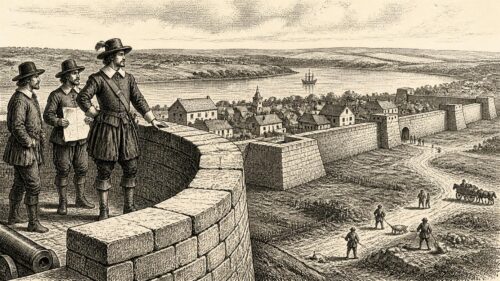
1619 was marked by surveys, construction and institutional change rather than a single national event. Captain Nicholas Pynnar’s inspection of Ulster Plantation estates assessed fortifications, settlers, farms, mills, arms and compliance, revealing uneven progress and persistent Irish presence. At Londonderry, newly completed walls demonstrated Crown authority, but sparse population, incomplete gates and inadequate watch shelter exposed vulnerability. A May deadline sought removal of Irish occupants from undertakers’ lands, though implementation proved limited. Estate houses, churches, schools and mills advanced colonial order. Dublin saw administrative government, episcopal succession and Ireland’s first medical book printed, foreshadowing enduring social and confessional tensions ahead.
Read Article
Archived: 16 October 2026
Abstract
In 1618, Stuart government in Ireland used municipal law, land policy and inspection to reinforce royal authority, Protestant conformity and plantation. Waterford lost its charter after electing recusant civic officers, demonstrating that corporate liberties depended upon religious obedience. Commissioners examined plantation schemes in Longford and O’Carroll country, while an October order required native Irish occupiers to leave assigned Ulster plantation lands by May 1619. In November Captain Nicholas Pynnar was commissioned to inspect settlement, fortifications, tenants and arms in Ulster’s escheated counties. Aodh Mac Cathmhaoil’s Irish-language Catholic book, published at Louvain, and Richard Stanihurst’s death in Brussels highlighted Catholic connections.
Read Article
Archived: 16 October 2026
Abstract
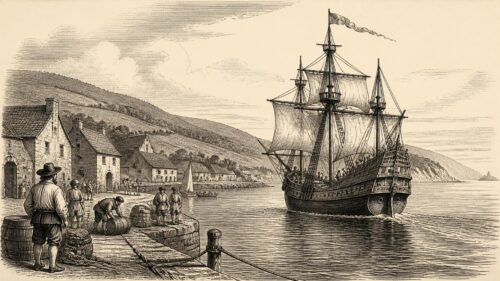
In 1617 Ireland was being reshaped by Atlantic commerce, plantation, religious pressure and cultural debate. Sir Walter Ralegh’s Guiana fleet provisioned at Cork before departing, demonstrating the port’s capacity. The Crown, under Lord Deputy Oliver St John, extended administration through land disputes, grants and titles, including Hamilton’s Strabane barony within the incomplete Ulster Plantation. In Munster, the Barrymore family shifted its seat to Castlelyons. An October proclamation renewed action against Catholic clergy, though Catholic practice endured. Gaelic poets contested regional honour and historical authority, while Barnabe Rich’s satire criticised colonial society. These developments reveal negotiated change rather than settled peace.
Read Article
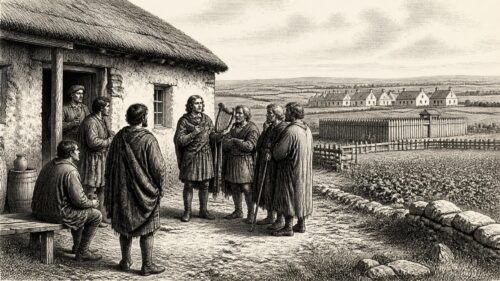
Archived: 16 October 2026
Abstract
In 1615, Chichester’s government confronted the abortive Macosquin conspiracy amid Ulster Plantation’s insecure transformation. Alleged Gaelic plotters lacked arms, coordination and foreign support, yet officials feared renewed war and used torture, trials and executions; eleven of seventeen defendants were acquitted. Plantation surveys revealed incomplete settler obligations and continuing dependence on Irish tenants, while landholding and local life were nonetheless changing profoundly. The final 1613 parliament passed a highways measure before dissolution, as proclamations regulated markets and currency. Church convocation adopted 104 strongly Calvinist Irish Articles, probably shaped by James Ussher, while visitation exposed the established church’s weak reach. Coercion persisted.
Read Article
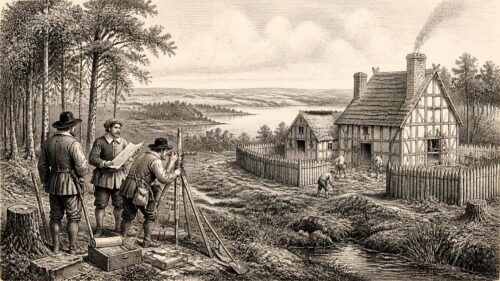
Archived: 16 October 2026
Abstract
In 1613, the administration intensified its remaking of Ireland through Ulster plantation surveys, municipal charters and a contested parliament. Josias Bodley’s inspection exposed settlement, while London’s Irish Society incorporated Londonderry and developed its county; Belfast and Coleraine gained corporations and parliamentary representation. These boroughs promoted trade and security but supplied Protestant votes. When parliament met in Dublin, conflict over Sir John Davies’s election as Speaker revealed Catholic fears of engineered representation, religious coercion and dispossession. Petitions and a inquiry failed to secure accommodation. Henry Ussher’s death marked change amid conformity. New institutions reshaped land, faith and politics without achieving consent.
Read Article
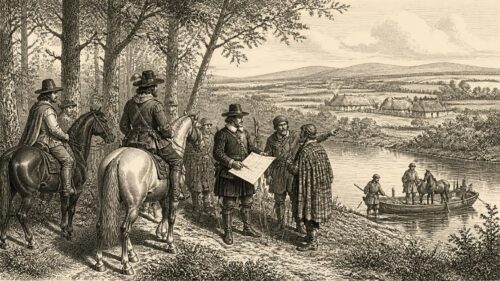
Archived: 17 October 2026
Abstract
In 1608, Sir Cahir O’Doherty, formerly a Crown ally and lord of Inishowen, rebelled amid disputes over land, authority and Governor George Paulet’s conduct. His followers seized Culmore Fort, stormed, plundered and burned Derry, killing Paulet, but failed to create a wider Ulster coalition. Crown forces suppressed the rising after O’Doherty’s death near Kilmacrennan in July, followed by reprisals and executions. The revolt intensified official distrust of Gaelic landholders and expanded forfeitures. Surveys of six Ulster counties documented lands and resources for redistribution, while planning for plantation advanced. Deaths among exiled Gaelic leaders further weakened resistance, leaving Crown power strengthened.
Read Article
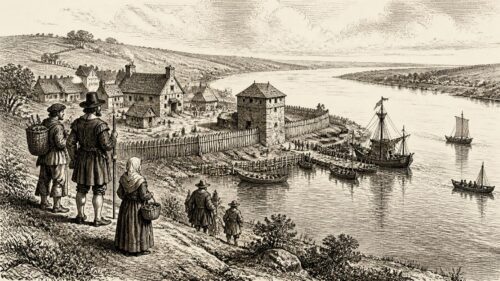
Archived: 17 October 2026
Abstract
In 1604, after the Nine Years’ War, the crown sought to convert military victory in Ireland into durable administration. James I’s 11 July charter for Derry envisaged a fortified commercial town on the Foyle, combining garrison, trade, law and settlement, though it preceded the later Ulster Plantation. Recovery remained painful amid famine, displacement and contested land rights; Brian Óg O’Rourke’s death symbolised defeated resistance. Knighthoods, patents and territorial grants rewarded cooperative elites while reshaping Gaelic lordship and provoking rivalries. Anglo-Spanish peace reduced prospects of intervention. Arthur Chichester’s appointment and John Davies’s policies foreshadowed stronger crown government, surveys and planned settlement.
Read Article

Archived: 26 September 2026
Abstract
Ireland in 1220 comprised competing lordships, Gaelic kingdoms, ecclesiastical communities and growing towns rather than a unified polity. Walter de Lacy’s attempted castle at Áth Liag was abandoned after Cathal Crobderg Ua Conchobair intervened, demonstrating limits to frontier expansion. Connacht’s succession remained insecure as a rival claimant sought western maritime support. At Derry, the successor to St Columba’s office prompted disputes resolved through local consent and Armagh’s arbitration. Papal intervention, church consecration and episcopal death illustrate religious connections and instability. Annalistic dating differs for several events. Trade, farming, crossings and markets linked regions, while conflict shaped movement, supplies and authority.
Read Article

Archived: 26 September 2026
Abstract
Irish annals portray 1214 as a period of contested lordship rather than national unity. Anglo-Norman castles at Clonmacnoise and Durrow provoked Cormac Ó Máel Sechlainn’s raids, involving cattle seizure, burning and attacks on church resources. Ualgarg Ó Ruairc raided settler-held Carbury, while deaths among Connacht lords and churchmen marked shifting local authority. Ulster records, though chronologically disputed, describe plunder at Derry, castle-building at Coleraine, resistance to settlers and destruction at Carlingford. Ecclesiastical communities remained influential yet vulnerable. Dublin received authority for commercial infrastructure. King John’s papal settlement formally included Ireland, but did not establish uniform control over its competing regions.
Read Article
Archived: 26 September 2026
Abstract
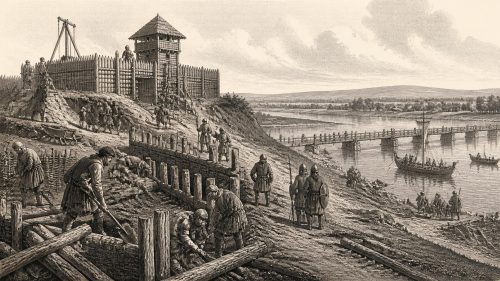
In 1213, King John’s submission of England and Ireland to Pope Innocent III altered the lordship’s international status, while Henry of London became archbishop of Dublin and justiciar. Royal and settler forces campaigned in Mide, defeating Cormac Ó Máel Sechlainn’s allies and building castles at Athlone, Birr, Durrow and Kinnitty to control crossings and routes. Cormac nevertheless recovered influence, illustrating frontier instability. Ulster saw Gaelic feuds, Anglo-Norman attacks, church plundering, Coleraine Castle’s construction and Áed Ó Néill’s raids. Clerical deaths highlighted enduring ecclesiastical centres. Ireland remained politically plural, as castles, warfare, alliances and royal administration reshaped contested regions across Ireland.
Read Article

Archived: 26 September 2026
Abstract
In 1212, royal efforts to extend King John’s Irish lordship through castles, taxation and military campaigns met persistent resistance. John de Gray’s northern offensive built Clones and Cáel Uisce castles, but forces associated with Áed Méith Ua Néill and other Gaelic leaders defeated raiders and destroyed both strongholds. Seaborne warriors from Galloway and the Isles ravaged Derry and Inishowen, aided by Cenél Conaill. In Meath, Cormac Ua Máel Sechlainn defeated English forces, while Munster and Desmond saw fort-building and dynastic conflict. Administrative records reveal expanding royal finance, yet authority remained uneven, shaped by alliances, tribute, churches, raids and regional rivalries.
Read Article

Archived: 26 September 2026
Abstract
In 1197 John de Courcy extended his Ulster lordship, building Kilsanctan castle and raiding Ciannachta and the Derry region. After King Flaithbertach Ua Máeldoraid died, de Courcy defeated his successor Echmarcach Ua Dochartaig, killed many Cenél Conaill warriors and seized cattle, though north-western control remained contested. Churches were targets, protectors of authority and repositories of treasure, illustrated by Derry altar’s robbery and punishment. Dynastic warfare also afflicted Thomond and Connacht. Limerick received borough liberties under John, while Archbishop John Cumin contested ecclesiastical property with the justiciar. The year revealed fragmented power, enduring Gaelic resistance, and incomplete conquest across medieval Ireland.
Read Article
Archived: 26 September 2026
Abstract
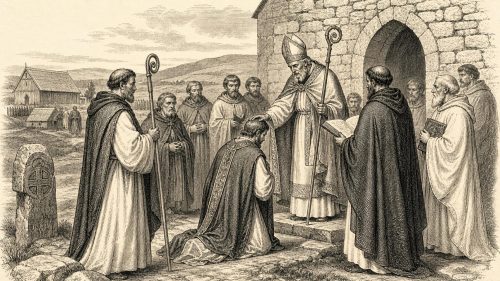
In 1180 Ireland remained politically fragmented, as Ruaidrí Ua Conchobair’s weakened high-kingship, Henry II’s overlordship and expanding Anglo-Norman lordships overlapped with resilient Gaelic dynasties. Hugh de Lacy’s marriage to Ruaidrí’s daughter demonstrated frontier diplomacy, despite royal suspicion. Connacht’s Battle of the Conors strengthened Ruaidrí’s family but devastated Uí Maine leadership, while local killings reflected persistent instability. Ecclesiastical politics shaped events at Derry and Armagh, where Tommaltach Ua Conchobair’s appointment required negotiation. Archbishop Lorcán Ua Tuathail died in Normandy during diplomacy with Henry. Castles at Carrickfergus and Meath advanced settlement, although Gaelic communities, pastoral economies and established ports retained substantial influence.
Read Article

Archived: 26 September 2026
Abstract
In 1164, Ireland remained politically divided yet interconnected by kingship, churches and Irish Sea networks. High-king Muirchertach Mac Lochlainn sustained authority through alliances, tribute and ecclesiastical patronage, despite northern raids and rebellion. Rival Ruaidrí Ua Conchobair built a major fortified residence at Tuam, while Munster and Leinster saw raids, dynastic killings and blinding. At Derry, royal and clerical resources created an exceptionally large Columban church, amid wider links with Iona and the Isles. Fires damaged several religious centres. Somerled’s Scottish expedition included Dublin forces. Agriculture, livestock, skilled labour and learning underpinned society, although conflict and disaster exposed persistent deep instability.
Read Article

Archived: 26 September 2026
Abstract
In 1162 Muirchertach Mac Lochlainn’s loose high-kingship united northern, Meath and Connacht forces, yet failed to compel Dublin’s surrender; after plundering Fine Gall, he accepted 120 ounces of gold. Tribute arrangements in Meath and exemptions from coigny showed the political and local economic importance of land and provisioning. At Clane, Gelasius of Armagh led a synod reinforcing clerical discipline, Armagh’s educational primacy and church reform. Laurence O’Toole became archbishop of Dublin, while Derry’s sacred precinct was reorganised. Deaths, fires, relic enshrinement and raids exposed cultural vulnerability. Continuing regional warfare and dynastic rivalry undermined Mac Lochlainn’s seemingly dominant authority across Ireland.
Read Article

Archived: 5 October 2026
Abstract
Thirty thousand years BCE is not a recoverable Irish historical year but falls within a broad Late Pleistocene range. At Derryvree, County Fermanagh, freshwater sediments between glacial tills record an ice-free wetland interval, dated approximately 36,900–31,700 calibrated years BP. Plant and insect remains indicate cold, treeless tundra-steppe conditions before expanding ice sheets reshaped Ireland. Cave faunas, notably Castlepook’s, demonstrate connections with north-west European ecosystems, including reindeer, mammoth, giant deer and predators. No secure human settlement exists; a possibly cut reindeer bone suggests only uncertain contact. Evidence supports changing environments and intermittent access, not political, cultural or social reconstruction in detail.
Read Article

Archived: 24 September 2026
Abstract
Nominally dated 30,762 BCE, this period belongs to Ireland’s fluctuating Late Pleistocene MIS 3, not a precisely identifiable year. Ice margins, sea passages and habitats changed regionally, leaving fragmentary evidence. Derryvree, County Fermanagh, preserves freshwater sediments, bogbean and mountain avens, indicating a local cold, tundra-like wetland during an ice-free or ice-marginal interval. Castlepook Cave, County Cork, contains Late Pleistocene remains including mammoth, reindeer, giant deer, predators and smaller cold-adapted animals, accumulated across several episodes. Human presence remains unproven: a possibly cut-marked reindeer bone suggests investigation-worthy visitation, not settlement. Ireland’s history here is palaeoecological, shaped by environmental instability and uncertain preservation.
Read Article

Archived: 24 September 2026
Abstract
At roughly 36,900–31,700 calibrated years BP, Derryvree near Maguiresbridge preserved freshwater sediments and organic remains between glacial tills. These record a local ice-free interval during MIS 3, followed by renewed glaciation. Mosses, bogbean, grasses, sedges, juniper and cold-adapted plants indicate wet, open tundra-like terrain with shallow pools and severe seasonality. Castlepook Cave fossils show that mammoth, giant deer, reindeer and predators occurred in Ireland during this broad period, though not necessarily together. No secure evidence identifies people, settlements, trade or beliefs at this date. Repeated glaciation and later sea-level rise obscured evidence. The record reveals local environments, not precise history.
Read Article

Archived: 21 September 2026
Abstract
Around 33,000 years before present, during Marine Isotope Stage 3, Ireland experienced a variable Ice Age environment rather than a precisely datable historical year. Castlepook Cave in County Cork preserves fauna including mammoth, reindeer, giant deer, predators and cold adapted mammals, although its disturbed deposits combine material from different periods. Revised radiocarbon dating increased its importance. A reindeer femur, dated about 31,000 BCE, bears a possible stone tool cut mark, potentially Ireland’s earliest evidence of human activity. However, no hearths, tools or settlements confirm occupation. Open steppe tundra supported animals; later glaciation erased much evidence and reshaped Ireland profoundly thereafter.
Read Article
Archived: 20 September 2026
Abstract
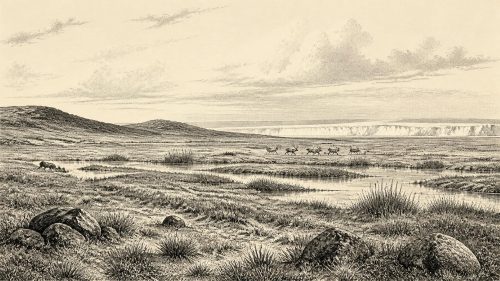
Around 31,000 BCE, Ireland lay within the cold, unstable Marine Isotope Stage 3, with lower seas, shifting ice, and open tundra-like habitats rather than modern coastlines or forests. Wetland deposits in Fermanagh preserve plants adapted to cold, moist conditions. Castlepook Cave, County Cork, contains re-dated animal remains showing that reindeer, mammoth, giant deer, bears, wolves, Arctic foxes and hyaenas occurred during parts of this period. A possibly cut-marked reindeer femur suggests brief Upper Palaeolithic human contact, but no secure occupation site exists. Environmental evidence, not events or societies, defines this fragmentary era, continually reassessed through improved dating and research methods.
Read Article




