French Ireland
At a Glance
French Context
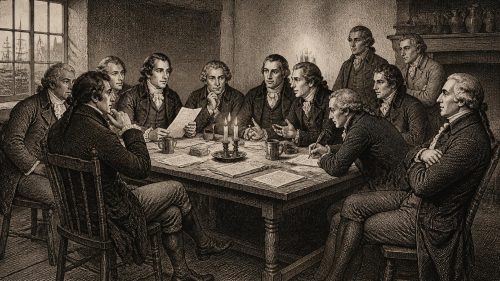
The evidence places Ireland’s French connection within a wider late eighteenth-century effort by the French Directory to destabilize British rule and support unrest in Ireland. One account states that the Directory made numerous plans to send landing parties to the British Isles and that, with encouragement from Wolfe Tone and the United Irishmen, it agreed to an invasion of Ireland to assist a general uprising. Another source preserves instructions addressed to Ireland with explicit calls to rise and rally around French forces. [4] [2]
The surviving passages do not describe a French revolution in Ireland as an abstract ideological event; instead, they show organized plans, military shipping, and appeals to action. The same material says that the French intended to facilitate a revolution and maintain order during a political crisis after despotism was overthrown. That wording shows a direct political programme attached to the Irish venture, while leaving the broader effects beyond these documents uncertain. [4] [2]
Bantry Failure
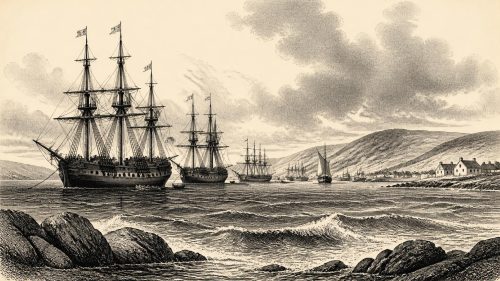
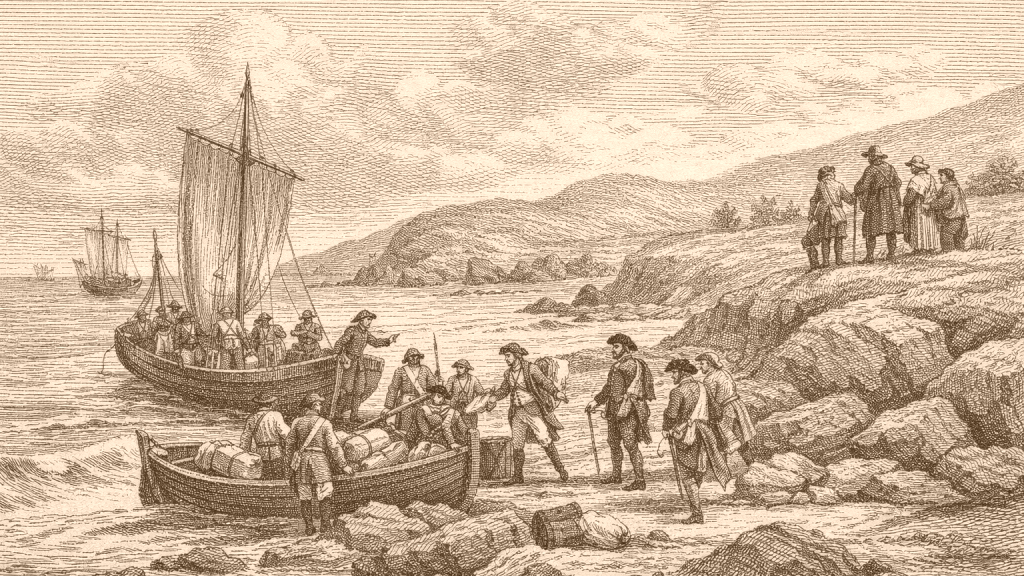
The first major French attempt failed before any landing. One account states that a fleet of forty-five ships sailed from Brest in December 1796 with almost 15,000 troops under General Hoche, but bad weather and poor communication scattered the force. At Bantry, strong winds prevented a landing, and the mission was abandoned after days of waiting. This shows that the Irish connection depended on seaborne intervention that never reached shore on that occasion. [4]
The Bantry episode also appears in a later index of the same subject, which identifies it as one of several expeditions to aid Ireland and distinguishes it from the later Humbert landing. In that index, the Bantry Bay expedition is described as formidable and as failing, while the Humbert expedition is listed separately. The comparison is useful because it shows repeated French planning toward Ireland rather than a single isolated venture. [1]
Irish Rising
By 1798 the Irish rising had broken out without foreign assistance, according to one account, beginning in Dublin and spreading to Kildare, Wexford, Wicklow, and later Ulster. The same passage states that the rising was only partial because many leaders had already been arrested and martial law had been imposed. It also says the rebels were almost without arms, discipline, plan, or leaders, which marks a very different condition from the French expeditionary plans. [4] [3]
Patrick Weston Joyce’s account adds specific arrests and preparations in the months before the rising, including Oliver Bond, Thomas Addis Emmet, and others, as well as the arrest of Arthur O’Connor and Father O’Coigley on the way to France. It also says the stopping of the mail coaches was to be the signal for rising, and that the rebellion was confined mainly to Kildare, Wicklow, and Wexford. These details show how closely Irish events and French contacts touched. [3]
Killala Landing
The most direct impact of the French Revolution on Ireland came through Humbert’s landing at Killala in County Mayo. One source says he arrived on 22 May 1798 with about 1,000 men and that he rallied several thousand Irish supporters. Another gives instructions addressed to the people of Ireland and describes the French force as the centre round which they should rally. These passages show that the French intervention reached Irish soil and temporarily attracted local support. [4] [1] [2]
The later index of the campaign records a series of local consequences after the landing, including Castlebar, the formation of a republican government for Connaught, and the movement toward Ballinamuck. It also notes good conduct by French soldiers during the occupation and their prevention of a massacre of Protestants at Castlebar. These entries indicate that the French presence in Mayo had immediate military and local effects, even if only briefly. [1]
Military Outcome
The campaign ended in defeat. One source says Humbert surrendered at Ballinamuck on 8 September 1798 after success in some engagements but against overwhelming odds. The index summarises Ballinamuck as a battle, notes the slaughter of the Irish and the treatment of French prisoners, and places the final campaign within a sequence of defeats and retreats. These references show that French involvement changed the course of events without securing victory. [4] [1]
The aftermath also appears in Thomas Paine’s letter, which says the Irishmen who went with Humbert had been taken and hanged, and that those from the second naval expedition faced the same fate. Paine’s letter is a political appeal rather than a neutral report, but it still confirms that the French connection carried legal and personal consequences for Irish participants. The evidence here is limited to arrest, execution, and hostage arguments. [2]
Historical Reach
Taken strictly from these passages, the French Revolution affected Ireland through planned intervention, failed invasion, local rebellion, and a short-lived landing that altered military conditions in parts of Connaught. The documents do not show a simple one-way influence, nor do they justify claims of an irreversible political transformation. They do show repeated French attempts, Irish collaboration, and British countermeasures, all clustered around the crisis of 1796 to 1798. [4] [1] [3] [2]
The strongest evidence therefore lies in the overlap between French strategy and Irish insurgency. The sources do not establish a broad social transformation, but they do establish contact, encouragement, landing, fighting, and defeat. In that sense the French Revolution’s impact on Ireland was real and visible, yet it remained bounded by military failure and by the limited scale of the forces involved in the final expeditions. [4] [1] [2] [3]
Source References
Hover over a number to see the source. Select it to open the source.