
GAA Volunteers
At a Glance
Origins Association
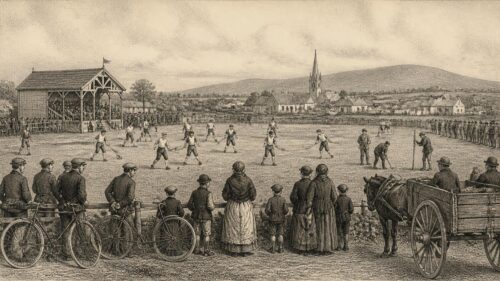
The GAA’s own origin story in the available record begins with Michael Cusack and Maurice Davin, who convened the meeting at Hayes’s Hotel in Thurles on 1 November 1884. The resulting body was established as the Gaelic Association for the Preservation and Cultivation of Gaelic Games, later the Gaelic Athletic Association, with Davin as president and Cusack as secretary. The same passage also stresses that the association was a vehicle for the promotion of traditional games and a distinctive national identity. [5]
The same account places the GAA within a wider political and cultural milieu. It says the association had a potentially very large membership of fit young men of military age, spread across the country, and that Fenians recognised its value as a recruitment pool. It also states that Fenian infiltration produced effective control within two years and that Cusack was removed from the secretaryship. The passage therefore records both attraction and internal conflict, not a simple alliance. [5]
Volunteer Founding
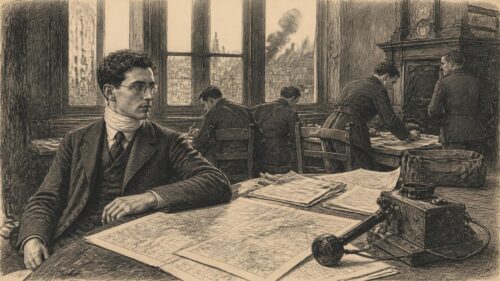
A separate record dates the foundation of the Irish Volunteers to 25 November 1913, at a public meeting in the Rotunda Rink in Dublin. Among the founders named are The O’Rahilly, Eoin Mac Néill, and Patrick Pearse. The account also notes that Mac Néill was professor of early and mediaeval Irish history at University College Dublin, while Pearse was another prominent member of the Gaelic League. These details show close personal links between cultural nationalism and the Volunteer movement. [2]
The same passage situates the Volunteers against the background of the Home Rule crisis and the rise of the Ulster Volunteer Force. It says the Irish Volunteers were formed amid rising militancy in Ireland, that the Home Rule Bill of 1912 had provoked Unionist opposition, and that by 1913 the Ulster Volunteer Force had been organised into a force of nearly 100,000 men. The Irish Volunteers are then described as being inspired by that example. The source does not go beyond this comparative framing. [2]
Congress Contact
A later notice from April 1914 records direct contact between the Irish Volunteers and the GAA. Robert Page, described as a member of the Executive Committee of the Irish Volunteers, addressed the Annual Congress of the GAA, which was held in City Hall, Dublin, the previous weekend. He was applauded when he asked delegates to return to their clubs and promote the objects and cause of the Volunteer movement. The report therefore shows an appeal to clubs and members rather than an official organisational merger. [3]
The same item explicitly states that the GAA had not officially endorsed the Volunteer movement and that, according to Page, it was not being asked to take any official action. That omission is historically important in this narrow record: it means the evidence shows sympathy and public attention, but stops short of formal institutional commitment. The passage is valuable precisely because it preserves both the invitation and the boundary drawn around it. [3]
Galway Organising
A club history connected to Galway identifies Liam Mellows as a figure who moved through both political and sporting networks. It says he spent much of his childhood near Castletown in County Wexford, later moved to Dublin, and became a member of the IRB. It then states that he was sent to Galway in 1915 to organise the Volunteers there, based mostly in Athenry. The passage is retrospective and local in tone, but it clearly links Mellows with Volunteer organisation in Galway. [4]
The same source says companies of Irish Volunteers had been training in Galway before 1916 and estimates about 1,800 Volunteers in the county on the eve of the Rising. It adds that almost all areas of the county and city had companies, and that some local figures travelled regularly to Dublin for meetings with other Volunteers. These details do not describe the GAA directly, but they show the wider Volunteer landscape in which local organisers operated. [4]
Rising Preparation
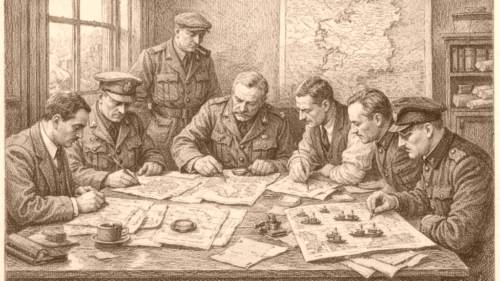
The same Galway account places Mellows and local leaders on the eve of the Rising. It says Pearse sent orders to Lardner in Athenry, that the word was conveyed to Mellows that the Rising was to take place, and that the Galway Volunteers were to be called out. Mellows and the local leaders then gathered at Killeeneen. The source does not offer a fuller operational narrative here, but it does preserve the chain of communication and assembly. [4]
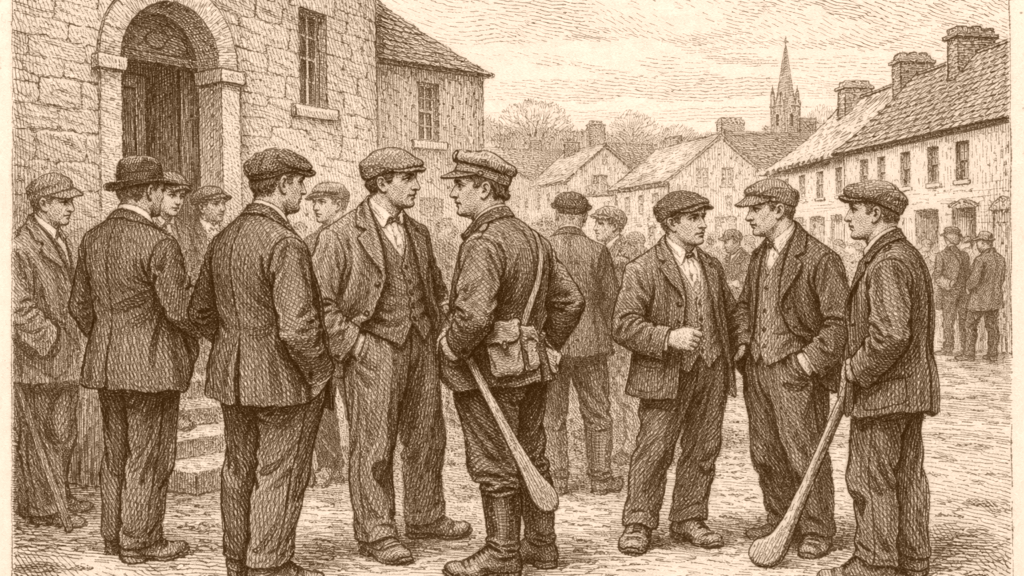
These passages show overlap between Gaelic games and the Volunteers through people and public meetings. The GAA was founded in 1884 and, according to the National Library’s exhibition text, was seen by Fenians as a potential recruitment pool. The Irish Volunteers were founded at a public meeting in Dublin in November 1913. In April 1914, Robert Page addressed the GAA Annual Congress and asked delegates to return to their clubs and promote the Volunteer movement. [5] [2] [3]
Historical Meaning
The historical excerpts here concern the Irish Volunteers founded in November 1913. The GAA’s own archive covers the revolutionary decade of 1913-1923, and its history page notes that the Association was seen by Fenians as a potential recruitment pool in its early years. [2] [1] [5]
The available passages do not show a single command relationship between the GAA and the Irish Volunteers. Instead, they show different kinds of contact: a cultural association with nationalist sympathies, a volunteer movement founded by men associated with Irish cultural politics, an address to GAA delegates, and a later Galway example of local organising. Read together, the records document proximity, shared personnel, and public encouragement, but they do not prove formal GAA adoption of the Volunteer cause. [5] [2] [3] [4]
Source References
Hover over a number to see the source. Select it to open the source.


How did Gaelic games organisations intersect with the Irish Volunteer movement in the years before the Rising?