
Institutional Apology
At a Glance
State Response
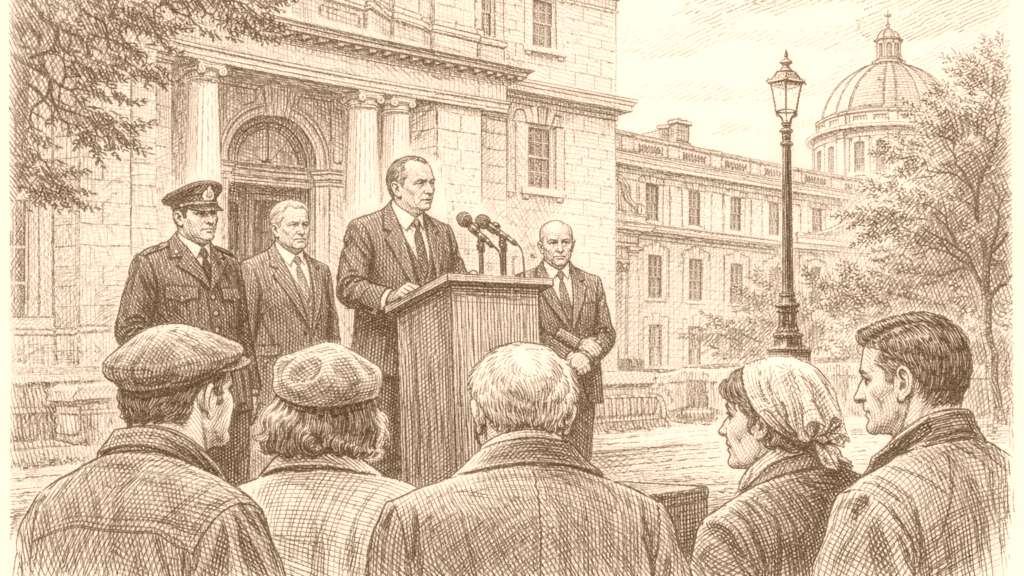
On 11 May 1999 the Taoiseach issued an apology on behalf of the State and its citizens to victims of child abuse. The report states that he made the apology while announcing a package of measures intended to address the issue. The same account says the Government described the apology as sincere and long overdue, and that the statement was tied directly to the announcement of a Commission to inquire into child abuse. [2]
A later RTÉ archive summary repeats the apology in similar terms but places it more explicitly within institutional child abuse. It says the Taoiseach apologized on behalf of the State and its citizens, and that the government wished to make a sincere and long overdue apology to victims of childhood abuse for collective failure. That archive wording also says the announcement was made to victims of institutional child abuse and that the Commission of Enquiry would let victims tell their stories. [3]
Apology Terms
The two accounts are close in structure but not identical in emphasis. The 1999 news report uses the broader phrase child abuse, while the archive summary uses institutional child abuse and collective failure. Both passages present the apology as state-level language spoken by the Taoiseach rather than by a private institution or individual congregation. Both also connect the apology to an official public announcement, not to a parliamentary debate or committee hearing. [2] [3]
The archive summary is also more specific about the people addressed. It says victims of institutional child abuse, then immediately describes the purpose of the Commission as giving victims an opportunity to tell their stories. The news report similarly says the Commission would provide a sympathetic forum in which victims could speak. In both texts, the apology and the inquiry are presented together, with the inquiry framed as part of the same announcement. [2] [3]
Industrial Schools
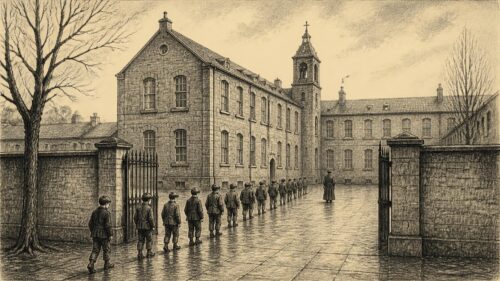
The archive summary makes a direct link to industrial schools by noting that the Christian Brothers, who ran many of the State’s industrial schools, were already the subject of a major Garda inquiry into child sex abuse. That is a specific institutional context, not a general claim about all schools or all congregations. The summary then places this detail beside the apology, suggesting that the announcement belonged to a wider moment of public attention to institutional abuse. [3]
The same archive item also mentions Saint Joseph’s Industrial School in Kilkenny in connection with cases of sexual abuse described in the television documentary States of Fear. That reference is descriptive rather than explanatory. It shows that industrial schools were named in the same media context as the apology, but it does not itself set out the full history of the institution or the extent of abuse across the sector. [3]
Inquiry Measures
The measures announced with the apology included the establishment of a Commission of Enquiry into Childhood Abuse and a nationwide professional counselling service costing around four million pounds a year. The news report says the Commission would consist of three people appointed during the following week. It also records a promise to publish mandatory reporting proposals and to legislate on a register of sex offenders and other matters related to abuse. [2]
The archive summary presents the same package in shorter form. It says the Taoiseach announced a Commission of Enquiry into Childhood Abuse, a professional counselling service at a cost of around four million pounds a year, and an extension of the time limit for victims seeking compensation. It also states that these announcements coincided with the broadcast of the final episode of States of Fear, giving the apology a documented broadcast context. [3]
Redress Matters
A later Oireachtas committee record shows that redress moved into formal parliamentary work. In 2005 the Committee of Public Accounts published a report titled Report into the Residential Institutions Redress Scheme. The table of contents and title confirm that residential institutions were the subject of committee reporting, and that redress had become a distinct parliamentary matter by then. The excerpt does not summarize the scheme’s findings, so no further detail is warranted here. [1]
The same report also sets out the committee’s formal role in examining accounts, reports, and matters within its remit. That procedural material does not describe the 1999 apology itself, but it does show the institutional setting in which later redress reporting occurred. In this evidence set, that is the main direct Oireachtas trace linking the apology’s aftermath to later parliamentary scrutiny. [1]
Documentary Limits
The records here do not give a full administrative chronology of what followed the apology, and they do not provide a complete account of the industrial-school system. They do, however, consistently show three linked facts: a state apology, an official inquiry, and an institutional context in which industrial schools were named alongside abuse allegations. Those points can be stated directly from the texts without extending beyond them. [2] [3]
Taken together, the excerpts show how the apology was framed in public language: as a state act, paired with inquiry and support measures, and situated amid reporting on institutions such as industrial schools. They also show a shift from immediate announcement to later parliamentary attention to residential institutions redress. Beyond that, the evidence here is limited, so broader interpretation should remain cautious. [2] [3] [1]
Source References
Hover over a number to see the source. Select it to open the source.

How did the State’s 1999 apology to victims of institutional child abuse frame responsibility, remedy, and the institutional context of industrial schools?