Raid Mechanics
At a Glance
River Assaults
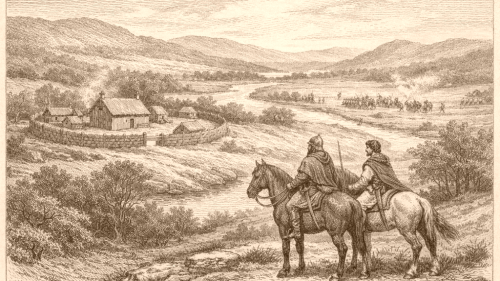
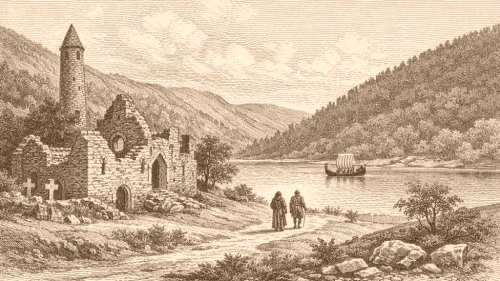
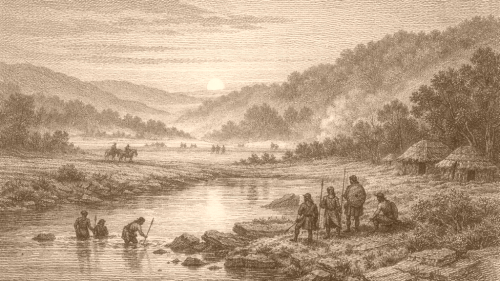
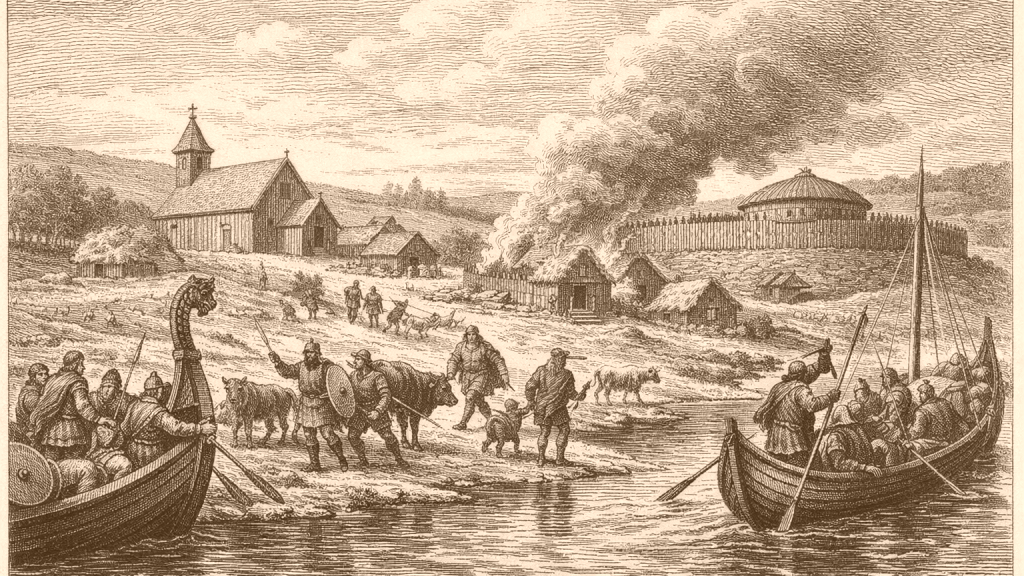
The clearest annalistic picture is of armed forces moving by river. One notice places two Norse fleets on the Boyne and the Liffey, each sixty ships strong, and says that they plundered the plain of Life and the plain of Brega. The same entry lists what was struck: churches, forts, and dwellings. This is direct evidence for waterborne access and immediate plunder, but it does not describe how the attackers crossed, landed, or organized themselves.
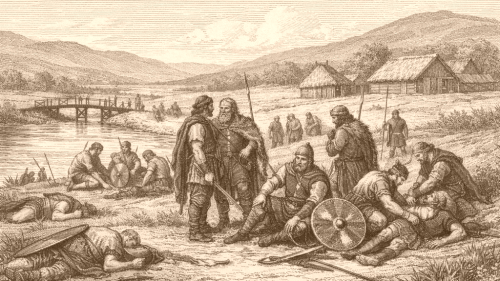
That same notice also records resistance. The men of Brega routed the foreigners at Deoninne in Mugdorna of Brega, and six score of the Norsemen fell. The sequence is short but revealing: approach by river, plundering of nearby districts, then local attack and heavy loss. The annal does not give tactics beyond that outcome, so the exact shape of the encounter remains uncertain, even though the basic order of events is clear.
Named Targets
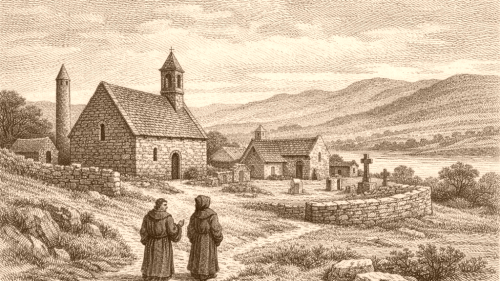
The named targets show that raids struck a mix of religious and secular places. In the river notice, churches appear alongside forts and dwellings, which places ecclesiastical buildings within the same pattern of attack as ordinary settlements and defensive sites. Another entry reports that Inis Celtra was plundered and that the churches of all Loch Éirne, including Cluain Éois and Daiminis, were destroyed by the heathens. The notices give targets, not motives.
Later annalistic entries preserve the same range of destruction in a different form. Lugmadh, Port Láirge, and Cenannas are each said to have been burned. The record also notes that lightning burned Dún dá Lethglas, which is not a raid, but it appears in the same compact style of year-by-year recording. These notices show burning as one repeated outcome among several, yet they do not explain whether burning followed plunder, resistance, or another course.
River Routes
The river notices are important because they show movement into vulnerable districts without requiring a land march in the text itself. The Boyne and the Liffey are named as the places where the Norse forces were found, and the surrounding plains were then plundered. The wording ties the attackers to water routes and to exposed territory beside those waterways. It does not mention coasts, harbours, or inland marches, so the observable evidence stays within river movement.
A later notice gives a different kind of raiding detail. Niall ua Lochlainn made a raid and carried off a thousand or three thousand cows in revenge. The entry identifies the act as a raid and states the livestock seized, but it does not specify a river route, a landing place, or the wider sequence of movement. It therefore supports raiding by an Irish actor, while leaving the route and mechanics of the raid unstated.
Violent Exchange
The annals place raids within a wider field of violence. In one year they list killings, deaths, raids, and battles together, and then say that only a few events are given so that the age may be known through them. That combination shows that raids were recorded beside other forms of conflict rather than isolated from them. The notice does not explain causes, but it does show that a raid could belong to a year already marked by many violent acts.
Other entries preserve retaliation as part of the same violent landscape. One notice says that Donnchad ua Anluain was treacherously killed by his kinsmen, and that those kinsmen were themselves killed within twenty nights by the Uí Nialláin to avenge him. This is not a Viking raid, but it shows revenge acting quickly in the record. The annals therefore preserve repeated exchanges of violence, while the exact relationship between each episode remains unstated.
Brief Notices
The form of the annals limits what can be said about how raids occurred. A single year can contain weather, deaths, burns, raids, and peace settlements, but each item is reduced to a short note. The result is a record of outcomes rather than a continuous narrative. From these passages one can identify plunder, burning, livestock seizure, and defeat, yet not the full sequence of planning, movement, and attack that produced them.
That brevity also leaves important omissions. The notices usually give place names, actions, and outcomes, but they do not describe the number of attackers beyond the river fleet entry, nor do they explain the length of each raid or the order in which target and resistance unfolded. What survives is enough to show recurring patterns, but not enough to turn every raid into a detailed reconstruction. The missing detail is itself part of the evidence.
Observed Pattern
Taken together, these notices show a consistent but limited pattern. Raids could arrive by river, strike churches, forts, dwellings, or whole districts, and be followed by pursuit or defeat. Other entries show burning, livestock seizure, and retaliation in different settings. The record supports a view of raids as fast, mobile violence aimed at exposed places, but it does not support a universal script. Each notice gives only a narrow slice of a larger event.
A careful reading therefore stays close to what is actually named: waterways, targeted places, plunder, burning, and occasional local resistance. The annals do not reveal every tactical step, but they do show how raids were remembered in concise entries. Those entries repeatedly connect movement with violence and violence with specific places. What can be said with confidence is limited, yet it is enough to answer how the raids are shown to occur in the surviving notices.