

Rights Republic
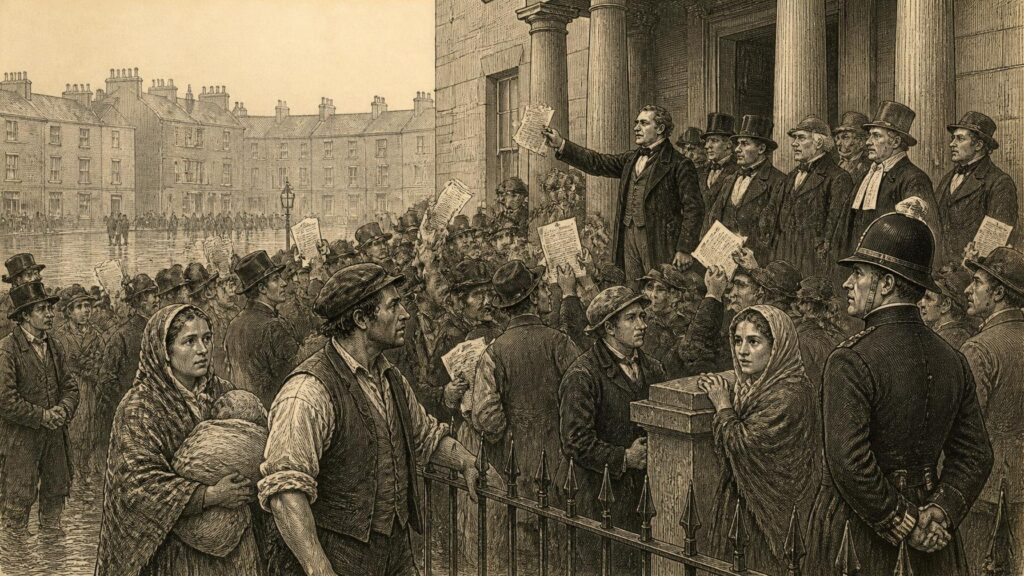
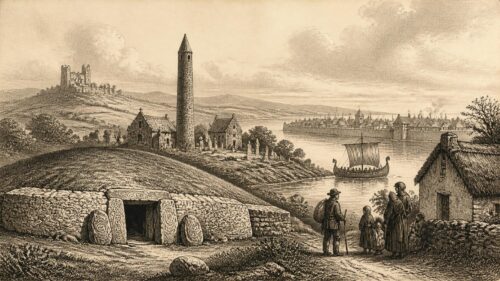
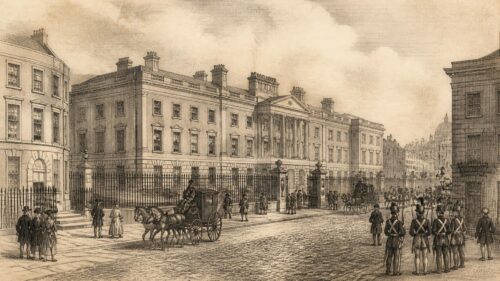
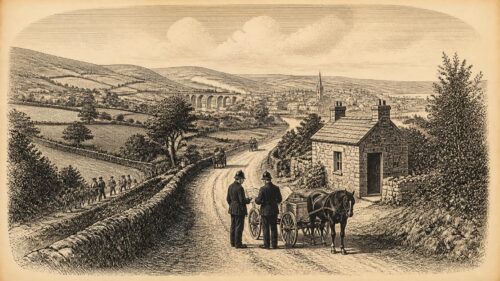
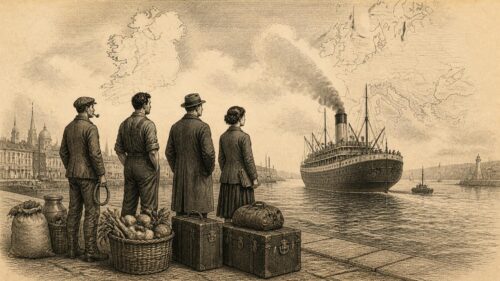
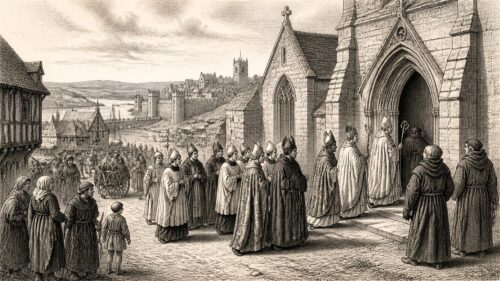
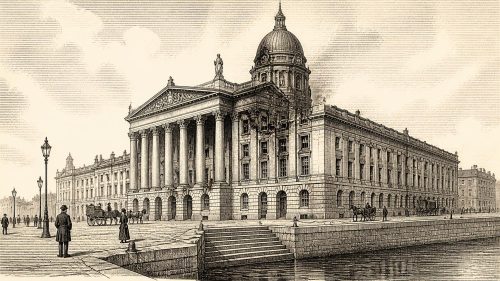
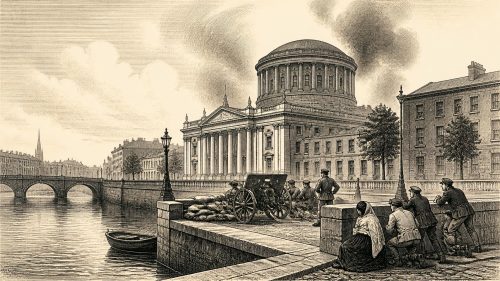
AI generated historical illustration, not a contemporary photograph.
At a Glance
Human rights in Ireland are not a single inheritance handed down intact from one generation to the next. They are the result of argument, resistance, lawmaking, litigation and, often, the testimony of people whose safety, status or autonomy had been treated as secondary to public order, religious morality, family authority or national security. The history is therefore neither a story of uninterrupted advance nor a record of national failure alone. It is a contested history in which the meaning of liberty, equality and dignity repeatedly changed as more people demanded that the promises of citizenship be made real.
Changing Language
The phrase ‘human rights’ is modern, but the grievances to which it gives expression are older. People in Ireland long argued about arbitrary power, unequal law, religious disability, land, poverty, imprisonment, violence and representation. They did not always use present-day language, and it would be misleading to describe every earlier struggle as a human-rights movement. Eighteenth-century reformers commonly spoke of civil and religious liberty; nineteenth-century campaigners used the idioms of tenant right, repeal, self-government, labour and national independence. Yet these arguments concerned questions which later became central to human-rights law: who belongs to the political community, which powers government may exercise, what protection a person has against coercion, and whether formal equality can coexist with entrenched inequality.
Modern human rights also differ from older appeals because they claim a universal basis. In principle, rights attach to persons rather than only to subjects, property holders, members of a recognised church or voters. That principle has always been difficult to realise. Irish history demonstrates the gap between declaring equality and supplying housing, income, education, legal representation or freedom from institutional control. It also shows that rights can be asserted against more than one authority: an imperial government, a parliament, local councils, police, churches, employers, families and the institutions of an independent state.
For historical purposes, it is useful to distinguish three things. First, there is documented law: statutes, constitutions, court judgments, treaties and official reports. Secondly, there is interpretation: historians and citizens disagree about why a law was passed, whom it chiefly served and how far it altered daily life. Thirdly, there is memory and folklore: powerful family and communal recollections which can preserve experiences excluded from official files, but which must be handled carefully where detail cannot be independently verified. A history of rights needs all three, while refusing to confuse them.
Ireland’s position is unusually revealing because the island’s modern history joins colonial government, revolutionary nationalism, partition, two states, a prolonged conflict in Northern Ireland and deep social transformation in the Republic. The result is not one legal tradition but overlapping jurisdictions and institutions. The Constitution of Ireland operates in the Republic; the United Kingdom’s legal order governs Northern Ireland; the European Convention on Human Rights reaches both jurisdictions through different domestic arrangements; and the Belfast Agreement made rights and equality central to a peace settlement. Human rights, in this setting, have been both a moral vocabulary and a practical machinery for limiting power.
Colonial Constraints
Under the old order, rights were distributed unevenly through property, religion, gender and rank. The Penal Laws, developed across the late seventeenth and eighteenth centuries, restricted Roman Catholic participation in public life and property-holding in ways that varied over time. Protestant dissenters also faced disabilities. Such arrangements were not merely private prejudice; they were embedded in law and in the structure of political authority. The gradual relaxation of restrictions in the later eighteenth and early nineteenth centuries mattered, but it did not create political equality. Parliamentary representation remained narrow, and the Act of Union of 1800 brought Ireland within the United Kingdom while removing the separate Irish parliament.
The United Irishmen placed liberty, representative government and religious inclusion at the centre of their late-eighteenth-century programme. Their language drew on Atlantic republicanism and the French Revolution, but its Irish setting was marked by sectarian division, state surveillance and armed repression. The rebellion of 1798 and the governmental response produced a documentary trail of arrests, prisoners, trials and administrative correspondence. The National Archives of Ireland’s Rebellion Papers show the depth of the state’s concern with security and order. They are also a reminder that a government archive records power’s own categories; it cannot by itself tell the whole story of fear, coercion or popular allegiance.
Nineteenth-century campaigns enlarged the political field without making it equal. Catholic Emancipation in 1829 removed major barriers to sitting in parliament, but property qualifications and class power continued to shape participation. The campaign for repeal, the Young Ireland movement, Fenianism and constitutional nationalism all connected national self-government with claims about political liberty. Their visions were not identical. Some imagined rights principally as the liberties of a nation; others gave greater weight to democratic representation or social reform. Later arguments about human rights would repeatedly expose the tension between collective national claims and the rights of individuals or minorities within a nation.
The Great Famine sharpened this problem. It was a catastrophe of crop disease, poverty, landlordism, market structures and governmental policy, not an event readily translated into the legal vocabulary of modern rights. Historians debate how best to characterise official responsibility, and terms such as ‘genocide’ remain contested rather than settled historical fact. What is beyond dispute is that mass death, eviction, workhouse discipline and emigration occurred under a state that possessed administrative capacity yet adopted policies shaped by prevailing economic doctrine and political assumptions. Later Irish social thought often treated the Famine as evidence that political dependency could have lethal consequences. That memory became part of the moral case for self-government.
Land agitation likewise mixed social rights with constitutional politics. The Land League demanded security for tenants and challenged an ownership system in which many cultivators had little control over the land on which they depended. Coercion legislation, imprisonment and restrictions on political activity revealed the limits of liberal liberty under emergency conditions. It is anachronistic to call the Land War a human-rights campaign in the modern institutional sense. Still, it raised enduring questions: whether property can be insulated from social obligation, whether protest may be criminalised as disorder, and whether legal equality has meaning where economic dependence is extreme.
Revolutionary Promises
The revolutionary decade transformed the language of rights, though not always its practice. The 1916 Proclamation promised religious and civil liberty, equal rights and equal opportunities to all citizens, and declared an intention to pursue the happiness and prosperity of the whole nation and its parts. Its words later acquired an almost constitutional authority in public memory. As a proclamation issued by insurgents, however, it was not a functioning bill of rights. Its importance lies in the standard it set and in the many later occasions on which campaigners asked whether the state created after independence had honoured it.
The democratic claim of the First Dáil was also central. The Dáil’s Declaration of Independence of January 1919 asserted the right of the Irish people to national independence and appealed to other nations for recognition. The subsequent War of Independence created a sharp contradiction. Republican institutions claimed legitimacy and sought to establish courts and administration, while the British state employed emergency powers, detention and armed force. Civilians experienced intimidation and violence from several actors. A rights-based history cannot treat violence as belonging to only one side, nor can it suppose that the justice of a national cause automatically settled questions about the treatment of individuals.
The Anglo-Irish Treaty of 1921 and the establishment of the Irish Free State ended one political relationship but did not resolve the island’s constitutional future. Partition created Northern Ireland within the United Kingdom and an independent state in the south. The boundary did not separate communities neatly, and the rights of minorities became an immediate concern. The Free State Constitution of 1922 contained protections for religious liberty and certain minority rights, shaped partly by international expectations surrounding the new settlement. Yet constitutional words did not remove fear, sectarian suspicion or the effects of civil war.
The Civil War brought emergency powers, executions and the suppression of political opponents. Its legacy complicates simple portraits of the new state as either a fulfilment or a betrayal of liberty. Governments facing armed threats have often claimed that exceptional measures are necessary for survival. Critics have warned that emergency law can make temporary power permanent in habit. Ireland’s later constitutional history retained special provisions for emergency and special courts, demonstrating that the state-building project included both rights language and instruments of coercion.
Women’s political participation also illustrates the unfinished nature of revolutionary promise. Women had been active as organisers, messengers, combatants, workers and political campaigners. They did not emerge from independence with equality secured in social life, employment or family law. The right to vote existed, but citizenship was increasingly imagined through a gendered model of family, respectability and domestic responsibility. The distance between women’s public contribution and their restricted legal and social autonomy would become one of the major themes of twentieth-century Irish rights history.
Constitutional Settlement
Bunreacht na hÉireann, approved in 1937 and operative from 29 December of that year, supplied the Republic’s enduring constitutional framework. Its fundamental-rights provisions were significant. Article 40 declared that citizens, as human persons, were equal before the law; it required the state, as far as practicable, to defend and vindicate personal rights; and it protected life, person, good name and property from unjust attack. Other articles addressed the family, education, religion and property. The Constitution gave courts a powerful role because legislation inconsistent with it could be struck down.
Yet the Constitution was neither a comprehensive modern human-rights charter nor an unambiguous egalitarian document. Article 40’s equality guarantee was formally framed around citizens and permitted the state to have regard to differences of capacity, physical and moral, and social function. Article 41 described the family as a natural and fundamental unit, and contained language assigning women a special support-giving role through life in the home. Its social vision reflected the period’s Catholic social thought and conservative assumptions about gender, marriage and sexuality. That language has been repeatedly criticised by women’s-rights advocates and constitutional reformers.
The constitutional text also placed strong protection around the family and marriage. For decades, divorce was constitutionally prohibited. The ban did not prevent marital breakdown, domestic abuse or poverty; it limited a particular legal route by which people might alter their status. The subsequent history of family law shows why a right written in abstract terms must be examined in relation to access, cost and social power. A person may formally possess a legal remedy and still be unable to use it.
Irish courts developed the idea of unenumerated personal rights, finding protections not expressly listed but inferred from the Constitution’s text and values. This doctrine helped establish rights concerning bodily integrity, marital privacy and other interests. It made constitutional law more adaptable, but also placed substantial authority in the judiciary. Supporters regarded that flexibility as a means of defending persons when legislation lagged behind social change. Critics questioned whether judges should discover rights not chosen by the people or written by the constitutional text. The debate was not simply technical: it concerned who should decide the content of dignity in a democracy.
The Constitution’s amendment procedure offered another path. A proposed amendment must be approved in a referendum, allowing the electorate to alter the state’s basic law. This has given Irish social change a distinctive public form. Referendums can establish new protections or remove old restrictions, but they also subject intensely personal matters to majoritarian campaigns. The process demonstrates popular sovereignty; it can also expose minorities to public contest over their status. Neither result is automatic. The quality of public information, the fairness of campaigning and the safeguards available before and after a vote all matter.
Social Silences
Formal constitutional rights existed alongside systems in which many people had little effective control over their lives. The history of industrial schools, reformatories, psychiatric institutions, Magdalene laundries and mother-and-baby homes has profoundly altered public understanding of twentieth-century Ireland. These institutions were not identical, and their histories should not be collapsed into one narrative. They involved different legal arrangements, religious congregations, state departments, local authorities and populations. What they shared was the capacity to confine, discipline or separate people who had limited power to resist: children, unmarried mothers, women, poor families and people judged socially deviant or vulnerable.
Official inquiries and survivor testimony have made this history more visible. The Commission to Inquire into Child Abuse, commonly associated with the Ryan Report, documented abuse in many residential institutions for children and examined the state’s role in regulation and supervision. The Mother and Baby Homes Commission submitted its final report in October 2020, and the report was published in January 2021. Its findings, its limitations and the state’s response have remained subjects of serious public disagreement. That disagreement should not be erased. Official investigations may establish important facts, but they do not exhaust survivors’ experiences or settle every moral and historical question.
It is tempting to tell this history solely as a conflict between church and state. The evidence points to a more entangled system. Religious bodies operated many institutions, but public authorities funded, inspected, legislated for and referred people into systems of care and confinement. Families, doctors, courts, local officials and wider social attitudes also formed part of the environment in which institutionalisation became possible. Recognising shared responsibility does not blur particular responsibility. It means that a history of rights must ask how authority was distributed and how people were denied a meaningful voice.
Women’s autonomy was central to these arrangements. Restrictions on contraception, the constitutional prohibition on divorce, unequal expectations within marriage and the stigma directed at unmarried mothers limited choices in ways that legislation alone cannot measure. The problem was not simply that the state failed to intervene; at times law and policy actively maintained dependency. The later language of reproductive rights, privacy and bodily autonomy supplied tools for challenging that order, though such language was itself contested within Irish society.
Children’s rights posed a related challenge. For much of the twentieth century, children were frequently treated as objects of welfare, discipline or family authority rather than independent holders of rights. The gradual emergence of child-centred standards changed public expectations, but evidence of past abuse showed how weak oversight could be when those affected could not safely complain. In historical terms, institutional inquiries did more than describe wrongdoing. They changed the archive: testimony, administrative records and public apologies became part of the state’s record of itself.
Northern Inequality
Partition created a second and distinct rights history in Northern Ireland. The Northern Ireland parliament, established under the Government of Ireland Act 1920, exercised devolved authority in a society divided by national identity, religion and constitutional allegiance. Unionists formed a durable governing majority; many Catholics and nationalists experienced the state as exclusionary. It is important to avoid treating either community as politically uniform. Nonetheless, discrimination in housing, local-government representation and employment became a central grievance, especially from the 1960s.
The Northern Ireland Civil Rights Association brought these grievances into a deliberate civil-rights campaign. Its demands included one person, one vote in local elections, fair electoral boundaries, an end to discrimination in housing and employment, repeal of the Special Powers Act, and reforms to policing. The movement borrowed methods and language associated with international civil-rights activism, but its roots were local: unequal allocation of homes, unemployment, gerrymandering and the lack of trusted mechanisms for redress.
The Cameron Report, appointed after the disturbances of 1968, remains an important contemporary source. It concluded that evidence of social and economic grievance and abuses of political power had substantial foundation and had been an immediate and operative cause of demonstrations and disorder after 5 October 1968. The report did not claim to adjudicate every individual allegation. That restraint is historically valuable: it illustrates both the strength and the limits of an official inquiry. It documented a broad pattern of justified grievance while acknowledging that its remit could not settle every case.
The civil-rights movement is sometimes remembered as a simple prelude to the Troubles, as though non-violent demands inevitably produced armed conflict. That account is inadequate. The movement included people with differing political aspirations, and its declared programme sought reforms through public demonstration and constitutional change. Violence, police action, loyalist mobilisation, republican organisation, British military intervention and political failure subsequently transformed the situation. The growth of the conflict did not make the original demands for equal citizenship less real; it made the protection of rights more difficult and more urgent.
The history of Northern Ireland therefore cautions against identifying rights with harmony. Rights claims can bring latent inequalities into public view and challenge arrangements that have appeared stable to those benefiting from them. They may provoke backlash. But suppressing grievance does not resolve it. The absence of violence is not, by itself, evidence that rights are secure; nor is the presence of conflict proof that claims to equality are illegitimate. The historical task is to examine institutions, evidence and consequences rather than rely on retrospective myth.
Emergency Powers
The Troubles tested the relationship between security and rights across the island. Internment without trial, introduced in Northern Ireland in August 1971, became one of the most controversial emergency measures. It was defended as a response to paramilitary violence but was experienced disproportionately in nationalist communities in its early operation, damaging confidence in the state and contributing to wider unrest. The measure exposed a recurring problem in democratic government: detention intended as an exceptional response can weaken the rule of law if the basis for arrest, review and remedy is inadequate.
The Republic also used exceptional institutions and laws. The Special Criminal Court, permitted under the Constitution where ordinary courts are deemed inadequate to secure the effective administration of justice and preservation of public peace and order, tried certain offences without a jury. Debates about it have continued for decades. Defenders stress threats from organised violence and intimidation; critics argue that emergency arrangements should remain exceptional and subject to close review. A historical article cannot settle that constitutional dispute, but it can note that Irish liberty has often been defined in the shadow of emergency.
International law became a forum for contesting state conduct. In Ireland v United Kingdom, the Irish government brought an interstate case before the European human-rights system concerning detention and interrogation in Northern Ireland. The original 1978 judgment held that the five interrogation techniques constituted inhuman and degrading treatment, though not torture under the Court’s legal classification at that time. A later effort by Ireland to seek revision was rejected in 2018. The case is historically important not only for its outcome but because an Irish government used an international court to challenge the conduct of the neighbouring state during a conflict.
Such litigation should not be romanticised. International courts are slow, dependent on legal categories and unable to repair all forms of loss. Their judgments can also become the subject of political argument. Nevertheless, they provide a record in which detainees and governments can test official accounts against evidence and legal obligations. The European system helped make the conduct of states a matter not solely for domestic discretion, an especially significant development where domestic remedies were distrusted.
Rights discourse during the Troubles extended beyond the conduct of governments. Victims of paramilitary violence, bereaved families, prisoners, police officers, soldiers and civilians all invoked safety, justice, truth and due process. These claims could conflict. A society emerging from violence cannot simply add them together without difficulty. The later peace process did not eliminate disagreement about accountability, but it created institutions and principles intended to reduce the likelihood that constitutional identity would again be settled by force.
European Remedies
Ireland was among the early participants in the European human-rights system. It signed the European Convention on Human Rights in 1950 and ratified it in 1953. The Convention’s significance lies in its combination of rights and enforcement: it sets out protections for life, liberty, fair trial, private and family life, expression, religion and other interests, while allowing applications to an international court under specified conditions. Ratification did not automatically transform every domestic rule, but it added an external standard against which state conduct could be measured.
Several Strasbourg cases involving Ireland became landmarks because they showed that rights must be practical, not merely formal. In Airey v Ireland, decided in 1979, Johanna Airey challenged the effective inaccessibility of judicial separation proceedings because she could not afford the legal costs. The European Court of Human Rights found breaches of the rights to a fair hearing and respect for private and family life. The case is especially important because it linked civil rights to material conditions. A court technically open to all is not equally open if legal costs prevent a person from using it.
Norris v Ireland, decided in 1988, concerned criminal provisions affecting consensual sexual acts between adult men. The Court found a violation of the right to respect for private life. The judgment did not by itself change social attitudes, and decriminalisation did not occur immediately. Yet the case demonstrated that sexual orientation could not be treated simply as a matter for domestic moral regulation insulated from international scrutiny. It also gave Irish LGBT campaigners a legal affirmation that private life and equality were matters of dignity rather than tolerance granted at the discretion of a majority.
Other cases illuminated restrictions on information, family status and access to remedies. Their cumulative effect was to widen the practical meaning of rights in Irish public debate. Strasbourg was not a substitute for domestic politics; people still had to campaign, legislate, litigate and vote. But international decisions could unsettle claims that a particular Irish arrangement was natural, inevitable or beyond challenge. They placed domestic controversy within a wider European framework of legal obligation.
The European Convention on Human Rights Act 2003 gave the Convention further effect in Irish law, subject to the Constitution. It requires organs of state, insofar as possible, to perform their functions compatibly with Convention obligations; it also instructs courts to interpret statutes and rules of law, as far as possible, compatibly with the Convention. The Act does not make the Convention superior to the Constitution, and courts cannot simply invalidate an Act of the Oireachtas under it. Instead, they may issue a declaration of incompatibility. This carefully limited structure reflects the Republic’s constitutional hierarchy while recognising the Convention as a working domestic standard.
Peace Guarantees
The Belfast or Good Friday Agreement of 10 April 1998 made rights, safeguards and equality of opportunity an explicit part of the constitutional settlement. Its language affirmed mutual respect, civil rights and religious liberties, including free political thought, religious expression, the pursuit of democratic national and political aspirations, peaceful constitutional change, equal opportunity regardless of class, creed, disability, gender or ethnicity, freedom from sectarian harassment and women’s full and equal political participation. These provisions mattered because they addressed not an abstract population but communities whose identities and fears had been shaped by decades of conflict.
The Agreement did not pretend that rights language would abolish political disagreement. Instead, it sought to provide rules through which disagreement could be managed: consent as the basis for constitutional change, power-sharing institutions, North-South bodies, equality duties and human-rights protections. In this sense, rights were built into a peace architecture. They were intended to reassure nationalists that British sovereignty would not mean permanent subordination, and unionists that constitutional change could not be imposed without consent.
The United Kingdom incorporated the Convention into Northern Ireland law through the Human Rights Act 1998 and the Northern Ireland Act 1998. The devolved institutions were constrained from acting incompatibly with Convention rights. The Northern Ireland Human Rights Commission, which had roots in the Agreement’s arrangements, became part of the wider institutional landscape. These changes did not make every rights dispute easy. Contentious questions concerning language, legacy, equality, abortion, religious freedom and public services continued. But the framework altered the terms on which they could be argued.
Cross-border cooperation also acquired a rights dimension. The Agreement recognised the birthright of all people of Northern Ireland to identify and be accepted as Irish or British, or both, and to hold both citizenships subject to law. This recognition was more than symbolic. It accepted that identity could be plural and that a stable settlement required people not to choose a single national label in order to possess equal civic standing. It remains one of the clearest examples of constitutional design responding to lived complexity rather than demanding uniformity.
The peace settlement is sometimes described as a final answer to the island’s constitutional conflict. History suggests a more modest conclusion. It created institutions and commitments that have made violence less politically legitimate and rights claims more central to public argument. It did not dissolve opposing constitutional aspirations, nor did it remove social inequality. Its achievement lies in establishing a framework within which those aspirations should be pursued by peaceful and democratic means.
Equality Statutes
The late twentieth and early twenty-first centuries saw a major expansion of equality law in the Republic. The Employment Equality Act 1998 prohibited discrimination in employment and related fields, while the Equal Status Act 2000 addressed discrimination in access to goods, services, accommodation and education. These laws recognised that equality could not be confined to a constitutional declaration. It had to reach workplaces, shops, schools, housing and services where unequal treatment is experienced.
The legislation developed a set of protected grounds that included gender, marital status, family status, sexual orientation, religion, age, disability, race and membership of the Traveller community. Later amendments extended and refined the framework. The inclusion of Travellers was particularly important. Irish Travellers had long faced discrimination, insecure accommodation, hostility and exclusion, yet official policy had often treated their way of life as a problem to be absorbed or managed rather than as a community entitled to equal respect. Equality law did not erase those conditions, but it offered routes for complaint and altered the public language available to challenge discrimination.
Legal equality is not identical with sameness. Both the employment and equal-status frameworks permit positive measures directed at people who have been disadvantaged or have particular needs. This acknowledges a central lesson of rights history: identical treatment can preserve inequality where people begin from unequal positions. Accessible buildings, reasonable accommodation, targeted employment initiatives and culturally informed services are not necessarily departures from equality; they can be conditions for making equality effective.
The creation of specialist institutions also mattered. The Human Rights Commission Act 2000 established a statutory Human Rights Commission, later replaced by the Irish Human Rights and Equality Commission under legislation of 2014. Such bodies investigate, advise, educate and intervene, but they do not replace courts or political movements. Their influence depends on statutory powers, resources, public credibility and the willingness of government and public bodies to respond. Institutional design can create a forum for rights; it cannot manufacture compliance.
Equality law has therefore changed the map of Irish rights without ending the struggle. A person can possess a legal remedy and still face delay, cost, lack of information or fear of retaliation. A complaint mechanism can expose discrimination after it happens but may not prevent it. These limitations do not make law meaningless. They show why the historical measure of rights must include implementation: who can obtain advice, who is believed, how decisions are enforced and whether public policy changes as a result.
Personal Autonomy
Questions of sexuality, marriage and reproduction became some of the most visible rights controversies in modern Ireland. They revealed how constitutional law, religious influence, medical practice, personal privacy and electoral democracy could collide. The decriminalisation of consensual sex between men in 1993 followed the Norris judgment and legislative change. It was a major legal shift, but it did not mark the end of LGBT activism. Campaigners continued to seek recognition of relationships, protection from discrimination and equal family status.
The marriage-equality referendum of 2015 was historically significant because the Constitution was amended by popular vote to permit marriage without distinction as to sex. Public celebration rightly reflected a real change in law and social recognition. Yet historical interpretation should remain precise. The vote did not create LGBT lives or relationships; it removed a constitutional barrier to equal civil marriage. Nor did it settle every issue affecting LGBT people, including the rights and treatment of transgender and non-binary people, family formation and the experience of discrimination in schools, workplaces and services.
Divorce followed a different route. In 1995, voters narrowly approved the Fifteenth Amendment, removing the constitutional prohibition and permitting legislation for divorce under stated conditions. That result underscored the extent to which family law had become a rights issue. The question was not merely whether marriage should be regarded as permanent, but whether people in irretrievably broken relationships could obtain legal recognition, financial arrangements and the possibility of rebuilding their lives. Subsequent reform shortened the required period of living apart, illustrating that constitutional change is often only the first stage of legal transformation.
Reproductive rights produced perhaps the most intense constitutional conflict. The Eighth Amendment, inserted in 1983, recognised an equal right to life of the pregnant woman and the unborn. Its interpretation generated litigation, restrictions on information and travel controversies, and sustained mobilisation by people holding sharply different moral views. The Thirty-sixth Amendment, approved in 2018, replaced that provision and enabled legislation. The Health (Regulation of Termination of Pregnancy) Act 2018 then provided for and regulated termination of pregnancy in specified circumstances, with review procedures and conscientious-objection provisions.
It would be inaccurate to portray the 2018 vote as an uncomplicated consensus or as the final resolution of reproductive justice. It was a decisive constitutional change, achieved after years of personal testimony, campaigning, legal debate and deliberation. But questions about access, regional provision, disability, medical practice, information and social support remain matters of policy and public disagreement. Rights history ends neither at a referendum count nor at the commencement of an Act. The test is whether people can exercise the autonomy that law recognises.
Unfinished Claims
The present meaning of human rights in Ireland is shaped by historical reckoning as well as new legislation. State apologies and redress schemes for survivors of residential institutions recognise that past wrongs cannot be treated as closed merely because the institutions have disappeared. The government’s responses to the Mother and Baby Homes Commission and to residential institutional abuse have involved apologies, information measures, health supports and compensation arrangements. These are important acts of acknowledgement, but they are not beyond criticism. Survivors and advocates have raised questions about eligibility, records, adoption information, exhumation, accountability and the adequacy of redress.
Here, perhaps more than anywhere, the distinction between documentation and interpretation is vital. Official reports can identify administrative systems, mortality figures, witness evidence and legal responsibility. Survivor testimony conveys consequences that bureaucratic records may minimise or fail to register. Public memory can give voice to people formerly expected to remain silent. A responsible history should neither dismiss testimony because it is personal nor claim that every recollection can be verified in every detail. The central fact is that people experienced institutional power in ways that denied them agency, privacy and respect.
Other claims remain unfinished as well. Travellers continue to seek equality in accommodation, education, health and public representation. Disabled people continue to press for accessibility, independent living and services that make legal equality meaningful. Migrants, asylum seekers and racialised minorities raise questions about direct provision, citizenship, policing and the boundaries of belonging. Poverty and homelessness expose the limits of a rights culture focused only on non-interference. If a person has formal liberty but cannot secure shelter, healthcare or legal help, the distinction between a right on paper and a right in life becomes painfully clear.
The historical record offers no basis for complacency. Ireland has moved from a political culture in which many personal matters were insulated from public challenge to one in which courts, commissions, journalists, advocacy groups and citizens regularly frame grievances in the language of rights. That is a substantial change. Yet rights can be invoked selectively, and institutions can adopt the language of dignity without changing their practices. Vigilance is therefore not an optional supplement to rights; it is one of their conditions.
The deeper Irish lesson is that rights are made durable when law, evidence and public action reinforce one another. Constitutions matter, but so do accessible courts. Treaties matter, but so do domestic remedies. Referendums matter, but so do minorities who cannot wait for majority approval. Archives matter, but so do voices omitted from official files. The history of human rights in Ireland is not a finished national achievement. It is an ongoing argument about who is protected, who is heard and what a democratic state owes to every person within its reach.
The article’s treatment of rights as both legal promises and lived access is especially compelling. Ireland’s constitutional guarantees, referendums and court-developed protections could expand liberty, yet institutionalisation, poverty, gendered expectations and emergency powers often limited who could use those safeguards. This suggests that rights history should be judged not solely by landmark texts or votes, but by whether marginalised people could speak, obtain remedies and avoid coercion in everyday life. The comparison between popular constitutional change and the vulnerability of minorities during public campaigns is thought-provoking. How should historians weigh votes against unequal power when assessing Ireland’s rights progress today?