Storm Chandra
At a Glance
Storm Context
Met Éireann described Storm Chandra as a low-pressure system bringing strong winds and heavy rain to Ireland from the night of 26 January and during 27 January 2026. The bulletin said the rain would fall on already saturated ground, with many rivers approaching or exceeding bank-full conditions, and warned of localised flooding and river flooding. It also issued yellow rain and wind warnings and advised people to stay back from rivers, lakes, and coasts.
A Met Office account described Chandra as a rapidly deepening system that swept across the UK from 26 to 27 January with severe weather, persistent heavy rainfall, and already saturated ground. It noted that rainfall, rather than wind alone, was the storm’s most significant feature and that several catchments tipped into flooding thresholds. The two reports align in presenting Chandra as a rain-and-flood event, though they focus on different affected areas.
Flood Response
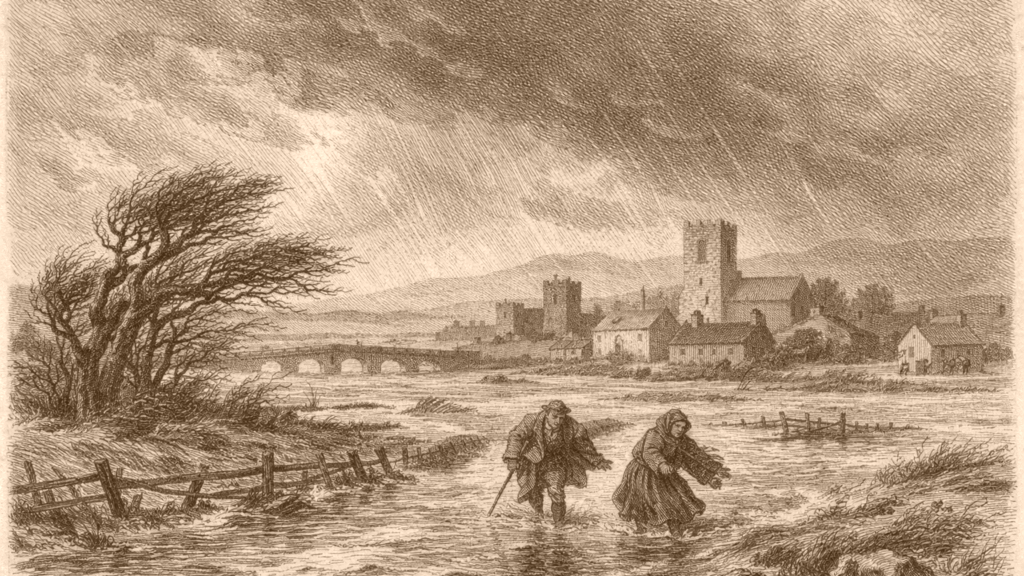
Contemporary reporting recorded direct disruption in several counties. One account says Dublin, Wexford, and Wicklow were among the worst impacted, with homes and businesses flooded, commuter disruption, and problems on roads and rail services. It also says Enniscorthy experienced heavy flooding and that homes were evacuated and businesses closed. Another report adds that motorists were rescued from floodwaters, the Dodder burst its banks, and around 2,500 homes, farms, and businesses were without power late in the day.
The same coverage shows an immediate official response. Met Éireann said heavy rain on saturated ground, with rivers near bank-full conditions, made localised flooding and river flooding likely. It warned that large rivers could overflow, smaller rivers and streams could flood sooner, and floodplains, agricultural land, and low-lying roads could be affected. The passages also mention wave overtopping, poor visibility, and difficult travel conditions, showing adaptation as warning, monitoring, and public guidance.
Climate Records
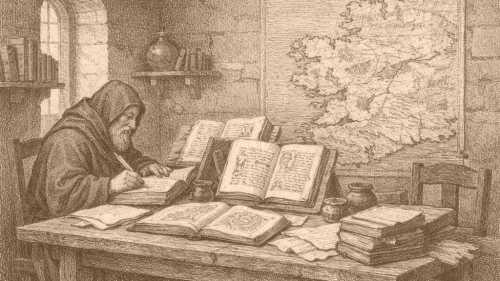
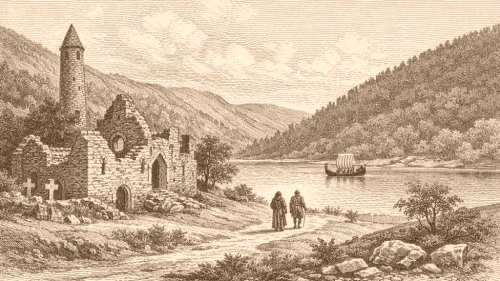
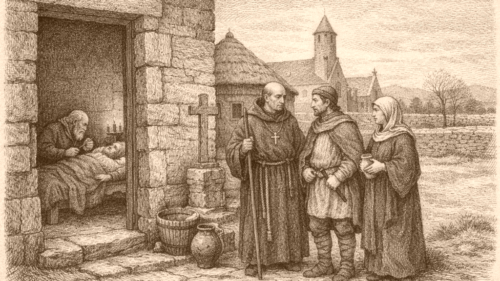
Irish climate research places extreme weather in a long historical frame. An EPA summary states that one project collated historical, proxy, and observational records to study extreme weather and natural disasters, and that historical analysis from the fifth through seventeenth centuries drew on the Gaelic Annals of Ireland alongside tree-ring and ice-core data. That passage supports the use of annalistic texts in climate work, but it does not identify any particular storm by name.
The CELT list shows that this annalistic corpus is broad, naming the Annals of Ulster, Tigernach, Inisfallen, the Four Masters, Loch Cé, and other texts. The Annals of Ulster edition then notes manuscript sources, lacunae, and later editorial handling. Taken together, these passages show a substantial body of edited material, but they also show that the record is incomplete in places and requires careful handling.
Historical Range
The temporal range implied by these sources is wide. The EPA summary says its historical analysis extends from the fifth through seventeenth centuries, while the Annals of Ulster edition describes coverage from AD 431 to AD 1540 in print and notes omitted material and lacunae in the electronic presentation. These details show breadth and incompleteness side by side, without permitting any claim that a single excerpt gives a full history of Irish weather.
A careful comparison can be made without claiming direct equivalence. Modern reports provide exact warnings, rainfall figures, and observed flooding impacts; the climate summary and annals passages show that older Irish records are used for long-run investigation, not for a direct statement about Storm Chandra itself. No retrieved passage links Chandra to a specific annalistic entry, so that connection remains absent from the evidence here.
Adaptation Measures
The adaptation measures documented in the contemporary sources are practical rather than abstract. Met Éireann issued county warnings, explained why saturated ground and high river levels increased flood risk, and advised avoidance of flooded roads and exposed coasts. RTE also reported that public river data were available through the Office of Public Works, which operates hydrometric stations and makes water-level information visible online. In these passages, adaptation means forecasting, monitoring, and public guidance.
The historical material offers a different kind of knowledge. The EPA summary shows that annals belong to a climate-research framework built from historical records and proxies, while the Annals of Ulster edition records manuscript gaps and editorial choices. The comparison is therefore methodological: present institutions measure rainfall and rivers in real time, whereas older texts contribute to reconstruction of earlier extremes. That distinction is visible in the cited passages themselves.
Comparative Limits
The limits of comparison should be stated plainly. Nothing in these passages supports a claim that Storm Chandra belongs in the annals, or that any specific medieval entry can be matched to it. What can be stated is narrower: Irish climate research uses annals to study extreme weather over centuries, and Storm Chandra shows contemporary adaptation through warnings, monitoring, and emergency response. The two bodies of evidence remain distinct.
The strongest supported conclusion is comparative, not causal. Modern reports document a January storm in precise operational terms, while older Irish records and modern climate summaries show how long-run inquiry depends on annalistic texts and related proxies. Storm Chandra therefore belongs to present-day weather response, and the annalistic material belongs to historical reconstruction. The evidence supports that separation more securely than any direct historical linkage.