
Chandra Flood
At a Glance
Storm Chandra
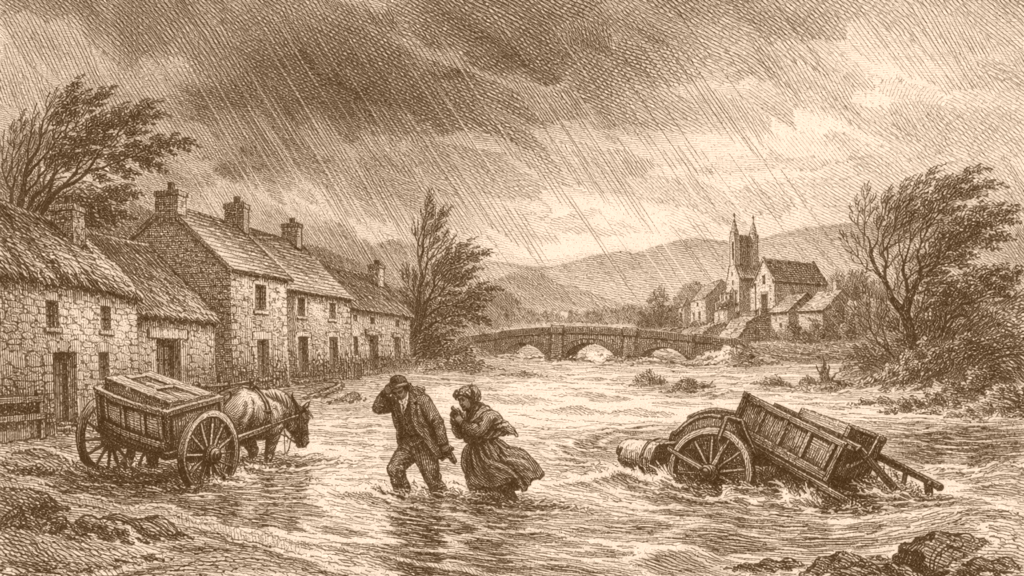
Storm Chandra was reported as a storm whose rain caused the clearest damage. Contemporary reporting said the storm brought strong winds, but the flooding was the striking feature, with scenes of flooded streets in Enniscorthy, Enniskerry, Dublin, and other places on the east coast. The rivers named in the report included the Slaney, the Dargle, and the Dodder, and the account described homes destroyed, roads disrupted, and traffic held up for long periods. [3]
Another report on the same event said rainfall was falling on already saturated ground and that flooding risks would continue into the following days. It also stated that Met Éireann had warned about rivers overflowing and bursting their banks, along with localised flooding, coastal overtopping, and difficult driving conditions. The article further noted that the storm arrived quickly and that some people in the east had not fully grasped the flood risk before impact. [3]
Flood Reports
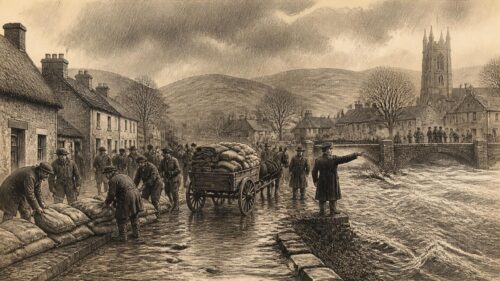
The Irish Times coverage linked Chandra to practical disruption rather than to abstract storm statistics. Roads in Wexford and Kilkenny were said to have reopened after flooding, while other commentary in the same live report referred to a major clean-up operation. The material also recorded that flooding risks would remain as rain continued to fall, showing that the event was still active in the reporting rather than being treated as a closed episode. [4]
The same report included claims that transport infrastructure had been exposed by the storm, especially roads and rail. It also recorded political criticism about communication and preparedness, but the factual core of the item was the widespread disruption caused by flooding. The report mentioned flooding in several areas and said that the week’s impacts were visible on named routes and rail lines, including the N11, M50, and Wexford rail line. [4]
Historic Storms
Earlier Irish weather writing also preserved reports of heavy rain and river flooding. A St Patrick’s Day survey noted that weather diaries and newspapers recorded a rainy day at Newcastle West in 1753 with high wind and a great river flood. It also gave examples of rainy weather in Dublin and at Armagh Observatory in other years. These notices are brief, but they directly show that river flooding was one of the kinds of weather damage recorded in historical Irish sources. [2]
The same survey shows how severe weather was described in local reports: a storm in Belfast was said to involve gale force wind, hail, and rain showers, while Dublin accounts mention cold winds and heavy sleet. Cork reporting described snow, sleet, hail, torn branches, and damaged traffic. These passages do not mention flooding in every case, but they demonstrate a recurring pattern of damaging weather being recorded in narrative form, not only in numerical summaries. [2]
Annalistic Records
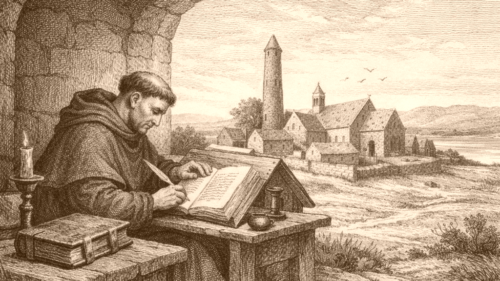
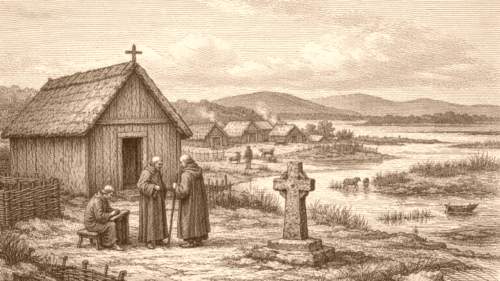
The Maynooth survey states that the Irish Annals contain the oldest records of extreme weather events in Ireland. It gives examples of great wind notices across a wide span of years and names several annalistic collections, including Ulster, Tighernach, Inisfallen, and Four Masters. The passage is a survey rather than a detailed storm narrative, but it shows that annalistic writing preserved repeated references to extreme weather across many centuries. [1]
That same survey adds that other books and diaries also recorded remarkable storms, and it lists later references to great or violent storms in the seventeenth and eighteenth centuries. The framing is important because it shows that the record is not confined to annals alone. However, the text does not provide a full catalogue here, and its list is explicitly non-exhaustive, so only the named examples can be treated as directly evidenced. [1]
Manuscript Survival
The CELT editions make clear that the Annals of Ulster and the Annals of Tigernach survive through manuscript traditions with gaps and overlapping copies. The Annals of Ulster edition notes lacunae in several periods and identifies different manuscripts that preserve portions of the text. The Tigernach edition likewise describes manuscript witnesses from the eleventh to the sixteenth centuries and specifies that one Dublin fragment belongs to a related but separate text. [5] [6]
The edition notices also show that these annalistic texts were edited from manuscript originals and later printed in modern scholarly form. The Annals of Ulster edition describes the use of earlier editions for some periods, while the Tigernach edition identifies the manuscript basis for its translation and notes that the electronic version follows an unpublished translation with permission. This is a matter of editorial description, not an explanation of the weather entries themselves. [5] [6]
Comparative Pattern
Read together, the modern reports and the older annals show overlapping weather vocabulary: flooding, rivers overflowing, roads becoming impassable, and local places affected by storms. Chandra is described in immediate news language, with flooding in Enniscorthy, Enniskerry and parts of Dublin, while the annals cited here record weather events in dated notices, including great wind, rain, floods, snow and frost. The later diaries and newspapers named in these studies also preserve examples of severe weather in brief narrative form. [1] [2] [3] [4] [5] [6]
The evidence also shows a difference in scale of detail. Modern coverage names towns, roads, rivers, and official warnings, while the annalistic survey identifies years and collections but usually not the same level of local detail in the survey passage itself. That does not make the older records less valuable; it simply means that the surviving excerpts preserve different kinds of weather notice, from concise annal entries to contemporary flood reporting. [1] [3] [4] [5]
Source References
Hover over a number to see the source. Select it to open the source.

- [1] A short history of destructive Irish storms | Maynooth University
- [2] A short history of extreme weather events around St Patrick's Day | Maynooth University
- [3] Storm Chandra: 'Weather bomb' storms becoming more common
- [4] Storm Chandra as it happened: Met Éireann issues Status Yellow rainfall warning for six counties – The Irish Times
- [5] The Annals of Ulster
- [6] The Annals of Tigernach

How does Storm Chandra flooding compare, in directly documented terms, with earlier Irish records of storm rain, river flooding, and destructive weather?