
Year by Year
Explore Year by Year articles from the most modern historical year back to the oldest.
3,305 Articles Archived
Fermanagh Refugia
Archived: 26 September 2026
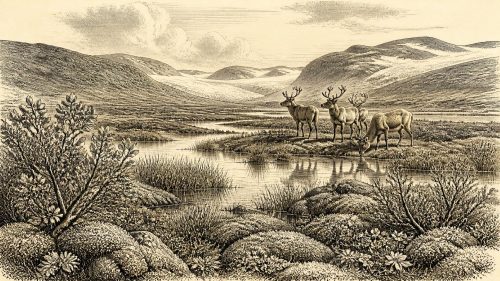
At 30,644 BCE, a modern label within a broad Marine Isotope Stage 3 range, Ireland's past is reconstructed from environmental evidence rather than records. Derryvree, County Fermanagh, preserves freshwater sediments between two glacial tills, showing a locally ice-free, cold, treeless wetland of pools, sedges, mosses and low plants. Elsewhere, growing British–Irish ice sheets created varied, unstable conditions and lower seas. Southern cave deposits record cold-adapted fauna, including mammoth, reindeer, giant deer and hyaena, but accumulated over long periods. No secure human occupation is known; a possibly butchered reindeer bone remains inconclusive. Deposits reveal changing refuges, animal movement and advancing ice.
Avens Ponds
Archived: 26 September 2026
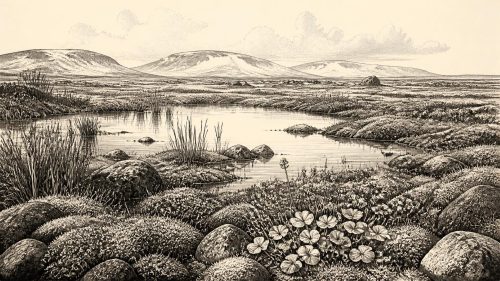
30,645 BCE is a modern label within a broad Late Pleistocene interval, not a recordable Irish date. At Derryvree, County Fermanagh, organic freshwater sediments between two tills demonstrate a local ice-free episode amid shifting glacial conditions. Bogbean and mountain avens indicate a cold, open wetland with ponds, fens and tundra vegetation. Castlepook Cave, County Cork, preserves diverse Ice Age animal remains, though not a single contemporaneous community. A marked reindeer bone may indicate brief human carcass processing around this era, but remains disputed and cannot prove settlement. Evidence supports changing, precarious environment, not identifiable societies, politics, culture, trade or habitation.
Pleistocene Mammals
Archived: 26 September 2026
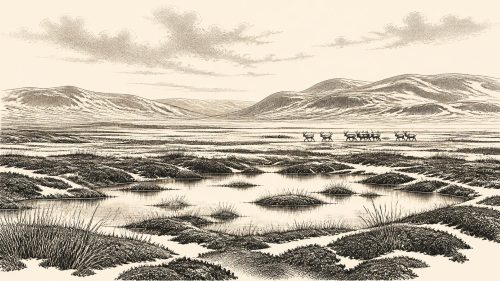
Around 30,646 BCE, Ireland lay within the unstable climate of Marine Isotope Stage 3, nearing the Last Glacial Maximum. Derryvree, County Fermanagh, preserves an ice-free freshwater wetland, later buried beneath till, whose sediments indicate treeless tundra-steppe, harsh winters and short growing seasons. Cave faunas, especially at Castlepook in County Cork, show large mammals including mammoth, reindeer and deer inhabited or visited parts of Ireland. A marked reindeer femur may record human butchery, but cannot prove settlement. No securely dated camps, tools or dwellings establish permanent occupation. Environmental evidence reveals a changing cold landscape, while human presence is still highly uncertain.
Seasonal Productivity
Archived: 26 September 2026
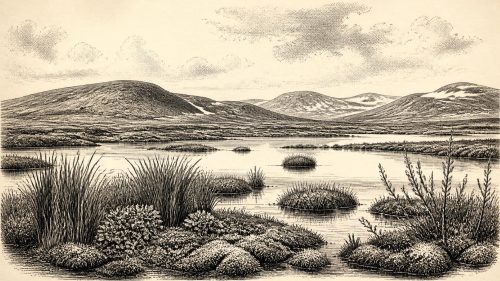
30,647 BCE is a modern label, not a recoverable Irish year. Derryvree, County Fermanagh, preserves freshwater sediments between glacial tills, radiocarbon dated broadly to 36,900–31,700 calendar years BP. Mosses and plant remains indicate treeless tundra, shallow water and seasonal productivity during a fluctuating MIS 3 climate. Castlepook Cave, County Cork, documents a diverse Pleistocene fauna, including mammoth, reindeer, giant deer, hyaena and horse, but its assemblage spans time and has complex formation histories. A possibly cut-marked reindeer femur suggests, without proving, human presence. No secure settlements, polities, trade networks or events are known; Ireland remained environmentally dynamic and archaeologically elusive.

Glacial Advances
Archived: 26 September 2026
The assigned date is not recoverable from Irish evidence, but lies within a broad MIS 3 climatic interval. At Derryvree, County Fermanagh, freshwater sediments, plants and insects between two glacial tills demonstrate episodic local ice advances and a cold, wetland, tundra-like environment. Castlepook Cave, County Cork, contains a mixed long-term fauna, including mammoth, reindeer and hyaena, showing that suitable open habitats periodically supported mammals. A possibly cut-marked reindeer bone suggests an early human visit, but lacks associated settlement evidence. No polities, farming, trade or cultural institutions are known. They document changing late-Pleistocene landscapes, not a specific event or recoverable history.

Shifting Drainage
Archived: 26 September 2026
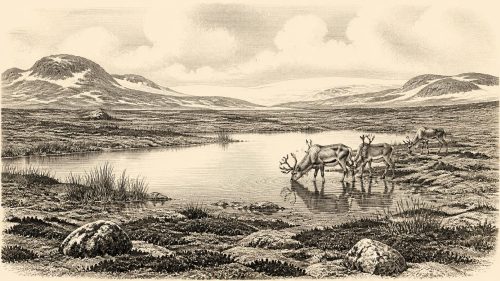
At c. 30,649 BCE, Ireland’s history is reconstructed from environmental evidence rather than records. Inter-till sediments at Derryvree, County Fermanagh, dated broadly to 36,900–31,700 calibrated years BP, preserve a local ice-free freshwater interval between glacial advances. Plant, moss, pollen and insect remains indicate a cold, treeless periglacial wetland supporting aquatic vegetation and tundra-like ground cover. Cave fauna elsewhere, including mammoth, reindeer and hyena, demonstrates changing animal movements but cannot define Derryvree’s precise fauna. Growing ice sheets later transformed the landscape. No secure evidence establishes any human settlement, society or activity; the period reflects ecological resilience, shifting drainage and repeated glaciation.
Episodic Glaciation
Archived: 26 September 2026
Around 30,650 BCE, Ireland lay within the climatically unstable Late Pleistocene, not a period of recorded history. Inter-till freshwater deposits at Derryvree, County Fermanagh, demonstrate an ice-free interval between glacial advances, when cold open wetlands supported mosses, sedges and insects. Comparable deposits confirm episodic glaciation in northern Ireland. Castlepook Cave, County Cork, preserves evidence of diverse Ice Age fauna, including mammoth, reindeer, giant deer, bears and hyaenas, though species did not necessarily coexist. No securely dated human settlement exists for this date. Possible modified bones suggest occasional human access, but permanent occupation remains unproven amid changing ice, water and habitats.
Tundra Hollows
Archived: 26 September 2026
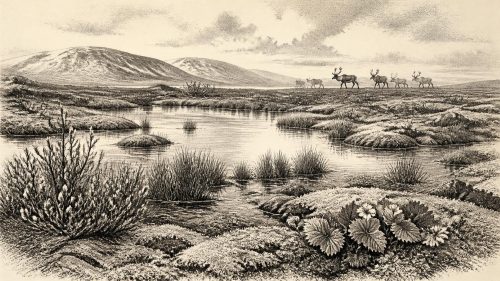
30,651 BCE is a modern label rather than a recoverable Irish historical year. Derryvree, County Fermanagh, preserves freshwater silts between glacial tills, radiocarbon dated broadly to a period encompassing this date. Its plants reveal treeless tundra, wet hollows and seasonal liquid water during an ice-free interval amid changing Midlandian ice conditions. Castlepook Cave, County Cork, records diverse Marine Isotope Stage 3 fauna, including mammoth, reindeer, giant deer and predators, but not a single contemporaneous community. Human presence remains unproven: possible cut marks require investigation, whereas secure evidence is later. The period documents Ice-Age environments, not kingdoms, settlement or recorded events.
Volatile Habitats
Archived: 26 September 2026
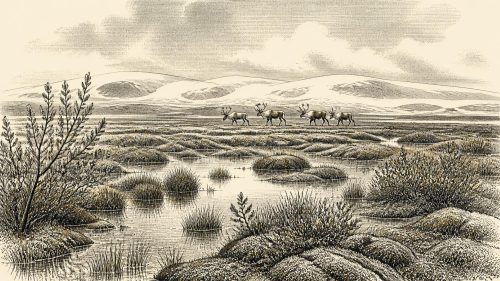
About 30,652 BCE cannot be treated as a precisely dated Irish year, but falls within a Late Pleistocene interval represented by Derryvree, County Fermanagh. Organic silts between glacial tills indicate an ice-free phase, broadly 31,700–36,900 calibrated years before present, when cold, treeless wetlands supported mosses, sedges, dwarf willow, aquatic plants and freshwater life. Cave remains demonstrate that cold-adapted fauna, including reindeer, mammoth and predators, reached Ireland, although assemblages are not local censuses. A cut-marked Castlepook reindeer bone may indicate human butchery, yet remains disputed. Evidence supports intermittently habitable, climatically volatile landscapes, not continuous occupation, settlements, states, trade or annual history.

Buried Tundra
Archived: 26 September 2026
Although 30,653 BCE cannot denote a specific Irish event, it falls within a Late Pleistocene MIS 3 interval recorded at Derryvree, County Fermanagh. Freshwater silts and organic deposits between tills show an ice-free phase, supporting cold, treeless tundra wetland vegetation. Castlepook Cave, County Cork, preserves a diverse, differently dated fauna including mammoth, reindeer, giant deer and predators, demonstrating changing connected habitats. A marked reindeer femur may indicate Upper Palaeolithic butchery, but cannot prove settlement or continuous occupation. No political, cultural or social institutions are identifiable. Lower sea levels and shifting ice affected access, while routes and ice extent remain uncertain.
Some records do not yet have a verified historical year and are awaiting chronological placement.