National Programme(c.1890s)

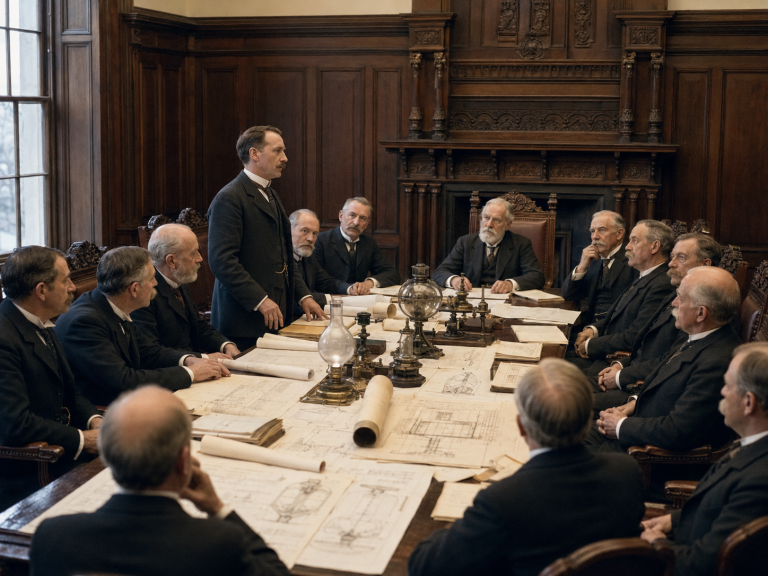
The reunited Irish Parliamenme Rule, land reform and the restoration of an Irish legislature responsible for domestic affairs. The programme places constitutional self-government and the condition of tenant farmers at the centre of nationalist politics following years of damaging division. In Limerick city and county, supporters are expected to welcome a policy connecting representation at Westminster with demands concerning land purchase, evicted tenants and overcrowded rural holdings. The agreement gives John Redmond’s leadership a defined political purpose while allowing the United Irish League to organise popular support through local branches, conventions and public meetings.
The nationalist movement entered the new century burdened by the divisions that followed Charles Stewart Parnell’s downfall in 1890. Rival parliamentary groups weakened electoral organisation and discouraged supporters who had previously regarded the Irish Party as a disciplined national force. Two Home Rule Bills had already been attempted at Westminster, in 1886 and 1893, but neither produced an Irish parliament. Meanwhile, the land question remained unsettled despite earlier legislation intended to improve tenant security and facilitate purchase. The rise of the United Irish League after 1898 restored popular activity by combining demands for political unity with agitation on behalf of small farmers, evicted tenants and landless families.
John Redmond now leads the reunited parliamentary party, while William O’Brien’s organisational work has provided it with a growing rural foundation. John Dillon, Timothy Harrington, Michael Davitt and other nationalist figures brought different traditions and personal loyalties into the settlement. Their agreement did not erase past disputes, but it restored a recognised parliamentary leadership capable of speaking for most constitutional nationalists. The United Irish League’s National Convention, meeting in Dublin on 19 and 20 June, established rules connecting local branches with national organisation. Home Rule remained the ultimate constitutional objective, supported by a renewed campaign to reform landholding and strengthen Irish control of domestic government.
The programme will face determined opposition from Unionists, who maintain that an Irish legislature would weaken the United Kingdom and place political and religious minorities under nationalist control. The government may consider limited Irish reforms while resisting any restoration of a parliament in Dublin. Differences could also develop within the nationalist movement over whether parliamentary leaders or League organisers should determine policy. Agrarian agitation has already produced allegations of intimidation in districts where disputed farms and grazing estates are contested. Party unity will therefore depend upon balancing constitutional action at Westminster with the demands of local supporters seeking immediate relief from economic hardship and unequal access to land.
In Limerick, the renewed policy could influence elections, local political associations and debates within county and district councils. Farmers seeking ownership of their holdings may look to the Irish Party for stronger land-purchase measures, while labourers and smallholders will judge whether reform reaches those with little property. Urban nationalists may regard an Irish legislature as a means of directing taxation, education, development and administration towards Irish needs. The programme gives Limerick supporters a common platform after a decade of factional conflict, yet its success will depend upon practical achievement. Home Rule, land reform and national unity have again been joined as the declared purposes of constitutional nationalism.
Primary Sources
- United Irish League, Constitution and Rules Adopted by the Irish National Convention, 19th and 20th June 1900, Dublin, Swan & Co., 1900; National Library of Ireland, Pamphlet Volume A17405; Thomas Bradley Papers, MS 33,561/2(12). This document verifies the Convention dates and the formal organisation adopted by the League.
- Freeman’s Journal and Daily Commercial Advertiser, 20 and 21 June 1900. Contemporary reports of the Irish National Convention can verify the speeches, resolutions and political programme discussed by nationalist representatives. Exact page and column should be confirmed before formal citation.
- The Irish Times, 20 and 21 June 1900. Contemporary reporting provides an alternative account of the Convention, nationalist reunion and the relationship between the parliamentary party and the United Irish League. Exact page and column should be confirmed before formal citation.
- John Redmond Papers, National Library of Ireland, correspondence concerning the United Irish League, the National Convention and parliamentary organisation during 1900, including MS 15,212/5. These papers can verify Redmond’s involvement in party reunion, League organisation and the development of nationalist policy.
- House of Commons Parliamentary Debates, 1900, speeches and questions concerning Irish government, land purchase, tenant grievances and nationalist organisation. These official parliamentary records can verify the positions expressed at Westminster by Irish members and government ministers. Exact volume, date and columns should be confirmed before formal citation.