Grazing Challenged
Limerick Archives — 1900
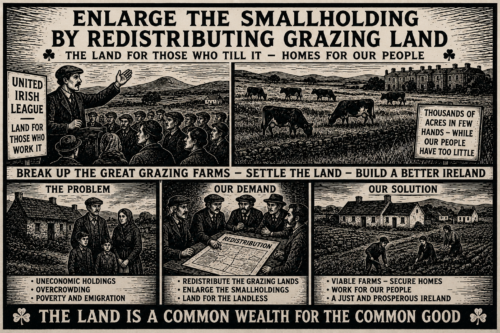
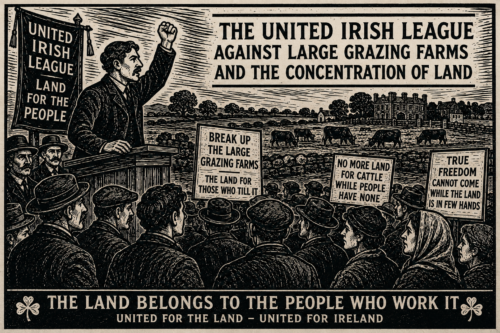
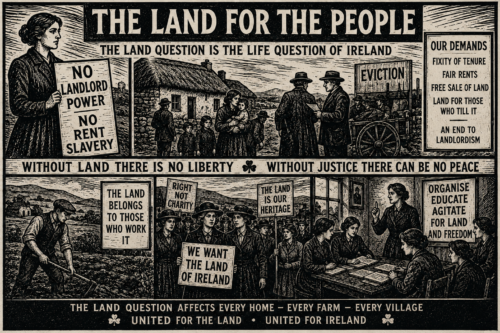
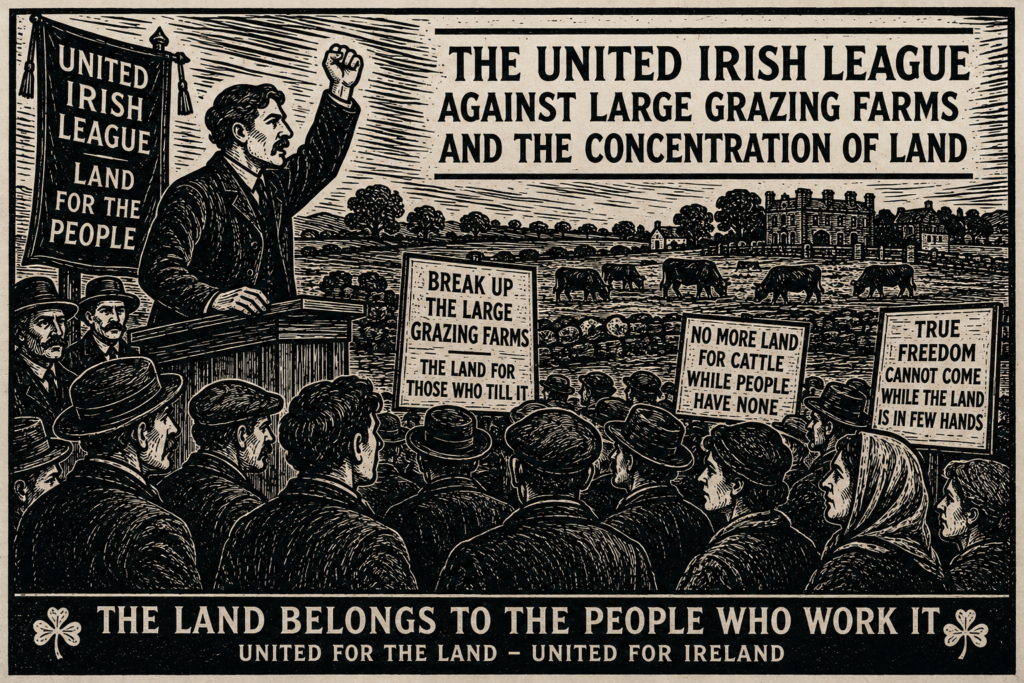
LIMERICK — The United Irish League is expanding its campaign against large grazing farms and the concentration of extensive tracts of land in comparatively few hands. Founded by William O’Brien in County Mayo, the League argues that great stretches of grassland should not remain devoted principally to cattle while small farmers struggle upon holdings too limited to support their families. Its programme seeks the division of untenanted land among smallholders, landless families and tenants requiring larger farms. In County Limerick, where agricultural security continues to shape employment, inheritance and emigration, the campaign is likely to command close attention.
The spread of grazing developed partly from the conversion of former tillage land into pasture, particularly where cattle offered owners and substantial occupiers a profitable return requiring fewer labourers. Nationalist organisers condemn the sight of lightly populated grasslands lying beside congested districts and uneconomic holdings. They argue that rural decline cannot be reversed while young families lack sufficient ground upon which to establish themselves. Large ranches have therefore become symbols of a wider imbalance in Irish agriculture: land may be productive in commercial terms while the neighbouring population remains poor, underemployed and increasingly dependent upon emigration.
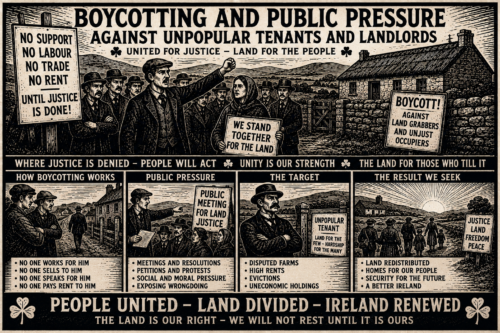
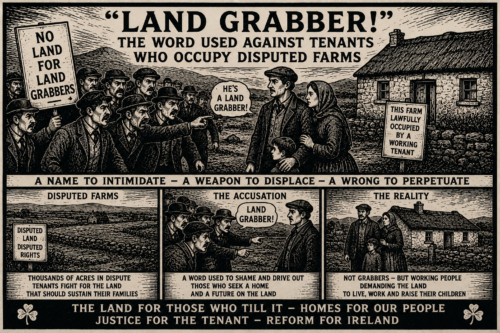
League branches are expected to identify extensive grazing holdings, discourage competition for disputed farms and press owners or occupiers to release land for redistribution. Public meetings, resolutions and organised social pressure allow local communities to turn individual grievances into a national campaign. Such tactics may revive memories of the Land War and its boycotts, creating unease among landlords, graziers and government officials. League leaders insist that parliamentary speeches alone cannot force reform unless rural organisation demonstrates the strength of popular demand. Their objective is to make the continued concentration of land politically and socially difficult to defend.
The campaign also exposes divisions within nationalist Ireland. Some prosperous farmers and League officials themselves rent or control grazing land, while smallholders and labourers may demand that the same property be divided. Tenant purchase could convert existing occupiers into owners without necessarily providing land for families possessing little or none. Agricultural labourers face an additional concern: breaking up ranches may create smaller farms but will not automatically guarantee cottages, secure wages or access to plots. In Limerick, the promise of redistribution will be judged by whether it benefits substantial tenants alone or reaches those whose poverty leaves them without meaningful influence.
The United Irish League has made the grazing question part of its wider effort to unite land reform with national self-government. Its supporters argue that Ireland cannot prosper while rural communities lose population and extensive land remains closed to families seeking viable holdings. Opponents warn that agitation may produce intimidation, conflict and unjust pressure against lawful occupiers. Whatever methods are adopted, the campaign has placed the ownership and use of grassland under renewed public scrutiny. Across County Limerick, farmers and labourers will ask whether agricultural land exists chiefly for commercial return or carries a wider responsibility towards the communities surrounding it.
- United Irish League, early constitution, National Directory resolutions and branch records, 1898–1901, concerning agrarian agitation, grazing ranches and redistribution of untenanted land. Exact archive, file and folio should be confirmed before formal citation.
- Freeman’s Journal, Dublin, 1900, reports of United Irish League meetings, speeches by William O’Brien and campaigns against large grazing holdings. Exact issue, page and column should be confirmed before formal citation.
- Limerick Chronicle, Limerick, 1900, reports concerning League branches, land meetings, grazing farms and tenant demands in Limerick city and county. Exact issue, page and column should be confirmed before formal citation.
- Royal Irish Constabulary, county inspectors’ reports and confidential reports concerning United Irish League activity and agrarian agitation, 1900, National Archives of Ireland. Exact county report, file and folio should be confirmed before formal citation.
- Parliamentary Debates, House of Commons, questions and debates concerning the United Irish League, grazing farms, boycotting and Irish land reform, 1900–1902. Exact date, volume and column should be confirmed before formal citation.