

Doneraile’s Cutmarked Femur
Around 31,516 BCE, Ireland was an unstable Late Pleistocene landscape, shaped by fluctuating ice, low sea levels and changing ecological connections. Derryvree sediments in Fermanagh record an ice-free interval with freshwater wetlands, tundra vegetation and insects, later buried beneath glacier deposits. Castlepook Cave in County Cork produced remains of reindeer, mammoth, giant deer, predators and other cold-adapted animals, though bones represent episodes spanning millennia. A cutmarked reindeer femur may indicate Upper Palaeolithic butchery, but disturbed context and absent associated artefacts make human presence provisional. Evidence supports temporary habitable environments, not settled communities, political history or continuous occupation on the island.
View Record
Mellifont and Rival Kings
In 1142, Ireland remained politically fragmented despite Toirdelbach Ua Conchobair’s claim to high kingship. His coalition army devastated lands en route to Munster but gained neither cattle nor Munster hostages. Conchobar Ua Briain died, enabling his brother Toirdelbach to take Munster amid dynastic conflict, while Muirchertach Mac Lochlainn fought in the north and Ottir from the Hebrides assumed Dublin’s leadership. Raiding, crop destruction, church burnings and clerical deaths exposed insecurity affecting rural and religious life. Mellifont Abbey, founded by Malachy Ua Morgair with Donnchad Ua Cerbaill’s patronage, introduced Ireland’s first Cistercian house, linking native reform, politics and Clairvaux’s continental network.
View Record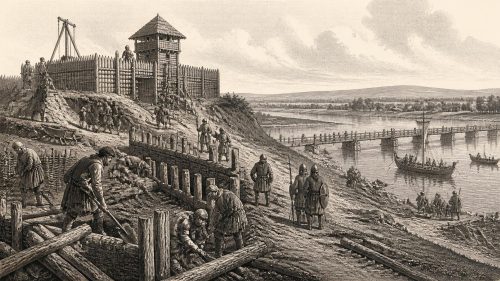
Athlone Castle Rises
In 1213, King John’s submission of England and Ireland to Pope Innocent III altered the lordship’s international status, while Henry of London became archbishop of Dublin and justiciar. Royal and settler forces campaigned in Mide, defeating Cormac Ó Máel Sechlainn’s allies and building castles at Athlone, Birr, Durrow and Kinnitty to control crossings and routes. Cormac nevertheless recovered influence, illustrating frontier instability. Ulster saw Gaelic feuds, Anglo-Norman attacks, church plundering, Coleraine Castle’s construction and Áed Ó Néill’s raids. Clerical deaths highlighted enduring ecclesiastical centres. Ireland remained politically plural, as castles, warfare, alliances and royal administration reshaped contested regions across Ireland.
View Record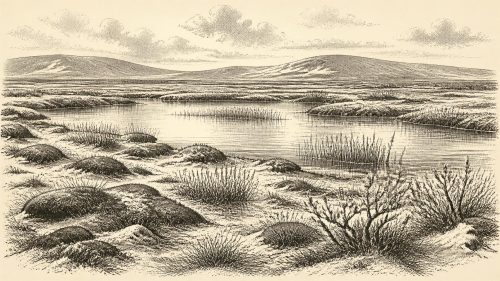
Derryvree’s Freshwater Silt
Around 31,262 BCE, a modern filing date within MIS 3 rather than a precise year, Ireland was a changing Ice Age landscape. Derryvree, County Fermanagh, preserves freshwater silts between glacial tills, indicating an ice-free cold wetland interval around 33,500 calendar years BP. Tundra vegetation and periglacial conditions prevailed, while lowered sea levels permitted animal movement across wider north-west Europe. Castlepook Cave, County Cork, yielded mammoth, reindeer, giant deer, carnivores and lemmings from differing episodes. A possibly butchered reindeer bone may indicate human activity, but no secure settlement exists. Later glaciation obscured earlier evidence, leaving human presence uncertain in the record.
View Record
Hostages of the North
In 1010 Brian Bóruma reinforced his contested supremacy by leading Munster forces north to Armagh and securing hostages from the northern Uí Néill, Ulaid and wider Leth Cuinn. The campaign demonstrated that overlordship required repeated negotiation, military display and guarantees. Connacht’s king Cathal mac Conchobair died penitently, while lesser rulers, an Ailech heir and other political figures also died or were killed. Church losses included Brian’s brother Marcán, senior cleric of Munster, Clonmacnoise bishop Conaing, and scholar-king Máel Suthain ua Cerbaill. An abbot suffered blinding. Annals also recorded a hot summer and fruitful autumn, underscoring rural resources sustaining political power.
View Record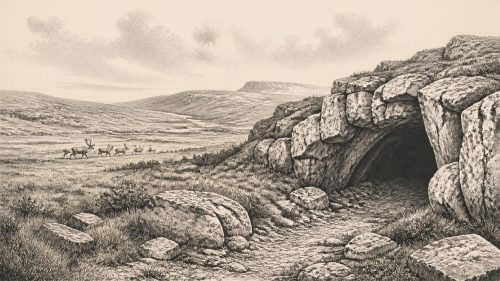
Cork Cave Reindeer Femur
Around 31,285 BCE, Ireland lay within the fluctuating cold conditions of Marine Isotope Stage 3, before the Last Glacial Maximum. Southern landscapes probably comprised open tundra and steppe supporting reindeer, mammoth, giant deer, predators and smaller mammals. Castlepook Cave, County Cork, preserves a disturbed, repeatedly accumulated fauna rather than a single contemporary scene. A reindeer femur, dated approximately 31,000 BCE, bears a mark interpreted as possible stone-tool butchery, potentially Ireland’s earliest evidence of human activity. Yet no sealed occupation, tools, hearths or human remains confirm settlement. Later glaciation and sea-level change destroyed evidence; further dating and excavation remain especially essential.
View Record
Castlepook’s Marked Bone
31,961 BCE is an imprecise label for a Late Pleistocene MIS 3 interval, when Ireland experienced cold conditions and advancing ice preceding the Last Glacial Maximum. Geological and cave-faunal evidence, especially from Castlepook Cave, records mammals including cold-adapted and open-country species, though deposits span long periods and were imperfectly excavated. A reportedly cut-marked reindeer bone may indicate human activity around 33,000 years ago, but lacks secure context and remains under investigation. No contemporary settlement, tools, hearths or cultural assemblage is known. Later bear-bone evidence confirms human presence only about 10,800–10,500 BCE. Ireland’s period remains an environmentally documented, uncertain human prehistory.
View Record
Castlepook’s Mammoth-Steppe
Around 31,608 BCE, Ireland formed a fluctuating Late Pleistocene frontier rather than a uniformly frozen island. Glaciers and open periglacial landscapes varied regionally as climate shifted. At Derryvree, County Fermanagh, freshwater deposits between till sheets preserve evidence of tundra-steppe vegetation, including sedges, herbs, mosses and aquatic plants. Castlepook Cave, County Cork, contains a mixed faunal record of mammoth, reindeer, giant deer, hyena, bear, wolf, Arctic fox and lemmings, reflecting links with wider Europe. A possibly cut-marked reindeer bone suggests brief Upper Palaeolithic human visits, but not settlement. Fragmentary evidence documents climate, water, ice and animal mobility before agriculture or monuments.
View Record
Winter of Rival Kings
In 1115, severe frost and snow caused widespread hunger, livestock deaths and disruption across Ireland, particularly Leinster. Muirchertach Ua Briain recovered from illness, regained Munster after his brother Diarmait’s capture, and reasserted influence through campaigns in Brega and Dublin, where his son’s forces defeated Leinster leaders. Yet attacks on churches at Ardbraccan and Clonmacnoise exposed warfare’s damage to sacred centres. Tairdelbach Ua Conchobair raided Thomond, removed a Ua Briain claimant, survived internal opposition, deployed a Shannon fleet and allied with Mide. His gifts at Clonmacnoise combined piety and political display. Despite Muirchertach’s recovery, Connacht’s growing power signalled a shifting balance.
View Record
Derryvree’s Radiocarbon Silt
31,484 BCE is not a date at which Irish history can be recovered year by...
View Record