Archived: 27 September 2026
Abstract
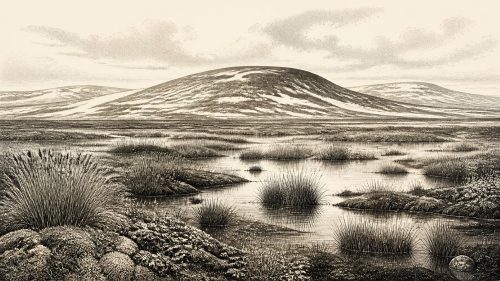
Around 30,581 BCE, Ireland lay within the unstable, cold Middle Midlandian phase of Marine Isotope Stage 3, before the Last Glacial Maximum. Dating is necessarily approximate, relying on calibrated radiocarbon ranges rather than annual history. At Derryvree, County Fermanagh, freshwater sediments between tills preserve evidence of sedges, mosses and herbs in open, wet tundra conditions. Castlepook Cave, County Cork, records diverse Pleistocene fauna, including mammoth, reindeer, giant deer, bear and hyaena, although deposits span long periods. A marked reindeer bone may indicate brief human activity, but lacks supporting settlement evidence. Ireland was environmentally varied, intermittently ice-free, and archaeologically fragmentary overall.
Read Article
Archived: 27 September 2026
Abstract
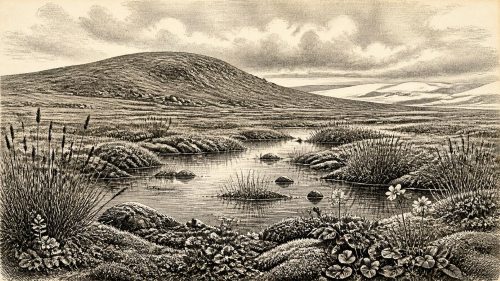
Around 30,582 BCE, Ireland lay within the climatically unstable Late Pleistocene MIS 3, though no event or settlement can be dated to that year. Derryvree in County Fermanagh preserves freshwater sediments between glacial tills, demonstrating an ice-free interval. Fossils, including bogbean and mountain avens, indicate treeless Arctic-alpine mosaic of wetlands, sedges and exposed stony ground. Castlepook Cave fauna shows that mammoth, reindeer and other cold-adapted animals reached Ireland during MIS 3. A possibly cut-marked reindeer bone suggests, but does not prove, human presence. Ireland’s record is environmental, not political or cultural; later glaciation obscured much earlier evidence across the island.
Read Article
Archived: 27 September 2026
Abstract
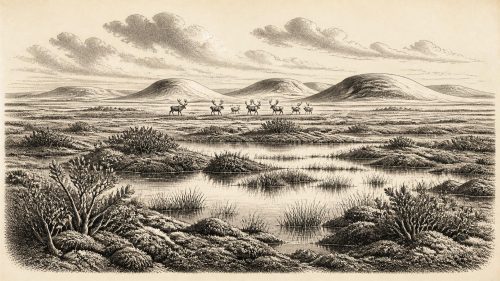
About 30,583 BCE, Ireland cannot be described through a single dated event, but Derryvree Fen in County Fermanagh offers evidence for the wider Late Pleistocene environment. Deposited during an ice-free interval around 36,900–31,700 cal BP, its organic silts preserve freshwater plants, sedges, mosses and alpine vegetation, indicating open, cold tundra-steppe with pools and wet ground. Cave finds show that mammals including reindeer, mammoth, hyaena and wolves periodically reached Ireland. A possibly cut-marked reindeer bone suggests human visits, not confirmed settlement. Later expansion of the British–Irish Ice Sheet buried and destroyed much evidence, making Derryvree a rare pre-glacial environmental archive valuable.
Read Article

Archived: 27 September 2026
Abstract
Around 30,584 BCE, Ireland’s evidence records environmental change rather than a datable event. At Derryvree, County Fermanagh, organic sediments between glacial tills indicate an ice-free interval, broadly 34,950–29,750 BCE, when a cold tundra wetland supported mosses, herbs, insects and freshwater pools. Ice conditions elsewhere remain uncertain. Castlepook Cave, County Cork, contains reindeer and mammoth remains; a possibly cut-marked reindeer femur may indicate human carcass processing, but not settlement. No continuous population, agriculture, polity or cultural sites are known. Lower sea levels altered coasts and routes. Later glaciation obscured much evidence, suggesting episodic human possibility within a shifting Ice Age landscape.
Read Article
Archived: 27 September 2026
Abstract
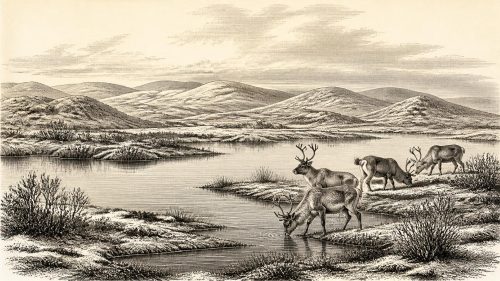
At the notional date of 30,585 BCE, Ireland was a climatically unstable Late Pleistocene landscape, not a documented historical society. Derryvree, County Fermanagh, preserves freshwater silts between glacial tills, dated broadly to this interval, demonstrating a locally ice-free, treeless tundra wetland with bogbean, sedges, mosses and seasonal freezing. Cave deposits at Castlepook, County Cork, indicate that cold-adapted animals, including reindeer, mammoth and giant deer, occupied parts of Ireland over the wider period. A possibly tool-marked reindeer bone suggests transient human activity, but proves neither settlement nor society. Later ice advances buried deposits and erased much evidence of this ancient world.
Read Article

Archived: 27 September 2026
Abstract
Labelled 30,586 BCE, this period cannot be reconstructed as an annual Irish history. Derryvree, County Fermanagh, preserves freshwater organic deposits between glacial tills, radiocarbon dated broadly enough to encompass the notional year. They indicate a temporary ice-free landscape of treeless tundra or muskeg, with sedges, mosses, aquatic plants and cold-adapted vegetation, while glaciers fluctuated widely elsewhere. Cave finds show that animals including reindeer and predators reached Ireland at varying times, but not necessarily together. No secure human settlement exists. A possibly cut-marked reindeer bone from Castlepook Cave suggests only tentative human contact. Later ice expansion reshaped landscapes and destroyed evidence.
Read Article

Archived: 27 September 2026
Abstract
Around 30,587 BCE, a modern label within Marine Isotope Stage 3, Ireland has no historical record. Derryvree, County Fermanagh, preserves organic freshwater sediments between glacial tills, dated broadly enough to include this period. Its pollen, plants, mosses and insects indicate cold, open, wet periglacial terrain with pools, sedges, herbs and sparse scrub, rather than forest. Other Fermanagh deposits reveal variable glacial conditions. The British–Irish Ice Sheet was expanding towards its maximum. Castlepook Cave records cold-stage fauna and a possible cut-marked reindeer bone, but provides no secure evidence of settlement. No claims about peoples, politics, farming or routes can be sustained.
Read Article
Archived: 27 September 2026
Abstract
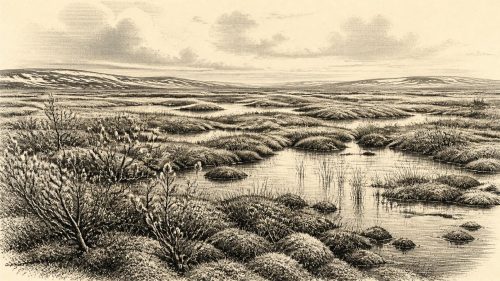
Thirty thousand five hundred and eighty-eight BCE is not a recoverable Irish historical year, but falls within the broad calibrated range of Derryvree’s Middle Midlandian freshwater deposit in County Fermanagh. Exposed in 1969, the deposit lies between glacial tills, recording a treeless, cold wetland of pools, mosses, sedges and dwarf shrubs during an interval without local ice. Plant and beetle remains indicate a functioning but severe environment amid unstable Ice Age conditions. Lower sea levels altered surrounding lands, yet human access remains unknown. Cave fauna attests cold-stage animals, while a cut-marked Castlepook reindeer bone offers inconclusive evidence of human activity.
Read Article

Archived: 27 September 2026
Abstract
Thirty millennia BCE is not a datable Irish year but a broad Late Pleistocene interval within unstable Marine Isotope Stage 3. Derryvree, County Fermanagh, preserves freshwater organic silts between glacial tills, indicating a local ice-free wetland roughly 36,900–31,700 calibrated years before present. Plants and insects suggest treeless, cold, tundra-like terrain with shallow water and seasonal growth. Crag Cave records intermittent milder conditions. Castlepook Cave’s mixed faunal remains demonstrate cold-stage mammals, though not contemporaneous communities. A cut-marked reindeer bone may indicate fleeting human activity, not settlement. Expanding British-Irish ice later transformed landscapes, leaving environmental archives rather than detailed conventional national history.
Read Article

Archived: 27 September 2026
Abstract
At 30,590 BCE, Ireland has no recoverable annual history, but Derryvree's inter-till freshwater deposits provide environmental evidence for a broad Late Pleistocene interval. Radiocarbon dating, though imprecise, places the sediments within the period indicated by the modern label. Mosses, sedges, bogbean, dwarf willow and insects indicate cold, open, waterlogged tundra-like conditions. Cave remains from Cork show that mammoth, reindeer, giant deer and predators reached Ireland during overlapping phases, without proving coexistence. Possible human traces remain unconfirmed, and no settlements or societies can be reconstructed. Subsequent ice-sheet growth buried and eroded landscapes, making Derryvree a rare record of unstable glacial ecology.
Read Article


