Archived: 7 October 2026
Abstract
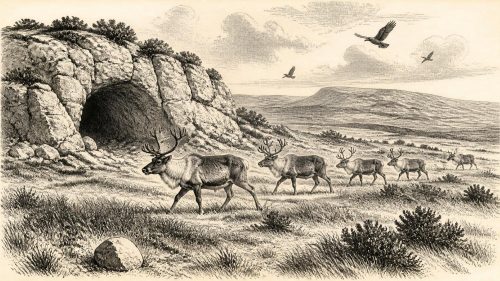
30,153 BCE is an approximate modern waypoint within Ireland’s climatically unstable Late Pleistocene, not a recordable historical year. Castlepook Cave, County Cork, preserves the island’s richest vertebrate assemblage from the period, though disturbed deposits and revised radiocarbon dates require caution. Reindeer, mammoth, giant deer, hyaena and lemmings indicate predominantly open, cold, variable landscapes. A reindeer femur from Hyenahall bears a possible stone-tool butchery cut, suggesting limited Upper Palaeolithic human activity, but not settlement, hunting, or continuous occupation. Later glaciation reshaped landscapes and destroyed evidence. Ireland’s deep prehistory is therefore understood through fragmentary surviving remains, calibrated dating ranges, and cautious interpretation.
Read Article
Archived: 7 October 2026
Abstract
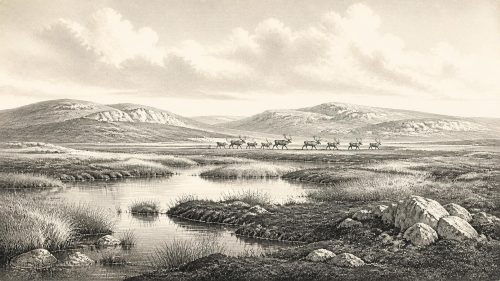
Around 30,154 BCE, Ireland was a climatically unstable Late Pleistocene landscape rather than a documented human society. Derryvree, County Fermanagh, preserves freshwater silts between glacial tills, demonstrating a locally ice-free, treeless periglacial wetland interval before renewed glaciation, though its radiocarbon date cannot identify a precise calendar year. Plants indicate open, cold, wet habitats. Castlepook Cave, County Cork, contains MIS 3 fauna including mammoth, reindeer and hyaena, but deposits are chronologically complex. A possibly cut-marked reindeer femur may indicate brief human activity, not settlement. Together, these records reveal shifting Irish habitats, animal movement and later ice-driven destruction or burial of evidence.
Read Article
Archived: 7 October 2026
Abstract
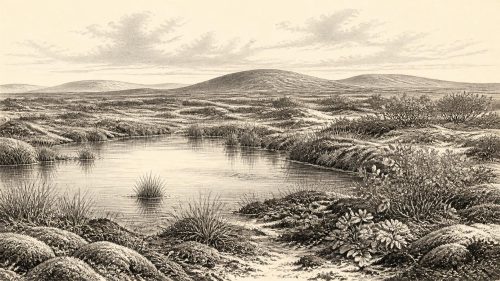
30,155 BCE cannot be identified as a specific Irish historical year; it falls within a broad Late Pleistocene radiocarbon range. Derryvree, near Maguiresbridge, preserves freshwater sediments between glacial tills, indicating treeless tundra-like wetlands with mosses, sedges, dwarf willow and aquatic plants. Insects and wider cave faunas suggest cold, open habitats supporting mammals including reindeer, deer and predators, although assemblages span long periods. Growing ice preceded the Last Glacial Maximum, altering routes and habitats. A marked Castlepook reindeer bone may indicate human butchery, but proves neither settlement nor continuity. Later glaciation destroyed evidence, leaving fragmentary record of ecological connections with Europe.
Read Article
Archived: 7 October 2026
Abstract
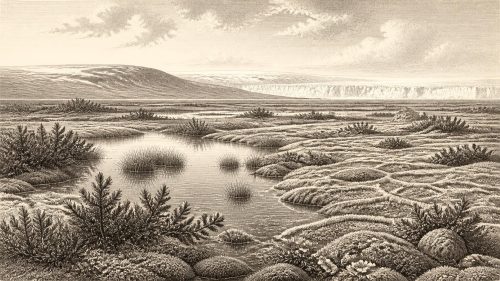
Thirty thousand years BCE is an imprecise modern label for a later Pleistocene interval. At Derryvree, County Fermanagh, freshwater silts between two glacial tills record a temporary ice-free basin, dated broadly to 34,950–29,750 BCE. Fossils indicate treeless, periglacial tundra with grasses, sedges, juniper, mosses, wetland plants and shallow water, before renewed ice advance. The site demonstrates local rather than island-wide conditions amid a dynamic British–Irish Ice Sheet. Castlepook Cave, County Cork, preserves diverse Ice Age animal remains, but not a single contemporary fauna. No secure human settlement is known; a possibly cut-marked reindeer bone may indicate brief human presence there.
Read Article

Archived: 7 October 2026
Abstract
Although 30,157 BCE is not a precise Irish historical date, evidence from Derryvree, County Fermanagh, illuminates a broad Late Pleistocene interval. Beneath a drumlin, an earlier till, freshwater sediments and later till record ice retreat, a cold treeless wetland, and renewed glaciation. Radiocarbon dating places the organic deposits within a wide calibrated range encompassing the nominal year. As the British–Irish Ice Sheet expanded unevenly, Ireland contained varied habitats rather than uniform ice. Castlepook Cave’s fauna confirms cold-adapted mammals; a possibly cut-marked reindeer bone suggests, but does not directly prove, human presence. No evidence establishes permanent settlement, society or year-specific events.
Read Article

Archived: 7 October 2026
Abstract
30,158 BCE is a modern label rather than a recoverable Irish year. Ireland lay within the volatile Late Pleistocene, before the greatest British–Irish Ice Sheet advance, with ice-free areas appearing between glaciations. Derryvree’s sediments record a cold, treeless freshwater wetland, later sealed by renewed ice. Castlepook Cave preserves bones from animal communities arriving at different times, including reindeer, mammoth and predators, but not a single contemporaneous fauna. A marked reindeer femur may show stone-tool butchery about 33,000 years ago, yet remains contested and proves neither settlement nor occupation. Evidence depicts changing landscapes, mobile fauna and uncertain human access, not history.
Read Article

Archived: 7 October 2026
Abstract
Thirty thousand years ago, Ireland lay within the climatically unstable later Marine Isotope Stage 3, not a precisely datable calendar year. Derryvree sediments in County Fermanagh indicate locally ice-free, periglacial wetlands supporting tundra vegetation between glacial advances. Castlepook Cave, County Cork, yielded a complex fauna including reindeer, mammoth, giant deer, predators and small cold-adapted mammals, accumulated over different times and processes. A cut-marked reindeer femur may record human carcass processing, but its old excavation context prevents firm conclusions about occupation. No evidence establishes settlements, politics, religion or culture. Dating, palaeoecology and zooarchaeology instead reveal environments, animal movements and human presence.
Read Article

Archived: 7 October 2026
Abstract
Around 30,160 BCE, Ireland experienced unstable Late Pleistocene conditions during Marine Isotope Stage 3, rather than a datable historical year. Derryvree, County Fermanagh, records a cold freshwater interval between glacial advances, with tundra vegetation, wetlands and sparse treeless terrain. Crag Cave speleothems indicate intermittent milder phases. Castlepook Cave, County Cork, preserves fauna including mammoth, reindeer, giant deer and carnivores, though its disturbed deposits limit precision. A cut-marked reindeer femur may suggest an early human visit, but cannot prove permanent settlement. Changing ice, sea levels and landscapes allowed occasional animal movement, while evidence remains fragmentary and regionally specific in character overall.
Read Article
Archived: 7 October 2026
Abstract
Around 30,161 BCE, Ireland cannot be assigned a recoverable event, but evidence indicates a climatically unstable, intermittently habitable Pleistocene landscape. At Derryvree, County Fermanagh, organic sediments beneath later glacial deposits reveal a cold freshwater basin supporting open-ground plants between ice advances. Castlepook Cave, County Cork, preserves pre-Last Glacial Maximum fauna, including reindeer, mammoth, deer, predators and mammals, though deposits are mixed and span millennia. A reindeer femur bearing a possible fresh-bone stone-tool cut may indicate fleeting Upper Palaeolithic human activity. It does not demonstrate settlement, culture or continuous occupation. Changing ice, coasts and routes governed movement across this ecological region.
Read Article

Archived: 7 October 2026
Abstract
At approximately 30,162 BCE, Ireland lay within the cold conditions of Marine Isotope Stage 3, although no precise calendar dating is possible. Roadworks at Derryvree, County Fermanagh, exposed a freshwater organic layer between glacial tills, showing a tundra wetland persisted between ice advances. Its flora indicates treeless, waterlogged, periglacial terrain. Castlepook Cave, County Cork, preserves a mixed, poorly dated assemblage including mammoth, reindeer and carnivores, demonstrating intermittent cold-stage animal habitats. A possibly cut-marked reindeer bone suggests, but cannot confirm, early human visitation. Evidence reveals dynamic regional environments, changed coastlines and uncertain ice extent, rather than settlement, society or continuous glaciation.
Read Article


