Lóegaire mac
Lóegaire mac Néill appears in early Irish king lists and in later Patrick tradition as a king associated with the first generation of Christianity in Ireland. The surviving material does not give a contemporary life narrative. What can be said securely is drawn from medieval genealogical and chronological texts that place him among the kings of Ireland and link him to the larger dynastic framework of the Uí Néill. In the king lists preserved in the Book of Leinster tradition, Lóegaire mac Néill is named among the kings of Ireland in sequence after the Christian era begins in the lists’ own chronological scheme.
Dateline
Lóegaire mac Néill appears in early Irish king lists and in later Patrick tradition as a king associated with the first generation of Christianity in Ireland. The surviving material does not give a contemporary life narrative. What can be said securely is drawn from medieval genealogical and chronological texts that place him among the kings of Ireland and link him to the larger dynastic framework of the Uí Néill.
Royal Setting
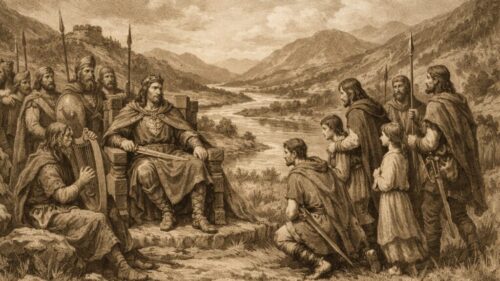
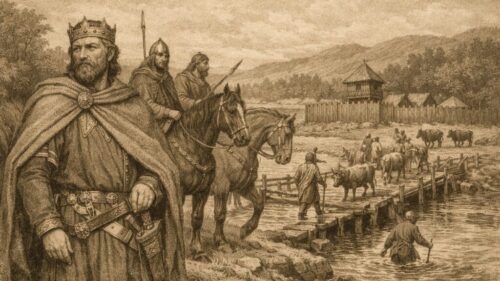
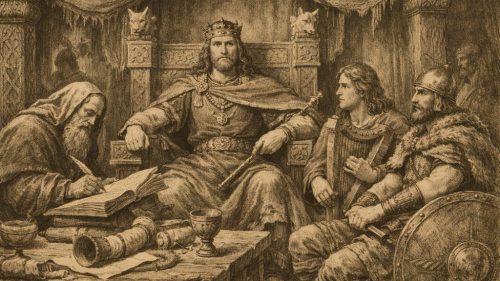
In the king lists preserved in the Book of Leinster tradition, Lóegaire mac Néill is named among the kings of Ireland in sequence after the Christian era begins in the lists’ own chronological scheme. The same tradition assigns him a reign of thirty years. These lists are later medieval constructions, so they should be read as historical memory rather than as modern annalistic record. They do, however, show that medieval Irish writers regarded Lóegaire as a recognised king of Ireland within their inherited chronology.
The genealogical texts in the Rawlinson B 502 tradition situate Lóegaire within the descendants of Niall, with Lóegaire named as one of Niall’s sons. The same material associates him with the wider Uí Néill lineage by deriving a branch from him known as Cenél Lóegaire. This matters because the genealogies are not merely family lists; they map political identity and kinship claims. In that framework, Lóegaire is both an individual king and an ancestral figure for a later kindred.
Patrick Tradition
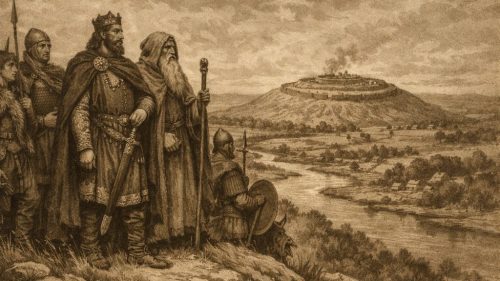
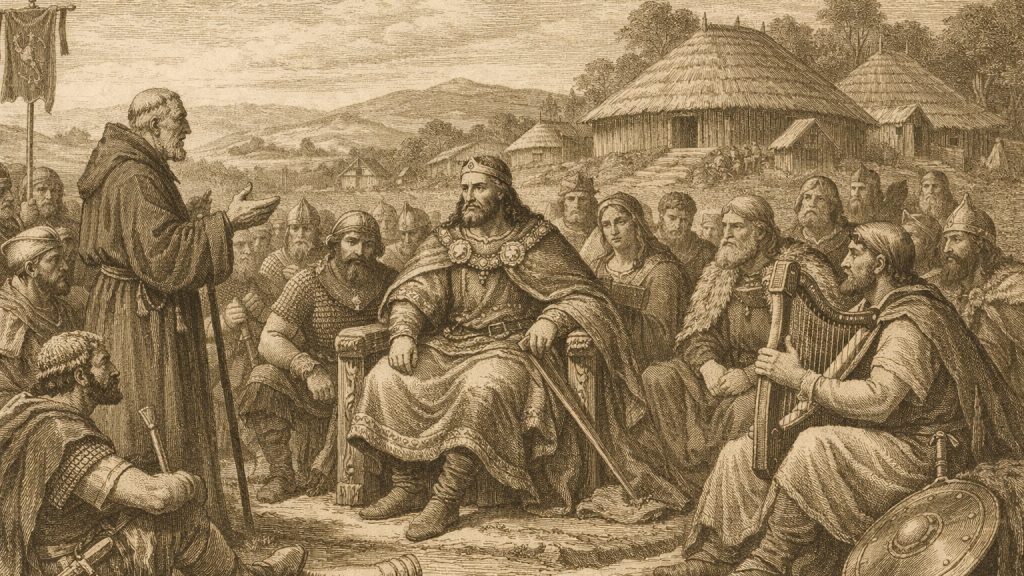
Lóegaire is also central to the Patrick narratives preserved in later Irish prose tradition. In one such account, Patrick confronts Lóegaire’s pagan court at Tara, and the king is presented as a major royal figure at the moment of conversion. The narrative also includes Lóegaire’s response to Patrick’s preaching and the traditional account of conflict between the old order and the new faith. These episodes belong to hagiography, not to contemporary biography, and their value lies chiefly in showing how later Irish writers imagined the conversion of kingship in Ireland.
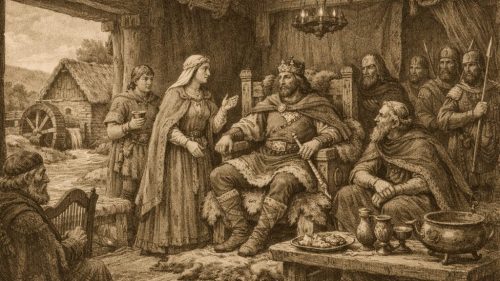
The same Patrick narrative also names Lóegaire’s family circle in its story of conversion. It identifies a daughter of Lóegaire and refers to his son Lugaid in a prophetic exchange. In that account, Lugaid is described as being warned by Patrick and then dying at Achad Forcha after challenging the saint’s words. These details are part of the traditional Patrick cycle, and they should be treated as literary and devotional material rather than independently verified history.
Chronological Memory
The chronological texts do more than preserve a name. In synchronistic material that aligns Irish kings with Roman emperors and church figures, Lóegaire is placed within a system of numbered reigns. That system gives him a specific duration of rule and sets him in relation to the coming of Patrick. Such synchronisms reflect an effort by medieval scholars to organise the past into an intelligible sequence, combining royal history, ecclesiastical memory, and biblical-style chronology.
Because these texts were compiled long after the fifth century, they cannot by themselves establish the details of Lóegaire’s life. They do show, however, that his name remained important enough to be incorporated into multiple genres: king lists, genealogies, and saint’s lives. The repetition across those genres suggests that later scribes treated him as a key figure in the early historical imagination of Ireland.
Historical Image
For readers today, Lóegaire stands at the meeting point of two kinds of evidence. On one side are the regnal and genealogical lists that place him in the early kingship of Ireland and connect him to the Uí Néill. On the other are the Patrick narratives that cast him as the ruler whose court marked a crucial stage in the Christian story of the island. Neither body of evidence offers a modern biography in the strict sense, but together they show how medieval Irish tradition remembered a king whose name remained embedded in the political and religious history of early Ireland.
Source References
Hover over a number to see the source. Select it to open the source.

- [1] Book of Leinster king list in the Corpus of Electronic Texts
- [2] Synchronisms and genealogical material in the Corpus of Electronic Texts
- [3] Rawlinson B 502 genealogical texts in the Corpus of Electronic Texts
- [4] Patrick narrative in the Corpus of Electronic Texts
- [5] Adam L. C. Roth? No—article on vernacular poets and Muirchu, Cambridge Core
Primary Sources
- Book of Leinster king list in the Corpus of Electronic Texts
- Synchronisms and genealogical material in the Corpus of Electronic Texts
- Rawlinson B 502 genealogical texts in the Corpus of Electronic Texts
- Patrick narrative in the Corpus of Electronic Texts
- Adam L. C. Roth? No—article on vernacular poets and Muirchu, Cambridge Core