Druim Dergaige514 CE
The surviving annalistic notices associated with 514 CE are sparse and uneven. One tradition records the birth of Ciarán and a notice about Pope Hormista, while another places the battle of Druim Dergaige in the same chronological neighbourhood; other annals shift these notices by a year or more, making the dating uncertain.
Dateline
Dated Notices
For 514 CE, the surviving annals do not preserve a dense narrative. In the Annals of Ulster, the entry with printed AD heading 514 records the ordination of Hormistas as the fortieth bishop of the Roman Church and says that he lived nine years. In the Annals of Tigernach, the internal label T514 preserves the birth of St Ciaran son of the artificis and the notice that Simacus the pope died and was succeeded by Hormista. Chronicon Scotorum places the birth of Saint Ciaran under A.D. 512, not 514. Tigernach’s T514 is an internal source label, not a converted CE date. [1] [2] [4]
Dating Drift
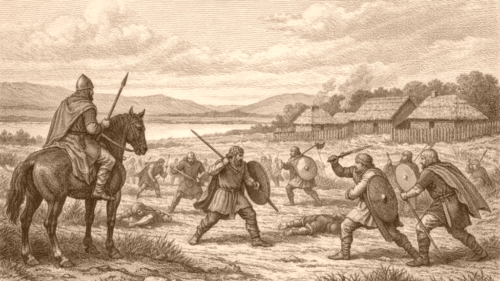
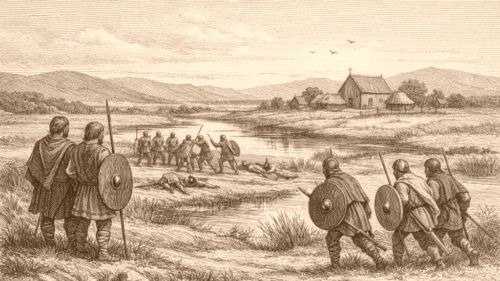
The battle material is less secure as a 514 notice. The Annals of Tigernach place the battle of Druim Deargaige under the same cluster of year-headings and associate it with Fiacha son of Niall, while the Four Masters and Chronicon Scotorum place the battle and its consequences under 512. In Inisfallen, the battle is also present, but the later cross-reference notes point it toward AU 516 and 517. Taken together, these passages show that the surviving annal tradition preserves the event but not a single stable date for it. [2] [3] [4] [5]
Source References
Hover over a number to see the source. Select it to open the source.