Seán Mac Diarmada
Seán MacDiarmada, also known as John Joseph MacDermott, was born in Corranmore near Kiltyclogher, County Leitrim. He was the son of Donald MacDermot, a carpenter, and Mary McMorrow. He was educated at Corradoona national school and at night school in Tullinamoyle, County Cavan, where he learned bookkeeping and Irish. After a spell in Scotland, MacDiarmada settled in Belfast in 1905 and worked first as a tram conductor and later as a barman. He joined the Gaelic League and the politically moderate Ancient Order of Hibernians. He was sworn into the Irish Republican Brotherhood by Denis McCullough, helped organise the republican Dungannon Clubs, and also acted as an organiser for Sinn Féin.
Dateline
Seán MacDiarmada, also known as John Joseph MacDermott, was born in Corranmore near Kiltyclogher, County Leitrim. He was the son of Donald MacDermot, a carpenter, and Mary McMorrow. He was educated at Corradoona national school and at night school in Tullinamoyle, County Cavan, where he learned bookkeeping and Irish.
Belfast Work
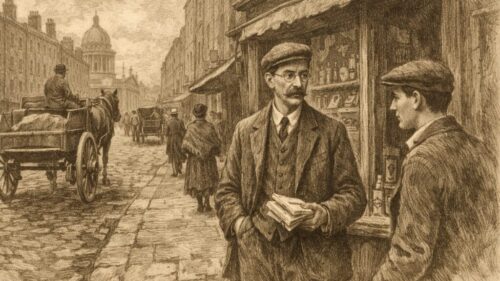
After a spell in Scotland, MacDiarmada settled in Belfast in 1905 and worked first as a tram conductor and later as a barman. He joined the Gaelic League and the politically moderate Ancient Order of Hibernians. He was sworn into the Irish Republican Brotherhood by Denis McCullough, helped organise the republican Dungannon Clubs, and also acted as an organiser for Sinn Féin.
Dublin Organising
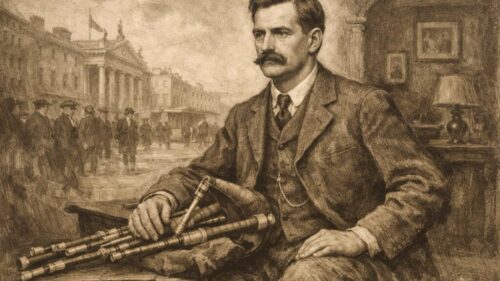
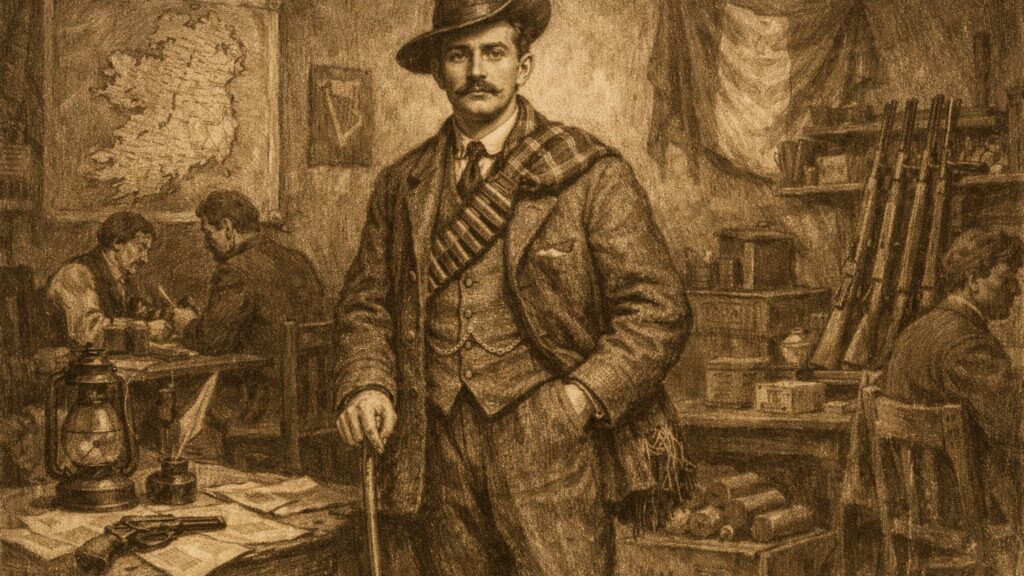
Moving to Dublin in 1907, he came under the influence of Tom Clarke. He became a full-time organiser for the IRB and managed its newspaper Irish Freedom. In 1911, he was stricken with polio, which left him lame and needing a walking stick. He was active in infiltrating cultural organisations such as the Gaelic Athletic Association and the Gaelic League, recruiting members and, where possible, getting them elected as officers.
Rising Role
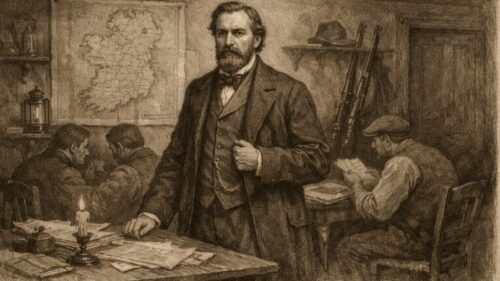
After the outbreak of the First World War in August 1914, MacDiarmada campaigned against Irishmen joining the British army and spent four months in Mountjoy Jail under the Defence of the Realm Act. After his release, he was co-opted with Clarke to the IRB Military Council. He had a leading role in planning the 1916 Rising and spent it in the General Post Office with most of the Provisional Government. He was tried by court-martial and executed by firing squad in Kilmainham Jail on 12 May. In his final letter, he wrote that he expected to join Tom and the others within a few hours and described his death as part of the day’s work.
Source References
Hover over a number to see the source. Select it to open the source.