Archived: 20 November 2026
Abstract
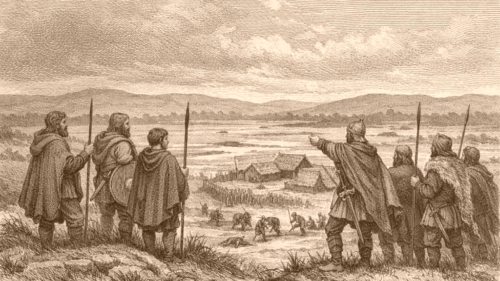
Ulster DatingIn the Annals of Ulster, the entry marked AD 509 records the battle of Fréamu, fought against Fiacha son of Niall, and says that Failge Berraide was victor. The immediately surrounding notices show the annal’s own dating frame, with the next year entry following after this notice.That same source also preserves an adjacent notice for AD 510 naming the second battle of Ard Corann, as some state. For the year under review, this means Ulster preserves one secure battle notice and also shows that related fighting was being arranged in a short sequence of nearby annal entries rather than
Read Article
Archived: 20 November 2026
Abstract
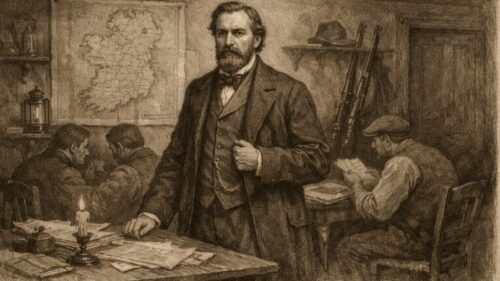
James Stephens was born in Kilkenny about 1828, according to one archival description. That same source says he was present at the Rising in Ballingarry, where he was slightly wounded, and that he escaped to France afterwards, meeting John O’Mahony there.Paris Years It also identifies Stephens as the founder of the Irish Republican Brotherhood, which was founded in Dublin on St Patrick’s Day 1858. The University of Galway archival description similarly says that Stephens returned to Ireland, secured employment as a teacher of French and Italian, and kept up correspondence with nationalists in the United States.Brotherhood WorkThe same Galway source
Read Article
Archived: 20 November 2026
Abstract
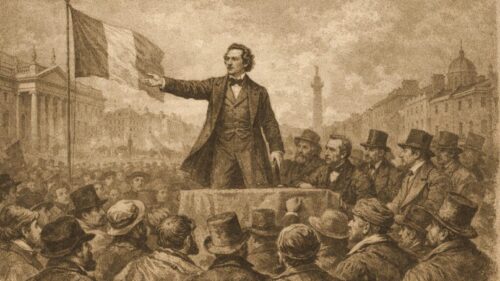
Thomas Francis Meagher was born in Waterford on 3 August 1823. He was educated by the Jesuit fathers at Clongowes and Stonyhurst, and by 1843 had entered public life with a reputation for strong oratorical power.Young IrelandHe became a zealous Repealer and joined the Young Ireland party. In the spring of 1848, Meagher and William Smith O’Brien were sent to France as a deputation to congratulate the French people on the establishment of the Republic. On their return, Meagher presented an Irish tricolour flag, green, white, and orange, to the citizens of Dublin. In May he was brought to trial
Read Article
Archived: 20 November 2026
Abstract
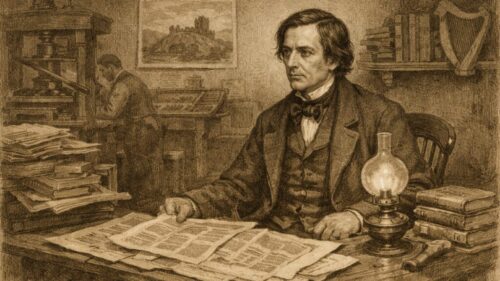
Early Years John Mitchel was born on 3 November 1815 at the manse, Camnish, near Dungiven, County Londonderry, son of the Presbyterian minister John Mitchel and Mary Haslett. In 1823, when his father became minister of Newry Presbyterian Church, the family settled in Dromalane House. At school in Newry, he met John Martin, who remained a lifelong friend. He graduated from Trinity College, Dublin in 1834. Law And Press In 1840, Mitchel became a lawyer and entered partnership with Samuel Livingstone Frazer in Banbridge, where he ran the branch office. In 1843, he and Martin joined Daniel O’Connell’s Repeal Association.
Read Article
Archived: 20 November 2026
Abstract
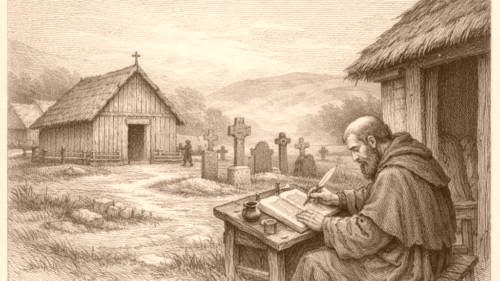
Ulster NoticesIn the Annals of Ulster, the entry under the heading for AD 511 records the repose of Bishop Bron, an eclipse of the sun, the birth of Ciarán son of the wright, and an alternative note that the death of Lugaid son of Laegaire may be placed there instead. The same source therefore combines several notices for the year with explicit uncertainty about one of them.Other AnnalsThe Annals of the Four Masters place the death of Saint Bron, Bishop of Cuil Irra, on 8 June 511. Chronicon Scotorum places the quies of Bron, Bishop of Caisel Irre, under the
Read Article
Archived: 20 November 2026
Abstract
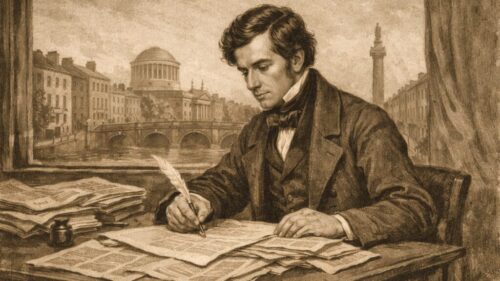
Thomas Davis was an Irish writer and a founding editor of The Nation with Charles Gavan Duffy and John Blake Dillon. He was born on 14 October 1814 in Mallow, County Cork, the fourth and last child of James Davis and an Irish mother. His father, a Welsh surgeon in the Royal Artillery, died in Exeter a month before his birth, en route to serve in the Peninsular War.Education CareerDavis attended school in Lower Mount Street and then Trinity College, Dublin. He became auditor of the College Historical Society and graduated in 1835 with a degree in Logic. From 1836
Read Article
Archived: 20 November 2026
Abstract
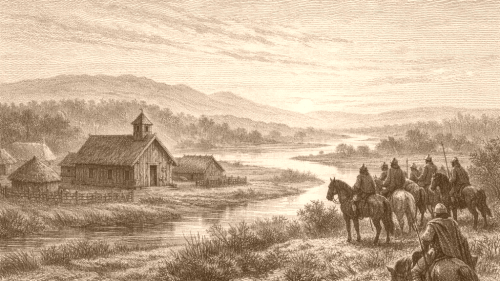
Year RecordThe year 512 is not empty in the surviving annals, but its notices are brief. The Annals of Ulster place the deaths of Erc of Slane and Dubthach of Ard Macha, and the beginning of Muirchertach Mac Erca’s rule, under their AD 512 heading. The Four Masters likewise place Erc and Dubthach in 512, while Chronicon Scotorum puts Erc’s death, the birth of Ciarán, and the battle of Druim Dergaighe under its 512 entry.Parallel NoticesThe same year is recorded unevenly across the sources. The Annals of Tigernach have a year label for T512 but no event in the excerpted
Read Article
Archived: 20 November 2026
Abstract
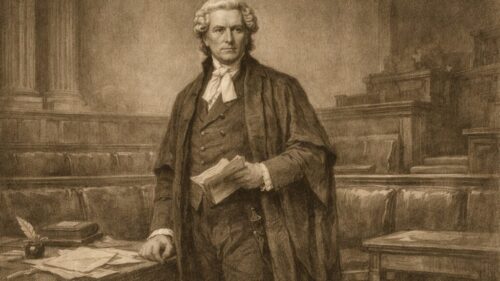
Maurice O'Connell was born on 27 June 1803 and died on 17 June 1853. The parliamentary record identifies him as a barrister or advocate by training and by occupation at the time of his election. He sat as a Liberal and was returned for Tralee in the general election of 10 December 1832.Clare ServiceHansard records his first contribution on 13 April 1831, during his earlier service for Clare. The same parliamentary record shows that he represented Clare from 23 March 1831 to 17 December 1832. His recorded contributions for that period run through 1831 and 1832.Tralee ReturnsAfter his election for
Read Article
Archived: 19 November 2026
Abstract
Annal EntriesAnnals of Ulster places the repose of Erc, bishop of Sláine, under U513.1, with the printed AD heading 512, and records Cairpre Daim Airgit and Mac Nise, bishop of Condaire, under U514.1 and U514.2, with the printed AD heading 513. Annals of Tigernach places the rest of Earc bishop of Slaine under T513.1 and the birth of St Ciaran, son of the artificer, under T514.1. The Four Masters records the death of Saint Macnisi, bishop of Coinnere Connor, under M513.2. Chronicon Scotorum records the quies of Erc, Bishop of Slane, under CS511 and the birth of Saint Ciaran under
Read Article
Archived: 19 November 2026
Abstract
Political CareerJohn O'Connell was called to the Bar and entered Parliament in 1832 for Youghal. Hansard lists him as Member of Parliament for Youghal until 1837, then for Athlone from 1837 to 1841, for Kilkenny from 1841 to 1847, and for Limerick from 1847 to 1851. It also records his later return to the Commons for Clonmel from 1853 to 1857. One account describes him as the third and favourite son of Daniel O'Connell; another says he was one of seven children and the third of four sons.Writing And OfficeHe was known in the literary world as editor of The
Read Article
