Archived: 19 November 2026
Abstract
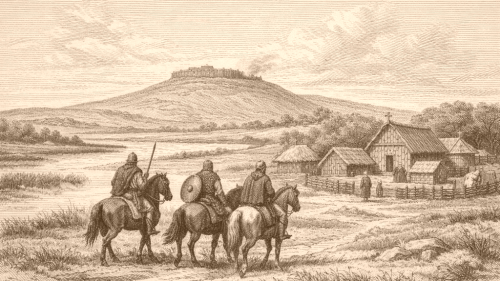
Dated NoticesFor 514 CE, the surviving annals do not preserve a dense narrative. In the Annals of Ulster, the entry with printed AD heading 514 records the ordination of Hormistas as the fortieth bishop of the Roman Church and says that he lived nine years. In the Annals of Tigernach, the internal label T514 preserves the birth of St Ciaran son of the artificis and the notice that Simacus the pope died and was succeeded by Hormista. Chronicon Scotorum places the birth of Saint Ciaran under A.D. 512, not 514. Tigernach’s T514 is an internal source label, not a converted
Read Article
Archived: 19 November 2026
Abstract
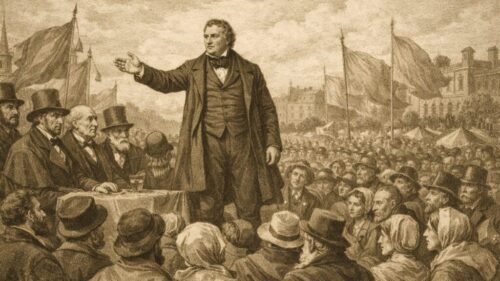
Daniel O'Connell (1775–1847) was a major Irish political figure known as “The Liberator”.Public LeadershipHe led the campaign for Catholic Emancipation and was the first Catholic to win a seat in the British Parliament in more than 100 years. He also founded the Repeal Association to challenge the Act of Union. The National Library of Ireland describes him as a brilliant orator, political organiser, and advocate for non-violent reform.Repeal AgitationLetters from his private correspondence show him directing the Repeal agitation in 1842 and 1843, urging detailed organisation and peaceful mobilisation. A Yale collection of selected letters preserves material from his campaign
Read Article
Archived: 19 November 2026
Abstract
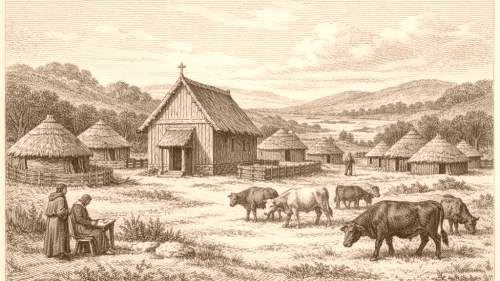
Irish NoticesFor 515 CE, the Annals of Tigernach record the death of Dubthach of Armagh, the Annals of Inisfallen note the birth of Comgall of Bennchor, and Chronicon Scotorum records Comgall’s birth under A.D. 515. In the Annals of Ulster, Hormistas was ordained under the printed AD heading 514, and under the printed AD heading 515 the record includes the battle of Druim Derg against Failge and the birth of Comgall of Bennchor.Dating FormsThe year is not handled identically in every annal tradition. In the Annals of Ulster, Hormista’s ordination appears under the heading with printed AD heading 514. Tigernach
Read Article
Archived: 19 November 2026
Abstract
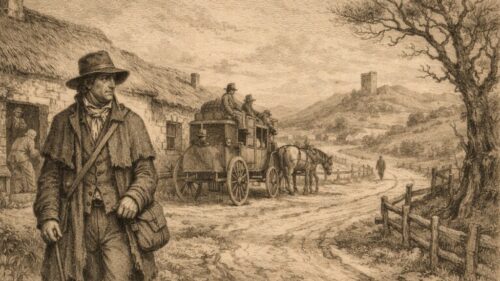
William Putnam McCabe was born near Belfast about 1775. He was a United Irishman, and his father, Thomas McCabe, was a watchmaker and part owner of a cotton-mill. Family associations placed him close to the reforming politics of Belfast, where his father had also been active against the proposed slave-trading venture of local merchants.United IrishmenMcCabe’s connection with the United Irishmen dated from Theobald Wolfe Tone’s visit to Belfast in 1791. He soon became one of the society’s most active organisers and propagators. He was noted for eluding the law by disguise and mimicry, and he used different assumed roles while
Read Article
Archived: 19 November 2026
Abstract
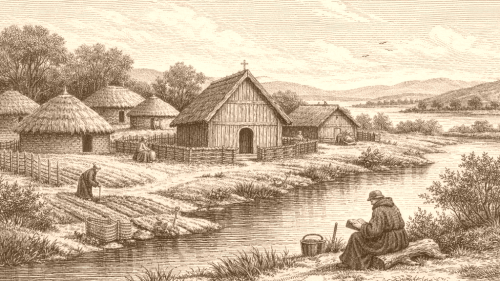
Annal EntriesThe Annals of Ulster place the birth of Comgall of Bennchor under the printed heading for AD 515. Chronicon Scotorum also records Comgall’s birth under AD 515. The Annals of Inisfallen preserve a brief notice for Comgall’s birth but give no explicit AD heading in the excerpt here.The same narrow cluster of notices includes the death of Darerca of Cill Sleibhe Cuilinn, identified in the Four Masters as Moninne, and in the Annals of Ulster as Dar Ercae of Cill Sléibe Cuilinn. The Annals of Inisfallen also record the repose of bishop Conlaed and the repose of Dar Erca
Read Article
Archived: 19 November 2026
Abstract
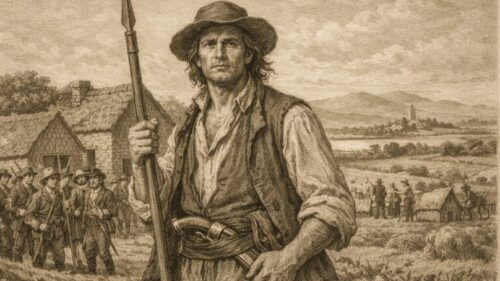
Thomas Cloney was from Moneyhore in County Wexford and was aged 24 when he joined the rebels in 1798. Before joining the rebellion, he helped to run the family farm and manage rented lands. In the fighting in Wexford, he played a leading role in the Battle of Three Rocks and the Battle of New Ross.Rebel CommandAfter the rebels’ defeat at Vinegar Hill, Cloney was chosen to negotiate surrender terms with General Lake, but Lake refused to discuss them with him. Cloney then went into hiding. He was sheltered by Protestant friends, later returned to his father’s house at Moneyhore
Read Article
Archived: 19 November 2026
Abstract
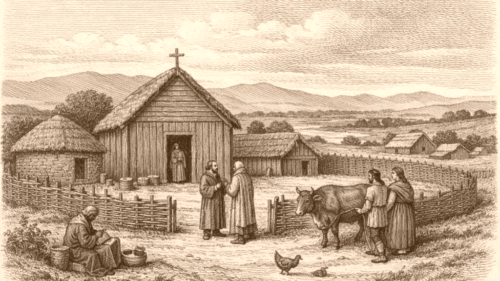
Annal RecordThe annals record the death of Conlaedh, bishop of Kildare, but they do not all give the same year-label. Chronicon Scotorum places it under A.D. 517, while the Four Masters place it in 519; the Annals of Inisfallen also preserve a notice for bishop Conlaedh, with a cross-reference in the form of the entry as transmitted.The year labels also vary for other notices: under U517, the Annals of Ulster record the repose of Dar Ercae and add that, according to another book, Ciarán's birth belongs to this year; the Four Masters' 517 entry gives Darerca's death; Chronicon Scotorum places
Read Article
Archived: 19 November 2026
Abstract
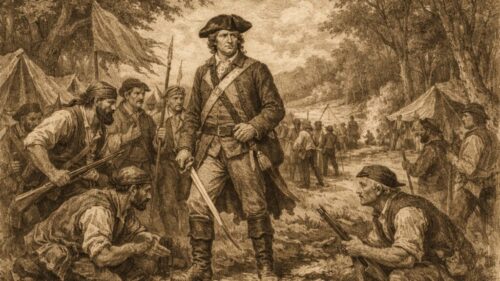
Anthony Perry was an Irish rebel leader associated with the Wexford rising of 1798. He came from County Down and was born to a Protestant family. He later lived at Inch, near the Wexford–Wicklow border, where he is described as a gentleman farmer. He enlisted in the local yeomanry corps as a second lieutenant, then took the United Irish oath in 1797 and was made a colonel.Arrest CoercionOn 23 May 1798 Perry was arrested and taken to Gorey for interrogation. He endured 48 hours of torture, including pitchcapping, and revealed some names of leaders. Those leaders were quickly arrested, and
Read Article
Archived: 19 November 2026
Abstract
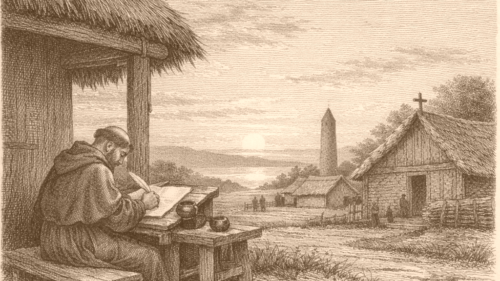
Irish RecordAnnals of Ulster places the birth of Colum Cille under its AD 518 heading. Chronicon Scotorum also places Colum Cille's birth under A.D. 518. Tigernach records "Columcill was born" under T520.3, without an explicit AD heading there.Ulster records the emperor Anastasius's sudden death under U518.1, whose printed AD heading is 517. Tigernach's T518.3 records Anastasius the Emperor in Latinised form, and Inisfallen's AI518.1 and AI518.2 note the death of Anastasius and the accession of Justin.Dating PatternUlster supplies explicit AD headings for this period, whereas Tigernach and Chronicon Scotorum preserve year labels without explicit AD headings in the excerpted material.
Read Article
Archived: 19 November 2026
Abstract
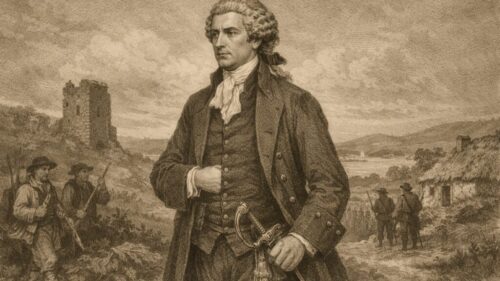
Early LifeBeauchamp Bagenal Harvey (1762–1798) was the son of Francis Harvey of Bargay Castle, Wexford. He was educated at Trinity College, Dublin, and was called to the bar in 1782. He acquired considerable reputation as a barrister, and promoted the public movements for catholic emancipation and parliamentary reform.Public RoleAfter his father’s death in 1792, Harvey inherited estates in Wexford and Waterford with an annual rental of 3,000l. In 1793 he presided as chairman at meetings of the Society of United Irishmen in Dublin. A public meeting in Wexford nominated him in March 1795 to present an address to Earl Fitzwilliam
Read Article
