

Island Woman
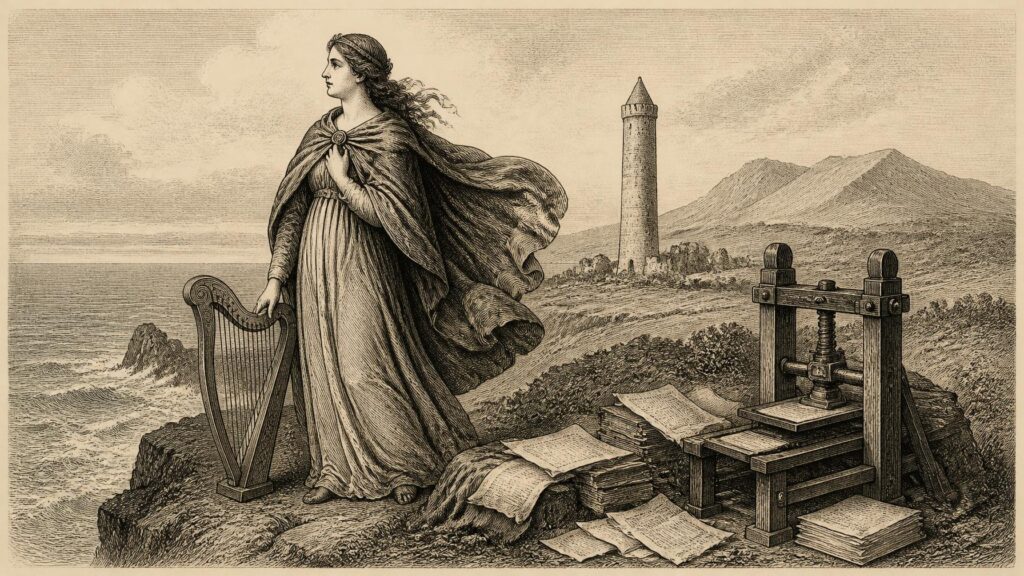
AI generated historical illustration, not a contemporary photograph.
At a Glance
Ireland has often been imagined as a woman, but never as one unchanging woman. Ériu, Erin, Hibernia, Cathleen Ní Houlihan and the Lady Lavery image on the Irish pound belong to different languages, genres and political moments. Their apparent continuity is real enough to be historically important, yet it can obscure crucial distinctions: between medieval literature and recoverable religion, learned Latin and popular English, allegory and living people, nationalist mobilisation and state authority. The female Ireland of story, verse, theatre and currency was not a timeless national essence. She was repeatedly made anew.
Names Endure
The Irish name Éire derives from Old Irish Ériu, a name familiar from medieval Irish literature and preserved in the constitutional name of the state. In ordinary English usage, however, Ireland has travelled through a different linguistic route. The English word incorporates a form related to Ériu with the Germanic word land. Classical writers recorded still earlier external forms, including Greek Iernē and Iouernia and Latin Hibernia. These names resemble one another, but they are not simply a row of translations. They are witnesses to long contact between languages, seafarers, scholars and political cultures.
It is tempting to make the sequence seem simple: a goddess named Ériu gave her name to Ireland; the Romans translated it as Hibernia; later poets called the island Erin; revolutionaries revived Cathleen Ní Houlihan; the Free State printed Lady Lavery upon its notes. That account contains useful connections, but it also compresses more than a millennium of changing meanings into a single national fable. Ériu belongs principally to learned medieval narrative. Hibernia is a Latin geographical designation, inherited and elaborated by writers whose knowledge of the island varied greatly. Erin is an Anglicised poetic form of Éirinn, the Irish dative case. Cathleen Ní Houlihan is a literary and political figure shaped in particular by the nineteenth-century and early twentieth-century national revival. Lady Lavery was a real woman, rendered emblematic by a modern painter and then reproduced by a state.
The words nevertheless matter because names provide a durable field upon which later generations can build. A name may be ancient without carrying a fixed ancient meaning. In the case of Ireland, antiquity gave authority to later uses. Classical Hibernia conferred the dignity of Rome and the international language of scholarship. Ériu and Éire connected modern speakers to Irish-language tradition. Erin allowed English-language poets, especially those writing for emigrant and nationalist audiences, to suggest Ireland without naming its constitutional or colonial status directly. Each form offered a different emotional and political register.
Modern readers should also resist a misleadingly literal idea that a country can have one “real” name and several corruptions. Ireland has long existed in multilingual worlds. Latin, Irish, English, Norse, French and Scots have all supplied names for places and peoples on the island. The coexistence of Éire and Ireland in the present is not a recent inconvenience but part of a much older history of naming. The movement from Ériu to Erin, Hibernia and Cathleen Ní Houlihan therefore tells a history not only of female personification, but of translation, selective inheritance and power.
Mythic Ground
The fullest well-known narrative concerning Ériu appears in Lebor Gabála Érenn, conventionally rendered as the Book of the Taking of Ireland or Book of Invasions. This is not a modern historical chronicle in disguise. It is a large medieval compilation which arranged Irish origin traditions within a Christian, biblical and universal history. Its surviving forms were written down and repeatedly reworked in the Middle Ages. They preserve older material in transformed literary settings, but they cannot straightforwardly report events or beliefs from a prehistoric past.
In the narrative, the incoming sons of Míl encounter three women associated with the Túatha Dé Danann: Banba, Fótla and Ériu. Each asks that her name be given to the island. Ériu’s request ultimately prevails, though Banba and Fótla remain traditional poetic names for Ireland. The episode makes territory personal and speech consequential. Possession of the island is not presented as merely a military acquisition. It involves meeting, naming, negotiating and overcoming its female representatives. In that sense, the story offers an influential literary model for later representations of Ireland as a woman whose recognition confers legitimacy.
To call Ériu a goddess is conventional and often useful, but it should be done with care. Medieval Irish texts were copied by Christian literati, and their narratives frequently present divine or otherworldly figures through euhemerising genealogies, learned explanation and biblical chronology. The texts show that medieval Irish writers knew Ériu as an eponymous female figure connected with the island. They do not provide a simple ethnographic record of a uniform pre-Christian cult dedicated to her. No surviving evidence allows historians to reconstruct, in detail, a prehistoric public worship of Ériu across Ireland.
This uncertainty does not make the material trivial. On the contrary, it directs attention to what can be documented: the extraordinary persistence of a literary association between woman, land and sovereignty. Medieval tales repeatedly imagine encounters between aspiring rulers and female figures who grant, test, foretell or symbolise kingship. Scholars differ over how far these figures preserve pre-Christian religious patterns and how far they are products of medieval literary art. The safest conclusion is that sovereignty imagery was a powerful and adaptable convention in early Irish writing, rather than a transparent window onto an otherwise lost religious system.
Ériu’s later importance rests less upon an unbroken popular cult than upon the authority of these texts and the prestige of the language that carried them. Antiquarians, poets, language revivalists and politicians could return to her name because it joined landscape, ancestry and speech. A medieval narrative figure thereby acquired a modern public career. The process is a reminder that folklore and myth do not stand outside history. They are continually selected, translated and given new work to do.
Sovereign Figures
The figure sometimes called the sovereignty woman occupies a central place in discussions of early Irish literature. In a common narrative pattern, a king or potential king meets a woman whose appearance may be alarming, aged, beautiful or ambiguous. Her transformation or consent is connected with the man’s right to rule. Such stories have often been interpreted as survivals of a sacred marriage between king and land. That interpretation can illuminate recurring motifs, yet it should not be treated as a demonstrated description of an ancient inauguration rite. Medieval tales are literary compositions with many purposes, not field notes from pagan ceremony.
What is beyond doubt is that Irish writers repeatedly gendered the land and made female figures vehicles for political thought. In poems and prose, a woman can represent a province, Ireland as a whole, abundance, loss, rightful order or dispossession. This is an imaginative language of sovereignty. It is not evidence that women held sovereignty in ordinary political life. Indeed, one of the enduring tensions in the tradition is that a female image can dignify the country while practical power remains overwhelmingly male.
The image also contains a built-in inequality. The land-woman often exists to validate a male claimant. Her speech may be prophetic, but her role can be reduced to choosing, rewarding or reproaching a ruler. Later nationalist versions inherit this structure. Ireland appears as mother, beloved, maiden or widow; men are asked to rescue, avenge, marry, defend or die for her. The nation gains emotional force from feminisation, while political action is frequently coded as masculine. Real women who took part in cultural and revolutionary life had to negotiate this symbolic order as well as the restrictions of law, custom and organisation.
Yet the image has never been wholly passive. A woman representing Ireland may accuse, demand and command. Ériu asks for her name to endure. The poor old woman of Cathleen Ní Houlihan arrives uninvited and redirects a family’s future. In political ballads, the female country mourns but also summons. Such figures have agency as symbols, although symbolic agency must not be confused with social emancipation. The difference is important when assessing claims that nationalist imagery somehow placed women at the centre of political power.
The long history of female Ireland is therefore best understood as a repertoire, not a doctrine. It offered poets and political writers a compact means of talking about belonging, legitimacy and injury. Its flexibility explains its survival. It could be archaic or modern, Irish-speaking or English-speaking, Catholic or secular, mournful or triumphant, radical or official. It could also be challenged, parodied and refused.
Classical Mirrors
Hibernia belongs to another layer of the story. Greek and Roman writers knew of the island beyond Britain, although their accounts were often dependent on hearsay, coastal knowledge or inherited geographical speculation. The Oxford Classical Dictionary notes Greek forms such as Iernē and the Latin Hibernia, while later Roman writers offered descriptions ranging from useful geographical observation to sensational claims about inhabitants. These texts are historical evidence for how Mediterranean authors imagined Ireland; they are not dependable portraits of Irish society.
The Latin form acquired extraordinary longevity because Latin remained the learned language of western Europe for centuries after imperial Rome. Medieval Irish clerics and scholars used Latin themselves, while continental writers could identify Ireland as Hibernia and Irish people as Hiberni. The name therefore never belonged exclusively to an outside gaze. It became part of Ireland’s own learned vocabulary. In charters, histories, ecclesiastical writing and later institutions, Hibernia could be a formal, antiquarian or dignified alternative to Ireland.
A persistent popular explanation treats Hibernia as meaning “winter land”, connecting it with Latin hibernus. The resemblance is obvious, and Roman writers may have found the association attractive. Etymology is less simple. The classical forms are generally understood to preserve a Celtic name related to the linguistic ancestry of Ériu rather than to originate as a Roman meteorological joke. The association with winter is therefore better regarded as a learned pun or later rationalisation than as a secure derivation. Such mistakes are instructive: they show how readily names attract stories which seem plausible because they fit expectations about weather, remoteness and empire.
Hibernia was especially useful in the early modern and modern periods because it made Ireland legible in the visual language of European allegory. Nations, continents and cities were commonly personified as women. Britannia, for example, supplied a familiar imperial model. Hibernia could be shown with a harp, shamrocks, a wolfhound, a round tower, a cloak or other selected emblems. Depending on the artist and moment, she might appear dignified, distressed, rebellious, helpless, comic or domesticated.
That visual Hibernia should not be mistaken for Ériu simply dressed in Roman clothes. She was a product of print culture, political cartooning and colonial argument. The relationship between the two lies in later association rather than in direct continuity of worship or iconography. Both made Ireland feminine; their historical settings and ideological functions were profoundly different.
Colonial Allegory
From the eighteenth century, and with particular intensity in the nineteenth, Hibernia became a contested emblem in British and Irish visual culture. Political illustrators personified states because bodies could dramatise relations more swiftly than constitutional prose. A woman labelled or recognisable as Hibernia could be bullied by John Bull, courted by politicians, threatened by disorder, protected by imperial authority or called towards self-government. Such images did not neutrally describe Ireland. They arranged sympathy and blame through costume, posture and proximity.
British cartoons often presented Ireland as immature, unruly or dependent. In that visual grammar, feminisation could work with racial stereotyping and paternalism. A distressed Hibernia invited rescue by a British statesman; a reckless or endangered Hibernia made coercion appear necessary. Irish nationalist artists and writers could reverse the emotional charge, presenting the same figure as violated, bereaved or unjustly restrained. The female personification thus became a battlefield over who had the right to speak for Ireland.
The harp was especially important. It had long associations with Ireland and was easily combined with a female figure. The harp could signify an ancient culture, a silenced voice, an inherited nation or a polity awaiting restoration. But symbols do not carry only one politics. Harps appeared within state, commercial, cultural and nationalist settings. The point is not that every harp concealed a revolutionary programme, but that its repeated use gave it a density of association which artists could activate in different ways.
English-language nationalist verse increasingly preferred “Erin”. The name could sound intimate and lyrical, carrying Irish resonance without requiring readers to know the language. “Erin” was common in popular songs, ballads and emigrant culture, where it could evoke home, separation and political grievance. Its very flexibility helped it travel. The result was sometimes sentimental, but sentiment should not be dismissed as historically insignificant. Emotional forms allowed dispersed communities to imagine a shared homeland and gave political messages a household vocabulary.
There were costs. Woman-as-country imagery encouraged readers to regard national loss through the idioms of female suffering and male obligation. It could turn complex questions of tenancy, class, religion, language and regional identity into a melodrama of violated innocence. It also permitted male political actors to claim the authority of protectors. The image was potent precisely because it simplified. Historians must recover that potency without accepting its simplifications as fact.
Revolutionary Theatre
Cathleen Ní Houlihan, written by W. B. Yeats and Lady Gregory, brought this tradition into a small domestic room and gave it one of its most lasting modern forms. The one-act play premiered in Dublin on 2 April 1902, with Maud Gonne in the title role. The Abbey Theatre archive records its early performance history, while the wider history of the Irish Literary Theatre shows the play emerging from a revival movement that treated drama as a means of cultural formation as well as entertainment.
The action is set on the eve of the French landing at Killala in 1798. A family is preparing for the marriage of its son, Michael Gillane, when an old poor woman arrives. She speaks of a country whose “four green fields” have been taken from her and of young men who have died for her. As reports of cheering and martial movement come from outside, Michael abandons his wedding prospects and leaves to join the rising. At the end, the old woman is said to have become a young girl with the walk of a queen.
The play’s economy is part of its power. The Gillanes’ practical concerns—dowry, land, marriage, household security—meet a demand that cannot be met by ordinary calculation. Cathleen offers Michael not payment but remembrance. The promise that those who die for her will be remembered turns sacrifice into a kind of immortality. This is theatrical speech, not a programme for government. Nevertheless, it operated in a public culture already full of arguments about national destiny, historical memory and political action.
It is essential to recognise Lady Gregory’s role. The play has often been absorbed into a simplified story of Yeatsian nationalism, but it was a collaboration. Later scholarship has examined Gregory’s substantial contribution to its composition, language and dramatic shape. Treating her merely as an assistant both distorts the record and repeats the gendered patterns that the play itself raises. Her work drew on vernacular speech, folklore collecting and theatrical practice, all of which helped make the allegory credible within the domestic realism of its opening scenes.
Maud Gonne’s performance added another layer. She was already a prominent nationalist activist and public figure, and her presence enabled audiences to see the symbolic woman as a recognisable political woman. That overlap was electrifying but unstable. Gonne was not Cathleen, and Cathleen was not Ireland in any literal sense. Theatre creates charged identifications that historical analysis must subsequently separate.
Sacrifice Debated
Few Irish plays have generated as much later argument about political responsibility. Because Cathleen Ní Houlihan presents a young man leaving ordinary happiness for a doomed rebellion, commentators have asked whether it sanctified blood sacrifice. Yeats himself later worried publicly about the question. In his poem “The Man and the Echo”, he asked whether his play had sent out certain men whom the English shot. The question is memorable precisely because it refuses an easy absolution.
It would be rash, however, to claim a simple line of causation from a performance in 1902 to later revolutionary action. Political violence in Ireland arose from specific institutions, organisations, international events, police and military responses, electoral conflicts, land questions and personal choices. A play did not create those circumstances. Nor did every spectator receive it in the same way. Some may have admired its language, others its historical setting, others Gonne’s acting, while many never saw it at all.
Yet art can help make political possibilities imaginable. The play dramatised a morally elevated departure from private life into national service. It made the country’s need speak in the voice of an elderly, dispossessed woman, a figure difficult for an audience to dismiss as abstract ideology. Its final transformation rewards the listener’s sacrifice with beauty and sovereignty. The emotional structure is clear even where its effects cannot be measured.
The play also illustrates a feature of nationalist personification that is sometimes overlooked: the woman’s appeal depends on the response of men. Cathleen calls; Michael acts. Her power is rhetorical and symbolic, his is physical and social. The drama’s sympathy is concentrated on the moment when the family’s economy is interrupted by national obligation, but it does not ask what political agency is available to the women in the household. Their losses are real—dowry, marriage, labour, kinship—but their choices are constrained by the plot.
That tension has made the work enduringly fertile for reinterpretation. It can be read as stirring nationalist theatre, as an unsettling meditation on seduction and sacrifice, as a critique of domestic property, or as evidence of the literary revival’s complicated gender politics. None of these readings cancels the others. The historical point is that Cathleen Ní Houlihan became important not because she expressed a single settled meaning, but because successive audiences found in her a language for difficult claims about Ireland and obligation.
Painted Currency
The transformation of Lady Hazel Lavery into a national emblem brought female Ireland from theatre and print into daily monetary life. Hazel Martyn, later Lady Lavery, was an American-born painter and society figure who married the Belfast-born artist Sir John Lavery in 1909. She was deeply involved in the political and social networks surrounding the Anglo-Irish Treaty negotiations in London. Her importance in those circles should not be exaggerated into formal political office, but neither should it be erased. She was a conspicuous and well-connected participant in a world where hospitality, access and personal relationships mattered.
When the Currency Commission sought designs for the Irish Free State’s new notes, Joseph Brennan wrote to John Lavery in December 1927. The National Library of Ireland catalogue preserves the commission’s striking request: a beautiful female head, treated emblemically and perhaps possessing an Irish association. The wording makes the purpose plain. The new state wanted a figure who would give its currency a distinctive identity without relying upon a party leader, soldier or divisive political event.
Lavery responded by adapting his image of Hazel. The resulting figure is often described as Cathleen Ní Houlihan, and the association is justified by pose, costume, harp and nationalist context. Yet the relationship needs precision. The model was Hazel Lavery; the artist was John Lavery; the emblem drew upon the established visual vocabulary of Ireland personified as a woman; and the Currency Commission reproduced the result as an official design. The picture did not reveal a pre-existing national woman. It constructed a modern one by combining a recognisable sitter, an artist’s style and inherited allegory.
In the larger composition commonly associated with Killarney, Hazel appears in dark dress, beside or leaning upon a harp, against a landscape. On the notes, the head or the wider image was adapted across denominations. The face thereby circulated in shops, public houses, farms, offices and homes. Where a theatrical allegory depended on a performance and an audience, this one became mundane through repetition. A personification of the nation appeared every time a note changed hands.
The design was not free from controversy. The National Library’s Brennan papers contain correspondence involving the Laverys and the Currency Commission, including discussion of the portrait, watermark and unwanted press attention. Such material is valuable because it shows a process rather than a legend. Banknotes were practical instruments requiring security, printing decisions and official approval; they were also miniature declarations of cultural authority. The arguments around them reveal the sensitivity of choosing an image for a state that was new, divided by civil war and still defining its public symbols.
State Portraits
The Lady Lavery image succeeded because it could appear both specific and impersonal. It had a face, but not the face of a president, minister or military commander. It invoked Irish culture through the harp and the Cathleen association, but it did not force every user to assent to a detailed political doctrine. In this respect, it was an astute state symbol. It converted the emotional resources of nationalist iconography into a form acceptable for everyday administration.
The decision also reveals a characteristic problem of the Irish Free State. Its leaders required symbols that could establish distinctiveness from Britain while avoiding renewed factional conflict. Language, flags, memorials and currency all presented difficulties. A female allegory had advantages: it seemed to reach behind recent divisions towards culture, landscape and tradition. At the same time, it could appear more inclusive or less threatening than a direct celebration of armed struggle. The image’s apparent timelessness was politically useful.
But timelessness was an effect, not a fact. Hazel Lavery’s face was shaped by modern portraiture, cosmopolitan society and the visual conventions of the 1920s. She was neither a peasant woman from the remote past nor an anonymous embodiment of Gaelic antiquity. Her identity as a wealthy, internationally connected woman made the image’s career all the more revealing. The state presented a polished artistic rendering of a particular person as an emblem of a people whose social circumstances were enormously varied.
The survival of the motif for decades reinforced its authority. According to the Dictionary of Irish Biography, the Lavery image appeared on Free State and Irish banknotes from 1928, remained associated with the currency after high-denomination notes were withdrawn, and continued as a watermark until the replacement of the Irish pound by euro notes and coins in 2002. Crawford Art Gallery likewise identifies the portrait as a national emblem whose currency afterlife extended into the euro changeover. The exact form changed; the public familiarity endured.
Currency gives an unusually literal meaning to the phrase national image. A banknote bears a state guarantee, yet its authority depends upon countless acts of trust. The Lady Lavery figure helped give the Irish pound a face at a time when the state’s institutions were still young. Her image did not create monetary value, but it helped make value look Irish. It joined mythic inheritance to the most practical of objects.
Gendered Nation
The history of Ériu, Hibernia, Cathleen and Lady Lavery makes clear why feminist historians and critics have been wary of national personification. A nation represented as a woman can inspire affection, grief and duty, but it can also turn women into scenery for male heroism. The image says that the country is worthy of love; it does not necessarily say that women are entitled to equal power, property, bodily autonomy or authorship. In Ireland, as elsewhere, symbolic reverence often coexisted with legal and social inequality.
This does not mean that female personification was simply oppressive or that women who engaged with it were dupes. Maud Gonne used public femininity, beauty and political celebrity in ways that unsettled conventional expectations. Lady Gregory exercised formidable cultural authority as writer, folklorist, theatre organiser and collaborator. Hazel Lavery navigated elite social and political worlds with conspicuous skill. Their lives show women acting within and against the imagery available to them. But their achievements should be studied as achievements, rather than treated as proof that “Ireland as woman” automatically empowered Irish women.
There is also an ethnic and religious question. The female Ireland of revival iconography was frequently coded as Gaelic and Catholic, even when presented as an image for the entire island or state. Such coding could exclude Protestant, unionist, urban, Jewish, immigrant and other experiences from the national picture. Hibernia, Erin and Cathleen were flexible enough to be recast, but none was naturally comprehensive. Every personification chooses features and leaves others outside the frame.
The 1937 Constitution’s use of the name Éire gave the medieval name a new legal and international prominence, while English-language Ireland remained equally official within the state’s constitutional text. This was another act of selection rather than a restoration of an untouched past. The name Éire carried linguistic and cultural claims; it also entered diplomatic disputes, especially where constitutional language seemed to imply an all-island claim. A name can be ancient and still be politically new in its application.
For that reason, it is better to speak of personifications in the plural. There has never been a single female Ireland. There have been many figures, made for different publics: the eponymous woman of medieval pseudo-history, the Latin allegory of maps and cartoons, the sentimental Erin of song, the demanding Cathleen of revival drama, the refined banknote portrait of the Free State. Their family resemblance is real. Their differences tell the larger story.
Living Symbols
These figures remain present in cultural memory because they answer a recurrent need: to make a territory speak. The device is powerful. An island cannot mourn, accuse or welcome; a woman in a story can. The gain is emotional immediacy. The danger is that political complexity becomes a personal drama in which history appears to demand devotion and dissent appears as betrayal. Modern readers can appreciate the imaginative force without surrendering critical judgement.
Ériu’s endurance is especially notable. Her name survives in Éire, in literary scholarship and in institutions, while Banba and Fótla still appear in poetry and ceremonial language. This survival does not prove that modern Ireland has retained an unchanged pagan consciousness. It proves something more historically demonstrable: medieval Irish literature has remained available as a reservoir from which later writers and institutions draw names, scenes and authority.
Hibernia has a different afterlife. It now often sounds antiquarian, commercial or formal, yet it remains visible in institutional names, architecture, medals and historical writing. It carries the echo of classical geography and early modern learned culture. Erin continues in song, diaspora memory and personal names. Cathleen Ní Houlihan remains a theatrical and critical reference point. Lady Lavery’s image is remembered by generations for whom the old notes were part of ordinary life. No one of these can replace the others.
The most responsible way to tell their shared history is to preserve distinctions. Folklore and medieval narrative reveal how Irish writers imagined origins and sovereignty, not a securely recoverable prehistoric religion. Classical names show external and learned knowledge of the island, not necessarily Roman mastery of it. Nationalist drama demonstrates the political possibilities of art, not a mechanical cause of rebellion. A banknote portrait displays the state’s choice of a symbol, not the discovery of an authentic national face.
Once those distinctions are made, the connections become more interesting rather than less. Across many centuries, Ireland’s names and images have made womanhood a language for land, culture, loss and authority. That language has been beautiful, moving and politically consequential. It has also been selective, gendered and open to misuse. Ériu, Erin, Hibernia, Cathleen Ní Houlihan and Lady Lavery are not one woman travelling unchanged through time. They are successive acts of Irish historical imagination.
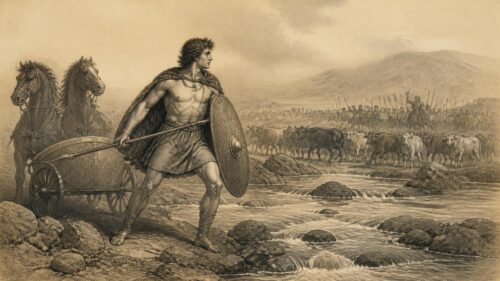
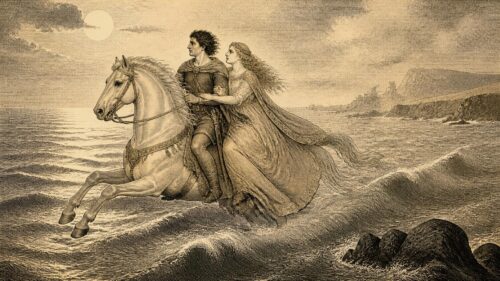
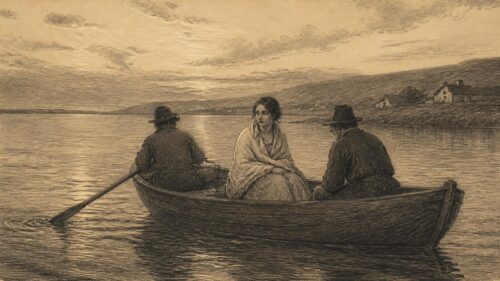
The article’s account of Cathleen Ní Houlihan highlights a persistent tension: female personifications could make Ireland’s political claims emotionally compelling, yet they often cast real women as symbols rather than participants in power. Lady Gregory and Maud Gonne complicate this pattern, since their creative and political work shaped how audiences encountered the allegory, even while the play directs Michael towards sacrificial action. Comparing this theatrical nationalism with Hibernia in colonial cartoons or Lady Lavery on Free State notes may reveal changing assumptions about gender, authority and nationhood. How did these images influence opportunities for women to claim agency in Ireland?