
Health Records

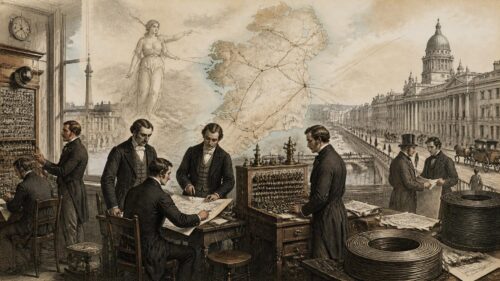
AI generated historical illustration, not a contemporary photograph.
At a Glance
Ireland’s reform of health data is not simply a recent exercise in computerisation. It is the long, uneven history of an effort to make information dependable enough to follow a patient, guide a clinician, measure a service and inform the State—without treating the citizen’s most intimate record as an administrative commodity. From the information shortages identified in the 1990s to the national electronic record now being procured, the story is one of institutional change, legislation, technical ambition and persistent questions of trust.
Information Inheritance
The modern Irish discussion of health information began before phrases such as “digital health” or “electronic health record” had entered everyday official language. A 1995 study of health-care information services in Ireland, undertaken against a background of substantial change in the health system, identified serious shortcomings in access to, awareness of and availability of information for practitioners, patients and carers. Its recommendation for a comprehensive national strategy is important because it places the origins of later reform not in technological fashion, but in a practical difficulty: people charged with making decisions often lacked reliable, accessible and shared information.
That difficulty had several dimensions. Clinical care was documented locally, often in paper files and in systems designed for particular hospitals, laboratories, specialties or schemes. Data useful for public health, administration, research and service planning were gathered for distinct purposes and according to differing definitions. The information held in one part of the service did not necessarily travel well to another. A patient could be known by different identifiers in different settings; a manager could possess activity figures without a sufficiently clear account of their meaning; and a doctor might have to seek records through slow, informal or incomplete channels.
Such fragmentation was not uniquely Irish. Health systems elsewhere also grew as collections of institutions, professions, insurance arrangements and local practices, each developing records to meet immediate needs. Yet the Irish setting gave the matter particular force. The health services were undergoing structural reform, while policy increasingly emphasised quality, accountability, integrated care and evidence-led planning. A system in which information was difficult to compare, locate or safely reuse could frustrate each of those objectives.
The Department of Health and Children’s Health Information: A National Strategy, published in 2004, was therefore a foundational document. It linked health information to earlier policy commitments on quality, fairness, primary care and service reform. Its central proposition was that data acquire public value only when they are defined in common, understood in context and used by people with the skill and authority to act. In this account, information was not an ornamental administrative output. It was an element of safer care, population health, management and democratic accountability.
The strategy did not imagine that a single database would solve every problem. Rather, it identified a broad framework of needs: better standards, clearer governance, improved collections, a stronger culture of information use, more capable technology and attention to confidentiality. It also anticipated that health information had several legitimate audiences. Patients and carers needed comprehensible information; professionals required records and evidence for care; managers and policy makers needed dependable measures; researchers needed appropriately governed access to data; and the public needed a basis on which to judge services.
This was a demanding agenda. It required agreement about language as much as machinery. A diagnosis, discharge, referral, prescription or waiting-list entry can be counted only when those who create the record mean broadly the same thing by it. It also required institutions that could set standards and inspect their use. The later development of the Health Information and Quality Authority, commonly known as HIQA, supplied an important part of that architecture. Under the Health Act 2007, the Authority acquired responsibilities in health information as well as in the regulation and oversight of services.
Evidence Limits
The documentary record supports a clear account of strategy, legislation and official intent. It does not support a simple tale in which Ireland had no health information before reform, or in which every difficulty arose from one failed project. Hospitals, public-health bodies, registries, laboratories, general practitioners and State agencies had long created and used important information. The problem was that these records did not automatically form a coherent national system. Nor is there useful folklore attached to this administrative history. Its principal sources are reports, Acts, parliamentary debates, regulatory standards, board papers and official programmes; interpretation must remain distinct from the evidence they provide.
Reform Architecture
The establishment of the Health Service Executive in 2005 altered the institutional landscape in which the 2004 strategy was to operate. The HSE replaced the former health-board structure with a national executive responsible for delivering public health and social care services. In principle, centralisation created an opportunity for more consistent systems and standards. In practice, it also inherited a large and varied estate of records, applications, local procedures and technical contracts. National organisation did not instantly produce national information.
HIQA’s early reports illustrate both the ambition and the scale of the task. The Authority described the 2004 strategy as an attempt to correct deficiencies in existing information systems and establish frameworks for the optimum development and use of health information. It also noted that the strategy contained twenty-seven actions, many of which involved HIQA in whole or part. The presence of a long action list is revealing: reform was never merely a question of purchasing software. It involved policy, classification, data quality, professional practice, legal authority, governance and public confidence.
Information governance became a central phrase in this period. In ordinary language, it concerns the rules and practical habits that determine who may collect, see, amend, share, retain and use information, and for what purpose. In health care, governance has an especially delicate role. Excessive restriction can deprive a clinician of material needed for safe treatment. Excessive or poorly controlled sharing can expose private facts and corrode trust. Effective governance does not abolish that tension; it makes the grounds for decisions visible, lawful and reviewable.
Irish reformers also faced a distinction that is often blurred in public discussion. Information about a person’s treatment is not identical to information about the performance of a service, and neither is identical to a statistical or research dataset. The first may be urgently required for direct care. The second may help identify staffing pressures, delays or uneven access. The third may help establish patterns of disease or assess an intervention. Each purpose demands a different degree of detail, different safeguards and different explanations to the public.
This distinction mattered because the promise of reform rested on linkage. If reliable records could be connected safely, a patient’s medication, allergies, investigations and prior treatment might be available where needed. Aggregate information might expose gaps in access or outcomes between places and groups. Researchers might answer questions that no isolated clinic could answer. But linkage also makes information more powerful, and power requires constraint. The history of health-data reform is consequently a history of balancing benefit with restraint rather than choosing one against the other.
The 2004 strategy’s language of a cultural change was therefore apt. Staff had to see recording as part of care rather than as a bureaucratic distraction. Managers had to use figures intelligently rather than demand ever greater volumes of poorly understood returns. Institutions had to accept common standards even when local custom differed. The public had to be persuaded that better information would improve care without dissolving confidentiality. Those changes cannot be delivered by statute alone, though legislation may make them possible.
Digital Ambition
By 2013, the language of reform had become more explicitly digital. The Department of Health’s eHealth Strategy for Ireland set out a programme in which the citizen would be more central to health care, technology would support system reform, and information would be available in the right place and at the right time. Its aspirations included electronic health records, electronic prescribing, better information exchange and stronger patient participation.
The strategy represented continuity as well as change. It did not replace the concerns of 2004; it translated them into a more technologically explicit programme. The problem remained one of fragmented information and inconsistent access. The proposed remedies now included national digital foundations, interoperable systems and a route towards an electronic record capable of serving a person across settings. The central policy insight was that a record confined within one institution could not adequately support care delivered across general practice, hospital, community, pharmacy, diagnostic and social-care services.
Yet a strategy is not an implementation. The distance between policy and delivery became a defining feature of the following decade. Legacy systems continued to perform essential work. Some hospitals and services developed more advanced local records; others retained mixed paper and digital processes. Specialist applications were often necessary and sometimes effective in their own domains, but their coexistence made national coherence harder. Technical systems can exchange information only if they have compatible standards, identifiers, interfaces, data definitions and governance arrangements.
HIQA’s 2021 report, The Need to Reform Ireland’s National Health Information System, offered a sober retrospective. It noted that Ireland had produced a national information strategy in 2004 and an eHealth strategy in 2013, and that both had identified recurring necessities: an individual health identifier, a national electronic health record, electronic prescribing and a standards-based approach to interoperability. In other words, the broad destination had been visible for years. The difficulty lay in building the roads, rules and institutions needed to reach it.
This does not mean that the period was empty. Standards work, registers, specialised systems, digital services and planning advanced. But progress was uneven, and national capability remained less mature than the ambitions expressed in policy. The HSE’s later documentation described an estate of considerable scale and complexity, rather than a blank sheet on which a single new system could be drawn. It is a useful corrective to technological rhetoric: replacing or joining a live health-service infrastructure is more akin to rebuilding a city while its streets remain open than to installing software in a vacant office.
The historical significance of the 2013 strategy lies partly in its insistence that technology was a means to reform, not an end in itself. It associated data with safer decisions, better co-ordination, service efficiency and citizen involvement. Its limitations lie in the fact that a national vision needed durable political authority, sustained funding, legislative support, workforce capacity and public legitimacy. Each was developed at a different pace.
Identity Foundations
The Health Identifiers Act 2014 addressed one of the most basic obstacles to a joined-up system: certainty about identity. The Act provided for national registers of individual health identifiers and health-service-provider identifiers. An Individual Health Identifier, or IHI, is intended to identify a person safely and uniquely in dealings with health and social care services. It is not a medical record, a diagnosis or a score of personal worth. It is an infrastructural key intended to reduce the risk that records belonging to different people are confused, or that records concerning one person remain wrongly separated.
The distinction between an identifier and a record deserves emphasis. A health identifier says, in effect, that this person is the person to whom the information belongs. An electronic health record is the organised body of health information that may be associated with that person. Confusing the two can create unnecessary anxiety or false expectations. An identifier does not itself make services interoperable; it makes reliable linkage more achievable when other legal, technical and professional conditions are in place.
HIQA records that the Act was enacted in July 2014, that the identifier service gained a later operational footing, and that the national register began collecting data in 2016. The identifier has had practical uses, including in Covid-related testing and vaccination platforms. The coronavirus emergency consequently demonstrated a modest but important point: national digital infrastructure can become visible to the public only when a shared crisis reveals the value of accurate identity, timely results and co-ordinated records.
Identification also has a privacy dimension. To identify a person correctly, the system must hold demographic particulars that are themselves personal information. Ireland’s approach therefore required both technical safeguards and governance standards. The policy promise was patient safety: the right information associated with the right person. The corresponding obligation was to ensure that the identifier did not become an excuse for indiscriminate collection, casual access or a careless expansion of purpose.
Legislative Delay
For much of the period after 2004, legislation was the conspicuous unfinished part of the reform programme. Official discussions of a health-information Bill appear in HIQA material from the late 2000s, and parliamentary answers continued to describe proposed legislation years later. The persistence of the subject shows that government recognised a gap between general data-protection rules and the detailed framework needed for health information shared across a complex system.
Existing data-protection law was—and remains—fundamental. Health information is highly sensitive personal data, and any processing must have a lawful basis and suitable safeguards. But data-protection law does not, on its own, settle every operational question in a national health service. Who has a duty to provide information for direct care? What data may be required for service planning or public-health purposes? How should patients access their records? What standards must providers use? What independent bodies should be consulted? How are failures to comply addressed? Those are matters that require sector-specific policy choices.
The proposed Health Information and Patient Safety Bill of the mid-2010s exposed the difficulty of those choices. Parliamentary material showed that officials were conscious of changing European data-protection law, differing national information cultures and the need to protect public confidence. The legislation was not merely a technical instrument for joining systems; it was also an attempt to define the ethical terms on which health information could be used beyond the room in which it was first created.
Delay had consequences. Without a clear, comprehensive statutory basis, national initiatives could proceed only so far through existing powers, administrative arrangements and local consent practices. This did not make every exchange unlawful or every programme impossible. It did, however, make the construction of a shared national framework slower and more contested. A health system that depends upon voluntary co-operation, local workarounds or uncertain legal interpretation will struggle to create the consistency required for safe nationwide interoperability.
There is a temptation to describe such delay as simple inertia. The evidence suggests a more complicated picture. Health records engage confidentiality, professional autonomy, commercial providers, research, public health, disability access, children’s rights, cybersecurity and the realities of a mixed public and private system. Drafting legislation that enables useful sharing while guarding against misuse is difficult. That difficulty does not erase the cost of delay, but it explains why the promised legal framework took many years to emerge.
Safety Lessons
Patient safety supplied a powerful practical argument for better information. Care is often delivered through handovers: from general practitioner to hospital, from emergency department to ward, from maternity service to community team, from hospital discharge to pharmacy or home support. At each handover, missing or misunderstood information can create risk. Medication histories, allergies, test results, diagnoses and care plans are not administrative curiosities. They can affect immediate decisions.
However, better information does not automatically create better care. A record may be complete yet poorly designed; available yet overlooked; accurate at entry yet outdated by the time it is read. Information systems can reproduce bias, transfer errors faster or burden staff with excessive documentation. The historical lesson is not that digitisation is inherently safe. It is that safe care requires records to be usable, current, appropriately shared and embedded in sound clinical practice.
Irish policy documents have increasingly framed national records as a patient-safety measure for this reason. The health identifier was presented as a means of ensuring that information was associated with the correct person. National standards have sought to improve the consistency of demographic data and information exchange. The planned electronic record is intended to give authorised professionals access to a more coherent account of a patient’s care across settings.
Cybersecurity added a further urgency. The 2021 cyberattack on the HSE demonstrated that health information is not only an asset to be shared; it is also a vital service that can be disrupted. The event exposed the operational dependence of modern care on digital systems and the potential human consequences when those systems become unavailable. It also complicated the reform narrative. Building connected records requires investment in access, interoperability and availability, but it must also strengthen resilience, authentication, backup, recovery and the capacity to work safely during disruption.
In historical terms, the cyberattack sharpened an older truth. Information reform has always been about the availability, integrity and confidentiality of records. Paper systems could be lost, delayed, misfiled or read by unauthorised people; digital systems can fail at larger scale and greater speed. The methods change, but the governing obligation remains: information should be available to those who need it for proper purposes, accurate enough to support decisions and protected from those who do not.
Public Trust
Trust is often invoked as a vague sentiment, but in health-data reform it has concrete conditions. Patients need to know what information is held, why it is held, who can access it and what rights they possess. Clinicians need confidence that a record is reliable and that lawful sharing will not expose them to unfair risk. Institutions need rules that are comprehensible enough to follow. The public needs evidence that the State is not treating health records as a resource to be exploited without clear benefit and accountability.
Irish reforms have accordingly placed emphasis on access, transparency and consultation. The Health Information Act 2026 requires the HSE, in preparing guidelines, to consult health practitioners, patient representative groups, HIQA, the Data Protection Commission, the National Disability Authority and others considered appropriate. That provision is significant. It recognises that a national record cannot be legitimately designed solely by technologists or administrators. Its rules affect patients, people with disabilities, families, clinicians, regulators and service providers.
The Act also provides for patient access to health information and for limits on access to electronic records in specified circumstances. These provisions should not be read as a guarantee that every historical record will immediately be complete, digitised or easily understood. They do, however, establish an important direction of travel: the patient is not merely the object of a record held by institutions. The patient has a place within the information relationship.
Trust also depends upon candour about secondary use. Health information can assist public-health surveillance, service planning, quality and safety work, performance management and statistics. These activities may serve a substantial public interest, but their legitimacy cannot rest on assertion alone. The 2026 Act requires requests for certain health information to be made in writing, to state their purpose and legal basis, and to include particulars about what is sought. It also requires publication of notices about such requests, including the relevant purpose and a description of the classes of information involved. This is not a complete solution to every concern, but it is a move towards visible governance.
Legal Settlement
The Health Information Act 2026 marks the most substantial legislative settlement yet reached in this history. Enacted on 30 April 2026, it gives effect in part to the European Health Data Space framework and provides a domestic structure for sharing personal health data for care, creating electronic health records, using the Personal Public Service Number in specified circumstances, and furnishing health information to the HSE for defined purposes.
The Act is careful in its language of purpose. It concerns information sharing for a patient’s care and treatment, but it also contemplates public and occupational health, protection against serious health threats, patient safety, service planning, performance management and statistics. These are broad functions, which is precisely why the accompanying procedures, safeguards and oversight will matter so much. A legal power that is necessary in one context may be disproportionate in another. The quality of implementation will determine whether the Act becomes a durable foundation or another source of uncertainty.
The legislation makes room for electronic health records for every patient and envisages their use across the health system. It also provides for data-protection impact assessment before the HSE creates and assigns records, an important recognition that privacy should be designed into the programme rather than checked only after deployment. Patients cannot be denied a health service simply because they do not have an electronic health record or cannot provide a PPS number. Such protections matter because administrative convenience must not become a new barrier to care.
By autumn 2026, official legal indexes recorded a commencement order for the Act. Its enactment and commencement arrangements should nevertheless be distinguished from full practical delivery. Law can authorise and oblige; it cannot by itself migrate records, cleanse data, train staff, procure technology, secure networks or build public confidence. The legislative milestone is therefore best understood as an enabling settlement, not as the end of reform.
National Record
The HSE’s One Health Record programme is the current practical expression of the long policy history. The HSE describes it as a single electronic health record intended to replace fragmented paper records and separate information systems with a more unified account of a person’s health and social-care journey. Government approval in February 2026 enabled procurement to begin, and the HSE issued the tender for the national system in March 2026.
The programme’s timetable is deliberately long. The HSE expects to select a vendor in 2027, begin the first deployment in the Dublin and North East Health Region in 2029, and extend the system in stages across Ireland with an aim of national availability by 2032. Such dates are plans rather than historical facts already achieved. They should be treated as aspirations subject to procurement, finance, technical delivery, workforce adoption and the usual risks of major public programmes.
That measured timetable may be frustrating to those who recall promises of electronic records from earlier strategies. Yet it also reflects the scale of the undertaking. A national record must work across hospitals, community services, public health, social care and the changing structures of regional health administration. It must coexist with specialist systems, accommodate patients with complex care, support clinicians in time-sensitive settings, allow appropriate patient access and remain resilient against cyber threats. A system built too quickly or without local clinical involvement could impose new dangers while trying to cure old ones.
The historical test will therefore not be whether Ireland possesses a branded national platform. It will be whether a patient’s information is more accurate, more available to authorised carers, more understandable to the person concerned and more secure than before. It will also be whether staff experience the system as help rather than hindrance, and whether policymakers use aggregate information with sufficient humility about its limits.
Historical Meaning
Viewed across three decades, Irish health-data reform is a story of continuity beneath changing terminology. The 1995 concern was inadequate access to information. The 2004 strategy called for better frameworks, standards and a changed information culture. The 2013 eHealth strategy set out a digital route towards patient-centred and integrated care. The 2014 identifiers legislation supplied part of the necessary foundation. The 2026 Act supplied a more comprehensive legal framework, while One Health Record seeks to construct the operational system that earlier policies repeatedly imagined.
The interpretation offered by this history is that Ireland’s difficulty was never a lack of awareness that information mattered. It was the challenge of converting awareness into lasting, connected and trusted institutions. Fragmentation had deep roots in the organisation of services, the inheritance of technology, the sensitivity of health information and the complexity of law. Progress has consequently come through accumulation rather than a single breakthrough.
There is also a caution for the future. Health information is frequently described as an asset, but that term can be misleading if it obscures the human relationship at its centre. A medical record may contain the most vulnerable episodes of a person’s life. Its value to clinicians, researchers and planners does not extinguish the person’s claim to dignity, privacy, explanation and agency. The strongest case for reform is not that the State should possess more data. It is that the health service should use necessary information more carefully, more safely and more fairly.
That is why the history deserves attention. It shows that data reform is not a narrow technical project undertaken in server rooms and committee papers. It is part of the continuing attempt to make Irish health care more joined-up, accountable and humane. The electronic record now in prospect may be the most visible product of that effort. The more important achievement, if it is realised, will be a durable public understanding that better information and stronger rights must advance together.




Ireland’s long path towards One Health Record suggests that interoperability is as much a social and legal achievement as a technical one. The article usefully distinguishes an individual health identifier from the record itself, while showing how fragmented systems can endanger continuity of care. Yet the same linkage that supports safer prescribing, handovers and planning can widen concerns about access, secondary use and cybersecurity. The 2026 legislation may provide clearer authority, but public legitimacy appears dependent on safeguards and explanations. How should Ireland balance nationally consistent record-sharing with meaningful patient control and public confidence across care, research and service planning?