
Irish Making
At a Glance
Craft Materials
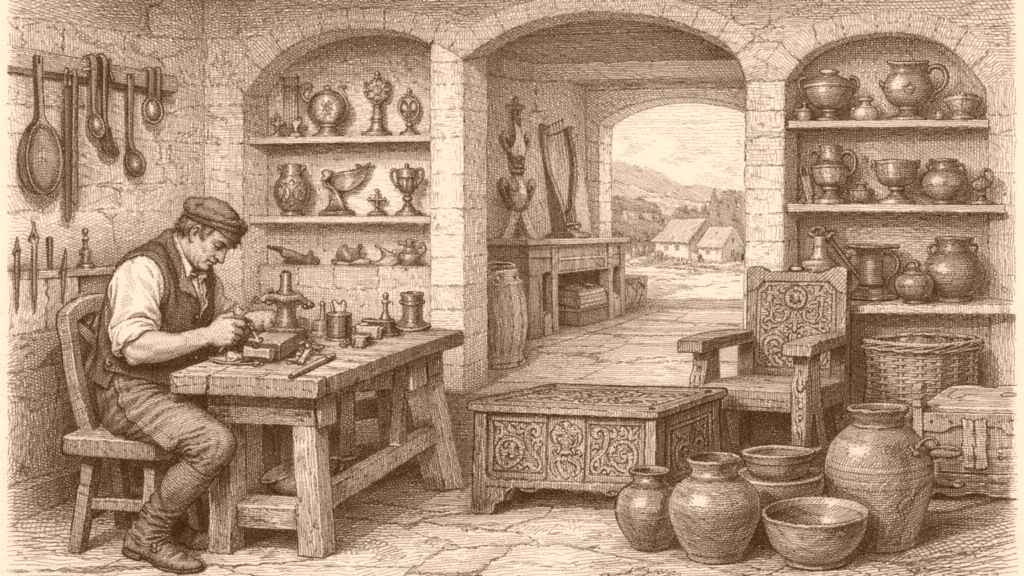
Museum descriptions of Irish craft stress that everyday objects were often made by hand from locally available materials. In that account, householders could make baskets, wooden furniture, and clay vessels, and similar objects varied by region in both material and design. The differences are attributed to available materials, maker skill, and local traditions. The emphasis is practical rather than ornamental, although the objects could still be beautiful in form. [3]
The same description says traditional craft workers usually relied on skill and accuracy developed through apprenticeship and experience, rather than written measurements or patterns. It also notes that their skills were often passed from one generation to the next, sometimes within the same family. Tools were valued, usually made by local blacksmiths, woodturners, or carpenters, and also handed down. These details present craft as a learned, intergenerational practice grounded in local production. [3]
Household Forms
The museum account of vernacular craft presents household objects as shaped by use, not by abstract design theory. It names wicker baskets, wooden furniture, and clay vessels as examples of the things people needed for daily life before mass production. It also notes that chairs, butter churns, and thatched roofs could differ from place to place. The passage therefore links design to function, regional habit, and the materials that could be obtained locally. [3]
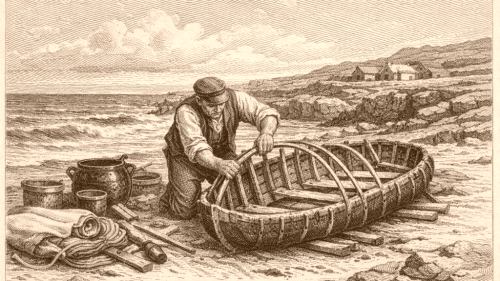
That same source records a later change in the place of craft workers. It says their role was eclipsed as mass-produced goods became more available through national and international transport networks. The examples given are concrete: tractors reduced the need for the local blacksmith and harness maker, baskets lost importance with plastic and cardboard packaging, and factory-made furniture displaced vernacular styles. The passage is descriptive, not interpretive, but it clearly marks a shift in material culture. [3]
Museum Collecting
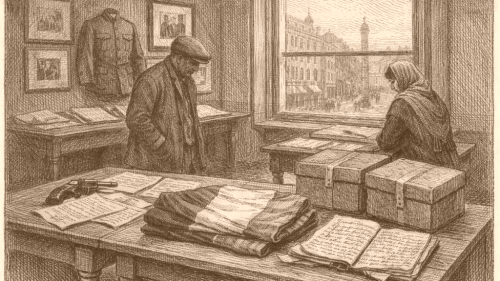
A modern museum display shows how contemporary Irish craft is being collected and exhibited. The National Museum of Ireland states that in 2004 it and the Crafts Council of Ireland established a joint purchase fund to acquire pieces for a contemporary craft collection within the decorative arts collections. The display now includes objects from Irish ceramics, glass, furniture, wood turning, jewellery, accessories, and silverware. This is a collecting practice, not a claim about older craft traditions. [2]
The same museum text says the point of such collecting is to preserve high quality works for future generations and to preserve the skills involved in making them. It also states that the exhibition was originally mounted in 2011, later reinstalled to highlight the joint purchase fund collection, and updated with more recent acquisitions. The record therefore shows an institutional effort to keep contemporary making visible alongside older museum holdings. [2]
Early Metalwork
The early medieval museum record gives craft a different emphasis. It says Christianity introduced new influences and that Irish craftsmen acquired new styles and technical skills. Christian ritual required chalices, patens, and containers for books and relics, and these were fashioned and adorned by Irish craftsmen. The collections are said to be rich in high quality ecclesiastical metalwork, especially from the eighth and ninth centuries. The text also names celebrated objects such as the Ardagh Chalice and the Tara Brooch. [6]
The same source broadens the picture beyond one type of object. It lists decorated buckets, tomb-shaped shrines, reliquary mounts, and stone reliquaries with wooden boxes inside. It also notes high crosses, carved stone slabs, ogham-inscribed pillar stones, and a range of personal adornments, including pins, brooches, finger rings, beads, and bracelets in several materials. Craft tools are present too, along with swords and spears, but the passage remains a catalogue rather than a narrative of development. [6]
Tools Tradition
The early medieval collection description also links craft to technique and material diversity. It says glass and enamel were used on brooches and pins, and that the collection includes objects made from bronze, silver, gold, iron, bone, antler, and lignite. This evidence shows that design depended on both ornament and material choice. The passage does not explain how each item was made, but it does demonstrate that Irish craftsmen worked across a wide range of substances and decorative effects. [6]
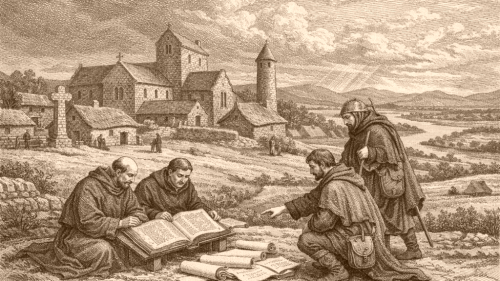
Another museum source focuses on the world of early medieval craftsmen through artefacts associated with production and decoration of metalwork. It says the exhibition uses interactive glossary kiosks and extreme close-up images to explore techniques. It also notes architectural details that evoke medieval cathedral treasuries, along with restored mosaic floors, fireplaces, and wooden doors. These features are about display as much as craft, but they frame metalworking within a carefully designed museum setting. [4]
Later Transformations
The early medieval record does not end with one stable style. It says Viking arrival brought attack and destruction, but also trade, silver, and new object types and art styles. It then describes new fashions in brooch design during the ninth and tenth centuries and a later renaissance in Irish metalwork during the eleventh and twelfth centuries, drawing on Viking Ringerike and Urnes styles. The text names croziers, a shrine, and the Cross of Cong among the notable works of this later period. [6]
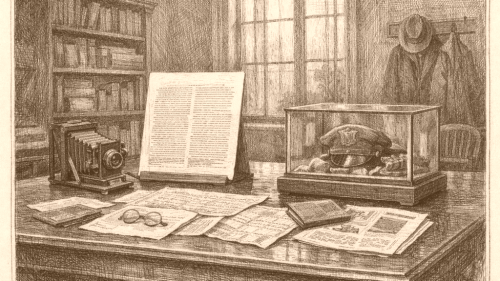
A separate CELT resource list places the study of Irish texts alongside annalistic, historical, and literary categories, and it includes editions of major annals and other works. This does not describe craft directly, but it shows the documentary landscape in which Irish materials are catalogued. Together with museum records, it suggests that Irish craft and design are known through both objects and texts, though the texts here do not themselves supply detailed craft narratives. The absence is notable in these excerpts, not a claim about all surviving sources. [1] [5]
Source References
Hover over a number to see the source. Select it to open the source.

- [1] List of Irish Texts at CELT
- [2] 21st Century Irish Craft | Decorative Arts & History | National Museum of Ireland
- [3] Trades and Crafts | Country Life | National Museum of Ireland
- [4] The Treasury | Archaeology | National Museum of Ireland
- [5] Latin Texts at CELT
- [6] Early Medieval | National Museum of Ireland
How do museum and reference-text descriptions together trace the materials, forms, and changing contexts of Irish craft and design from the early medieval period to the present?