Cogitosus
Cogitosus is known as an Irish author and monk of Kildare. The surviving evidence attaches his name to a single work, the Latin Life of Saint Brigid. The date and place of his birth and death are unknown, and it is uncertain even in what century he lived. Some later writers placed him in the sixth century, while other evidence points to a much later period. The probability, therefore, is that he lived and wrote the Life of St. Brigid about the beginning of the ninth century. He wrote the Life of St.
Dateline
Cogitosus is known as an Irish author and monk of Kildare. The surviving evidence attaches his name to a single work, the Latin Life of Saint Brigid. The date and place of his birth and death are unknown, and it is uncertain even in what century he lived. Some later writers placed him in the sixth century, while other evidence points to a much later period. The probability, therefore, is that he lived and wrote the Life of St. Brigid about the beginning of the ninth century.
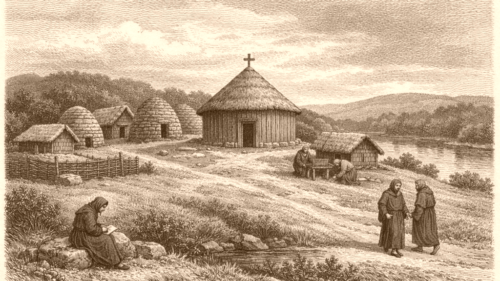
Monastic Setting
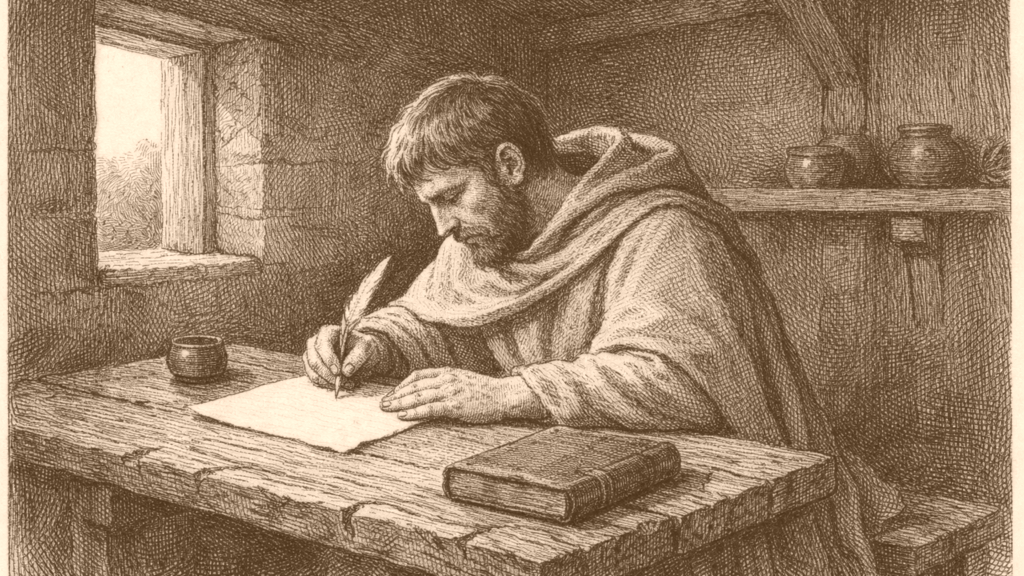
He wrote the Life of St. Brigid in fairly good Latin, much better indeed than might be expected in that age. His description of the church of Kildare, with its interior decorations, is specially interesting for the history of early Irish art and architecture.
Latin Prose
Cogitosus’s Life of Brigid is not presented as an even-handed biography. One standard assessment describes it as a panegyric rather than a biography, meaning that its purpose is to praise the saint. The work supplies very few precise biographical particulars for Brigid herself, yet it dwells on her piety, humility, charity, zeal for religion, and the honour in which she was held. It also recounts miracles attributed to her and describes the pilgrims who came to Kildare because of her fame. Those emphases reveal the author’s literary aim: to exalt the saint and the religious house associated with her.
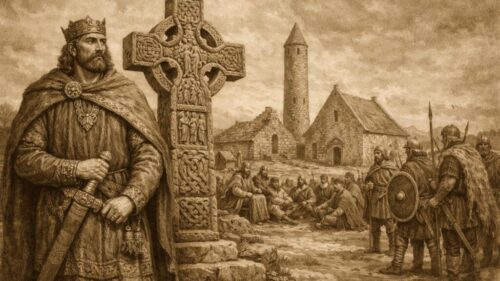
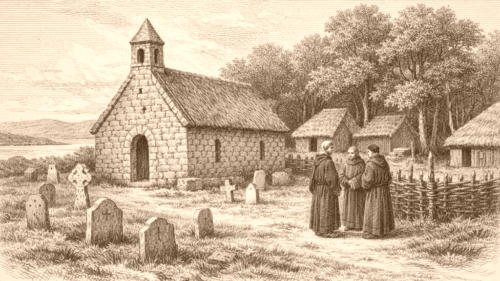
Kildare Church
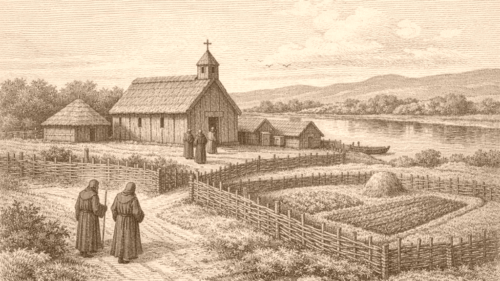
Among the most striking features of the work is Cogitosus’s description of the church at Kildare. The description has drawn attention because it appears to reflect an ecclesiastical building of some later date than Brigid’s own lifetime.
Saintly Claims
The biography of Brigid attributes to her a wide authority, including a claim that she had abbess-like authority over all the abbesses of Ireland. The same source also says that she appointed the Bishop of Kildare. These statements belong to the author’s exalted presentation of Brigid and should be understood in that devotional and literary context. Cogitosus also names her parents while carefully avoiding mention of facts that other traditions record about her birth and family background. His work thus shapes memory as much as it transmits it.
Dating Questions
Cogitosus’s date remains uncertain. One older account assigns him to the sixth century on the basis of an interpreted phrase in his work, but that conclusion is disputed. Another reading argues that the text itself points to a later period, since it refers to a long succession of bishops and abbesses at Kildare and uses a title for Saint Conleth that is associated with later ecclesiastical usage. The same line of argument notes that the church description appears to belong to a time before the Danish raid on Kildare in 835 and before the transfer of Brigid’s remains to Down. The probability therefore is that he lived and wrote the Life of St. Brigid about the beginning of the ninth century.
Enduring Text
What can be stated securely is limited but clear. Cogitosus was an Irish ecclesiastic writer associated with Kildare, and he composed a Latin Life of Saint Brigid that is valuable both as a saint’s life and as evidence for the church of Kildare. His prose is described as fairly good Latin, better than might be expected from the period in which he wrote.
Source References
Hover over a number to see the source. Select it to open the source.