Michael Collins
Michael Collins (1890–1922) was an Irish revolutionary who moved through several decisive phases of the struggle for independence. According to the chronology published by University College Cork, he was born in the townland of Woodfield near Clonakilty, West Cork, on 16 October 1890. In 1906 he passed the Post Office Boy clerkship examination and moved to London, where he worked in the Post Office Savings Bank and later for other financial firms. He was sworn in as a member of the Irish Republican Brotherhood in 1909. Collins returned to Ireland in January 1916 and joined the Irish Volunteers.
Dateline
Michael Collins (1890–1922) was an Irish revolutionary who moved through several decisive phases of the struggle for independence.
Early Life
According to the chronology published by University College Cork, he was born in the townland of Woodfield near Clonakilty, West Cork, on 16 October 1890. In 1906 he passed the Post Office Boy clerkship examination and moved to London, where he worked in the Post Office Savings Bank and later for other financial firms. He was sworn in as a member of the Irish Republican Brotherhood in 1909.
Revolutionary Work
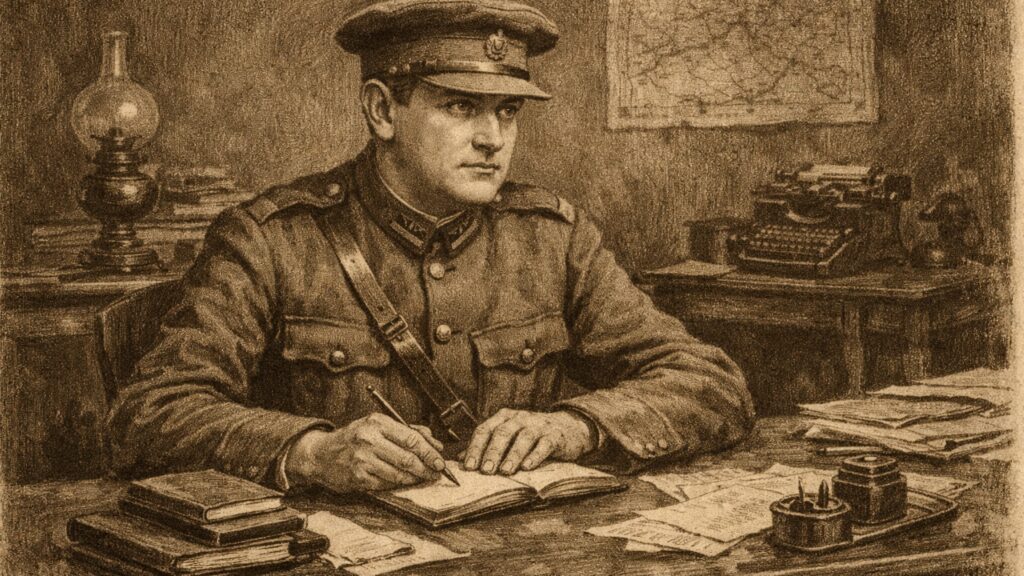
Collins returned to Ireland in January 1916 and joined the Irish Volunteers. He took part in the Easter Rising, was interned at Frongoch Prison Camp in Wales, and was released in December 1916. In 1918 he helped in Éamon de Valera’s escape from Lincoln Prison in England. When Dáil Éireann was established in January 1919, he was appointed Minister for Finance and organised a successful national loan. The National Archives preserves his working diaries from 1918 to 1922, which contain hurried notes, lists, names, appointments and tasks from his revolutionary life.
Treaty Years
In September 1921 he was appointed by Dáil Éireann as a delegate to the treaty negotiations in London, and the Anglo-Irish Treaty was signed in December 1921. Trinity College Dublin describes Collins as chairman of the Provisional Government of the Irish Free State in 1922, and states that he telegraphed Winston Churchill requesting ammunition during the battle of the Four Courts in June 1922.
Final Days
The National Museum of Ireland states that, after negotiating the Treaty with Britain, he became Minister of Finance in the Provisional Government, and that on the outbreak of the Civil War he resigned that post to take command of the National Army. It also records that he was returning from a visit to Munster when his convoy was ambushed at Béal na mBláth in County Cork. The fight lasted about 30 minutes, and he was shot and killed on 22 August 1922.
Source References
Hover over a number to see the source. Select it to open the source.