Explore one hundred years of Limerick and Irish history through the decades. Each period brings together political change, social transformation, conflict, work, poverty, migration, culture, sport and everyday life.
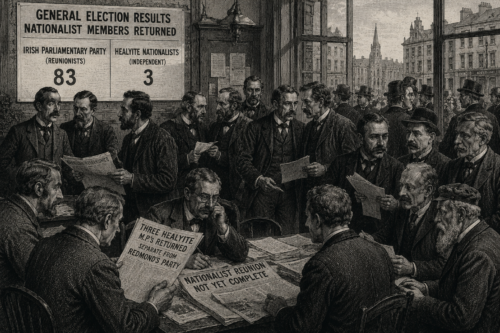
1900–1909
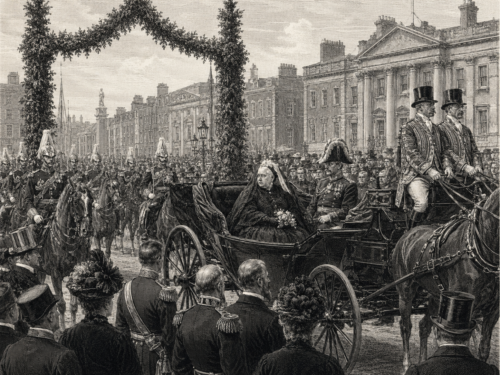
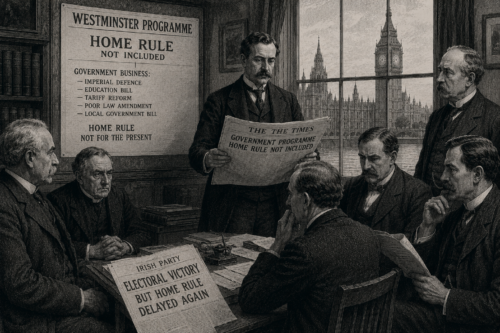
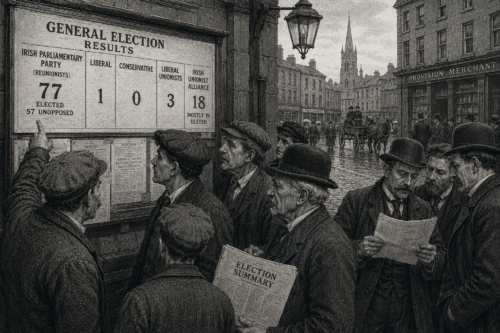
The opening decade of the century was shaped by Home Rule politics, land reform, rural poverty, emigration, urban hardship and the continued growth of Irish cultural nationalism. Limerick remained a city of markets, churches, military influence, crowded housing, labour and trade.
1910–1919
Political tension intensified through the Home Rule crisis, the First World War, the Easter Rising, anti-conscription agitation and the growth of republicanism. Limerick families experienced enlistment, bereavement, rising prices, labour unrest and political division.
1920–1929
The War of Independence, Truce, Anglo-Irish Treaty and Civil War transformed public life. The creation of the Irish Free State brought new institutions, political divisions and difficult economic conditions, while families continued to face unemployment, poor housing and emigration.
1930–1939
Economic depression, political change and social conservatism defined much of the decade. Limerick experienced poverty, industrial uncertainty, housing shortages, rural hardship and continuing emigration, alongside developments in education, sport, transport and popular entertainment.
1940–1949
The Emergency shaped Irish life during the Second World War through shortages, rationing, censorship and economic difficulty. Limerick’s people adapted to fuel restrictions, food controls and uncertain employment, while the post-war years brought renewed expectations of improvement.
1950–1959
Emigration remained a defining experience as thousands left Ireland in search of work. Housing schemes, electrification, education and new industries began altering daily life, while older neighbourhoods, trades and social customs continued to shape Limerick.
1960–1969
Economic modernisation, television, expanding education and changing cultural attitudes brought visible transformation. New housing estates, factories, roads and consumer goods appeared, while the closing years of the decade were overshadowed by the outbreak of conflict in Northern Ireland.
1970–1979
The Troubles, economic uncertainty, industrial disputes and social change dominated the decade. Ireland joined the European Economic Community, while Limerick experienced shifts in employment, housing, education, entertainment, transport and public life.
1980–1989
Recession, unemployment, emigration and political tension marked much of the 1980s. The decade also brought major cultural, technological and social changes, alongside intense public debate over identity, religion, family life and Ireland’s future.
1990–1999
Economic growth, peace initiatives, improved communications and changing social attitudes reshaped Ireland. Limerick entered a period of redevelopment and expansion as the century approached its end, though older inequalities and community challenges remained visible.
The Year 2000
The arrival of a new millennium encouraged reflection on a century of conflict, endurance, migration, political change and modernisation. Limerick entered the twenty-first century carrying the memory of the people, places and events preserved throughout this archive.