Nationalist Defiance
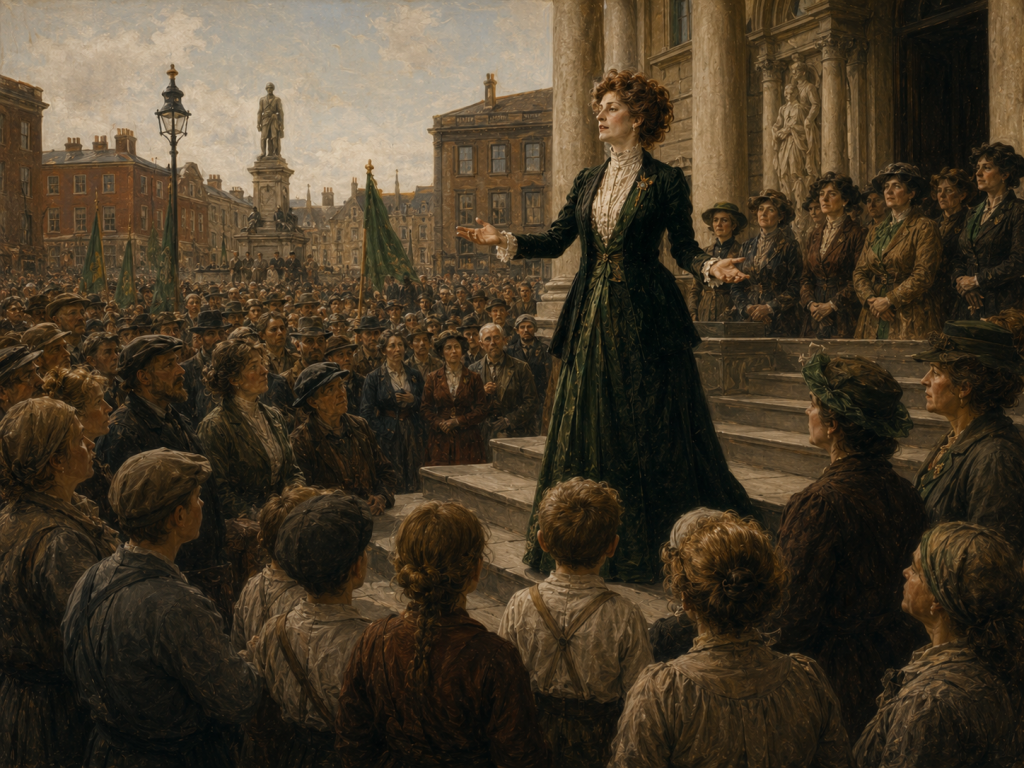
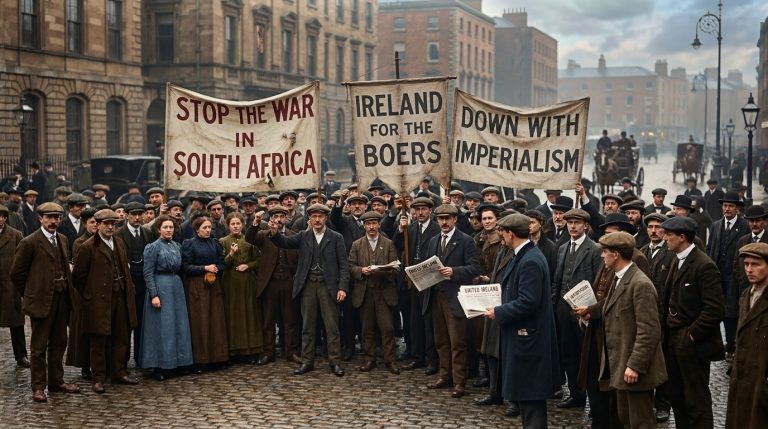
Maud Gonne and other advanced nationalists have organised determined opposition to Queen Victoria’s visit, rejecting official claims that the royal ceremonies represent the will of the Irish people. Gonne’s article “The Famine Queen,” published immediately before the monarch’s arrival, condemns the visit as an imperial and military demonstration conducted during the South African War. Her supporters have challenged loyal addresses, public decorations and attempts to present cheering crowds as evidence of national contentment. In Limerick, where nationalist opinion is strong, the campaign will attract attention among readers who regard Home Rule as insufficient and seek complete Irish independence.
Gonne’s attack places the Great Famine, eviction and emigration at the centre of the dispute. She argues that the splendour surrounding the Queen cannot be separated from the suffering endured during her reign or from the continued departure of Irish men and women. Advanced nationalists also believe the visit is intended to encourage recruitment for Britain’s war against the Boer republics. Their opposition therefore joins Irish separatism with sympathy for another small nation resisting imperial power. Supporters of the Queen denounce the language as bitter and unjust, but the controversy has ensured that royal celebration will not proceed without an organised nationalist answer.
Women have assumed a conspicuous role in the resistance. Gonne and a group of nationalist women are developing an organisation that will become Inghinidhe na hÉireann, or the Daughters of Ireland, devoted to independence, Irish culture and political education. Their activity challenges the exclusion of women from many established nationalist organisations and creates a new space for female leadership. Rather than remaining spectators to male political debate, they are raising funds, organising meetings and preparing an alternative patriotic celebration for children. The movement demonstrates that opposition to the royal visit is helping to reshape both nationalist organisation and women’s participation in public life.
The planned Patriotic Children’s Treat will answer the official celebration held for schoolchildren in Phoenix Park. Nationalist organisers object to children being assembled beneath royal and military influence and intend to offer an alternative gathering centred upon Irish history, music and national identity. The event is expected to attract children whose families refused participation in the royal festivities or rejected their political purpose. By organising food, entertainment and instruction, Gonne’s supporters seek to prove that separatism can provide practical community action as well as protest. The contest over the Queen’s visit has consequently extended into education, childhood and the loyalties of a rising generation.
Limerick nationalists will recognise many of the arguments advanced by Gonne and her associates. Memories of famine, rural hardship and emigration remain powerful throughout the city and county, while sympathy for the Boers has strengthened criticism of British imperial policy. Constitutional nationalists may disagree with the severity of the separatist campaign and continue to distinguish courtesy towards the Queen from support for the Union. Advanced nationalists reject that compromise, insisting that every loyal ceremony strengthens foreign rule. The royal visit has therefore exposed divisions within nationalism itself while giving women activists and separatist organisers a prominent platform from which to challenge imperial authority.
Primary Sources
- Maud Gonne, “The Famine Queen,” United Irishman, 3 April 1900. Exact page and column should be confirmed before formal citation.
- United Irishman, Dublin, March–April 1900, editorials and reports opposing Queen Victoria’s visit, British recruitment and the South African War. Exact issue, page and column should be confirmed before formal citation.
- Helena Molony, Bureau of Military History Witness Statement No. 321, account of the founding of Inghinidhe na hÉireann on Easter Sunday 1900 and its early nationalist activities.
- Maud Gonne MacBride Papers, National Library of Ireland, writings concerning the history, aims and activities of Inghinidhe na hÉireann. Exact manuscript number and folio should be confirmed before formal citation.
- Senia Pašeta, “Nationalist Responses to Two Royal Visits to Ireland, 1900 and 1903,” Irish Historical Studies, vol. 31, no. 124, 1999, pp. 488–504.