Culture Revived
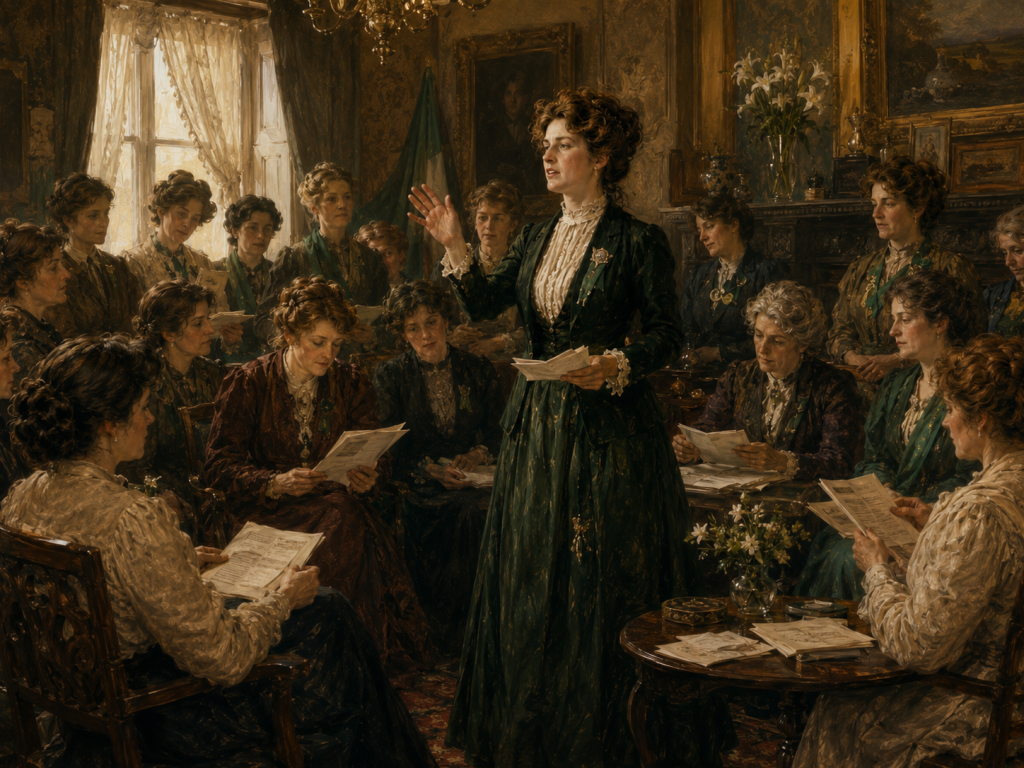
Inghinidhe na hÉireann has placed the Irish language, national culture and economic self-reliance at the centre of its programme for complete independence. Established under Maud Gonne’s leadership, the women’s organisation argues that political freedom cannot be secured by parliamentary action alone while Irish people continue to neglect their own language, history, literature and industries. Members intend to cultivate national confidence through education and practical organisation, especially among children. Their approach joins separatist politics with everyday choices concerning speech, reading, entertainment and household spending, giving women a direct role in shaping the cultural foundations upon which an independent Ireland might eventually stand.
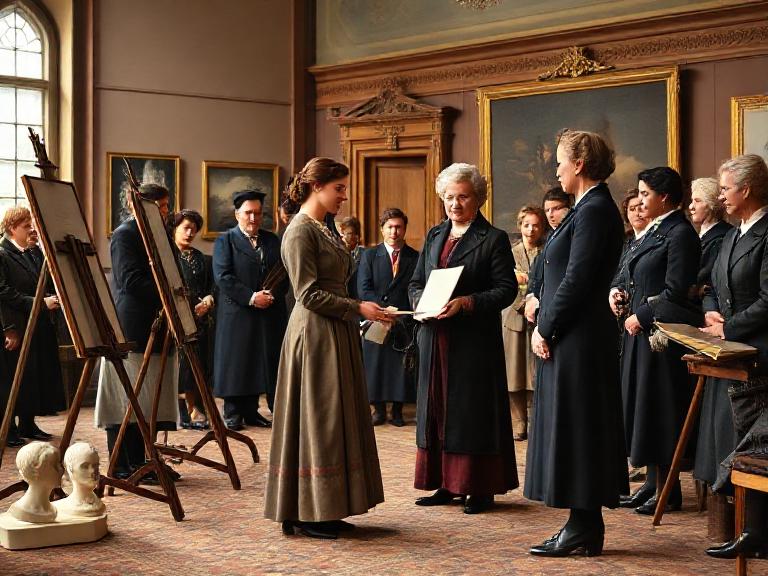
The organisation proposes classes in Irish language, history, literature, music and art, with particular attention given to younger people. Members believe generations educated principally through English institutions have been separated from important parts of Ireland’s inherited culture. Public lectures, dramatic performances, historical commemorations and children’s gatherings will therefore be used to make national learning accessible beyond formal schools. These activities resemble aspects of the Gaelic revival but carry a more openly political purpose. For the Daughters of Ireland, recovering the language and cultural memory is not antiquarian work. It is a means of weakening dependence upon Britain and strengthening belief in Ireland’s capacity to govern itself.
Irish theatre, music and storytelling will also form part of the movement’s cultural campaign. Members plan to encourage plays based upon Irish history and legend, promote Irish songs and challenge entertainments they consider degrading or excessively imitative of English popular culture. Their performances will allow women to write, act, organise and speak before audiences at a time when most formal political platforms remain controlled by men. The organisation’s cultural work may appear less confrontational than street protest, yet its leaders regard it as equally important. A population familiar with Irish achievement, they argue, will be less likely to accept political inferiority or dismiss independence as impractical.
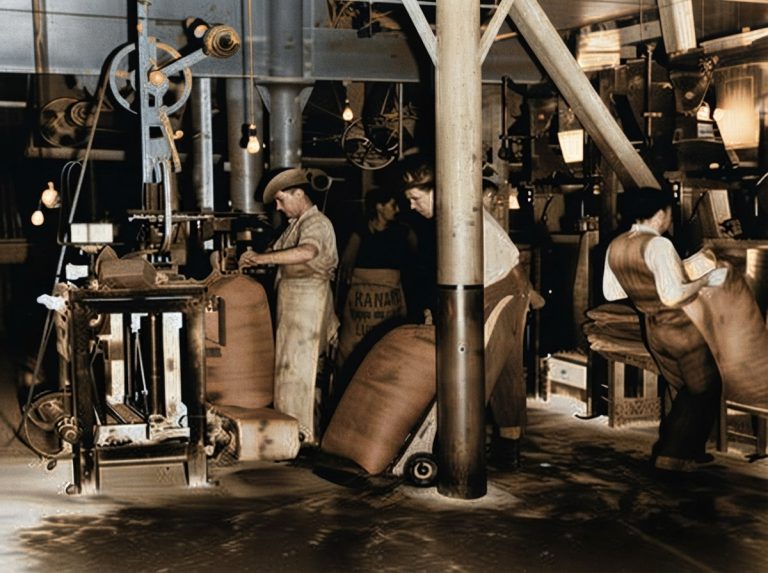
Economic self-reliance provides another important element of the programme. Inghinidhe na hÉireann intends to support and popularise Irish manufactures, encouraging households to purchase goods produced by Irish workers whenever possible. This policy connects national independence with employment, trade and consumer choice. Money spent upon imported products is viewed as strengthening outside industries while Irish craftspeople, dressmakers and manufacturers struggle for markets. Women exercise considerable influence over household purchases, clothing and provisions, giving them practical power within such a campaign. Supporting Irish goods therefore becomes both an economic measure and a daily expression of national commitment rather than a principle confined to public speeches.
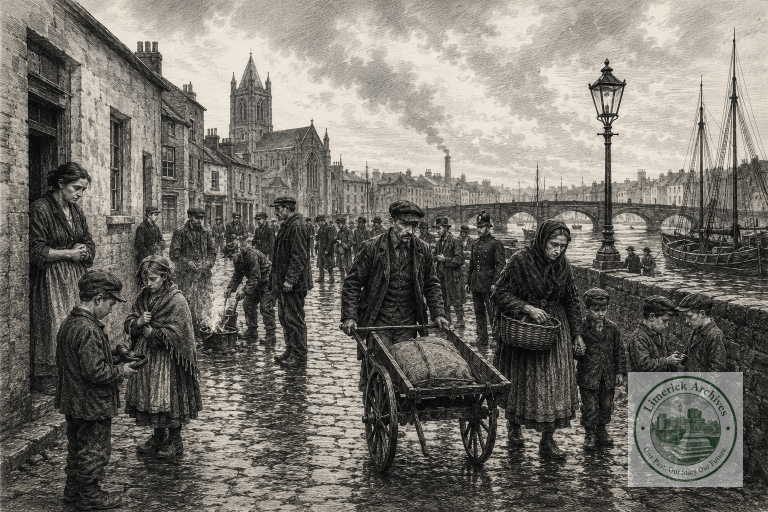
The programme may carry particular relevance in Limerick, where language revival, local manufacture, employment and cultural identity touch city and county life directly. Teachers, shopkeepers, craftspeople, musicians, writers and mothers could all participate without waiting for parliamentary permission or membership in male political organisations. Constitutional nationalists may question the separatist purpose behind these activities, while unionists will reject attempts to portray British cultural influence as harmful. Nevertheless, the Daughters of Ireland has defined national freedom broadly. Independence, in its view, requires political authority, cultural confidence and the practical habit of supporting Irish work, Irish learning and Irish creativity within ordinary life.
Primary Sources
- Inghinidhe na hÉireann, early rules, stated objectives, membership records and annual reports, Maud Gonne MacBride Papers, National Library of Ireland, including MS 49,531/33. Exact folios should be confirmed before formal citation.
- Máire Ní Chinnéide O’Brolcháin, Bureau of Military History Witness Statement No. 321, describing the foundation and early work of Inghinidhe na hÉireann.
- Maud Gonne MacBride, Bureau of Military History Witness Statement No. 317, recollections concerning the organisation, its members and nationalist activities.
- Bean na hÉireann, Dublin, 1908–1911, articles promoting Irish language, culture, children’s education and Irish manufacture. Exact issue, page and column should be confirmed before formal citation.
- Margaret Ward, Irish Nationalist Women, 1900–1918, Manchester: Manchester University Press, 1983; consult the chapter concerning the cultural, educational and economic programme of the Daughters of Ireland.