Patriotic Children
Limerick Archives — Sunday, 1 July 1900
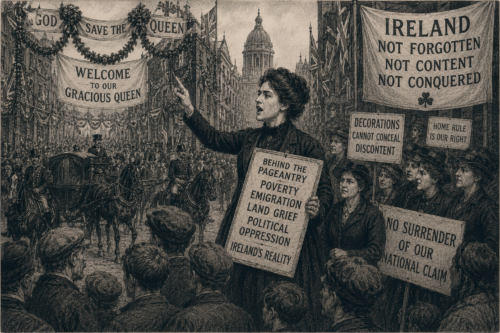
LIMERICK, Sunday — Nationalist women have organised a vast Patriotic Children’s Treat in Dublin as a direct challenge to the royal celebration arranged for school pupils during Queen Victoria’s April visit. Led by Maud Gonne, the women gathered children whose families had rejected or avoided the Phoenix Park festivities and offered them a separate day of food, music, recreation and national instruction. The event demonstrates that women excluded from formal political power can still influence public opinion through community organisation. Limerick nationalists will follow the gathering closely, recognising its attempt to place Irish identity rather than imperial loyalty before the country’s children.
The organising committee emerged from a meeting of nationalist women held in the rooms of the Celtic Literary Society on Easter Sunday. Their discussion turned towards the children’s royal celebration, which they regarded as an effort to associate youth, education and generosity with the British monarchy. Maud Gonne became president of the committee, while volunteers collected money, provisions and practical assistance across Dublin. With few established resources, the women relied upon subscriptions, donated food and extensive unpaid labour. Their preparations revealed considerable organisational ability and created a political role for women beyond attendance at meetings directed by male nationalist leaders.
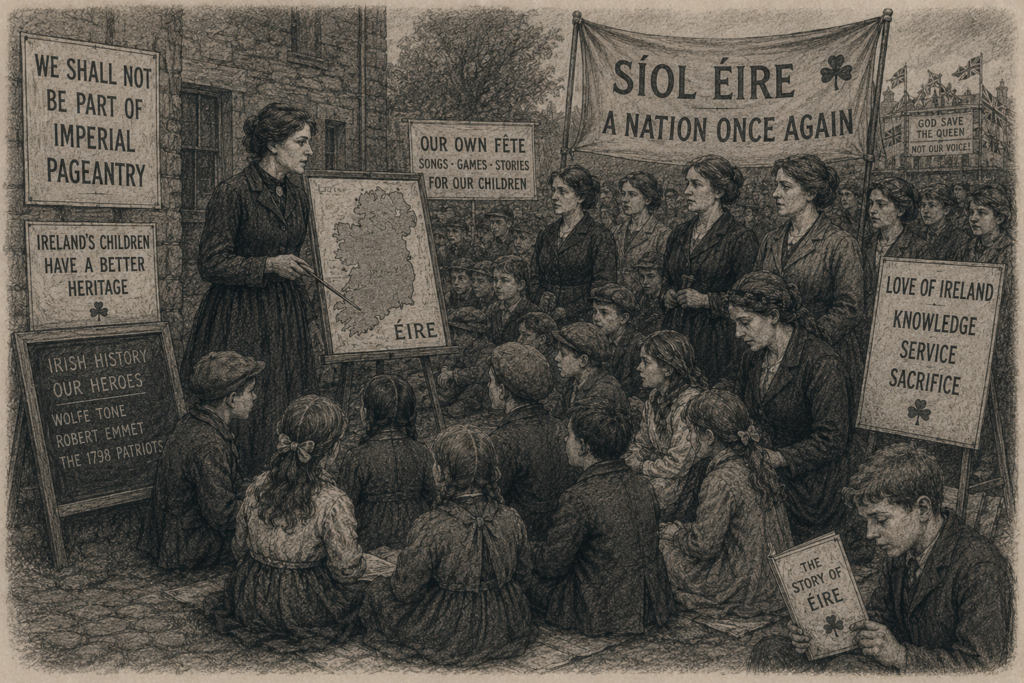
Children and stewards assembled at Beresford Place before proceeding towards Clonturk Park in Drumcondra, where the principal entertainment was held. Contemporary accounts place attendance between approximately twenty-five thousand and thirty thousand, making the occasion one of the largest nationalist children’s events yet organised. Wagons carried buns, biscuits, sweets and drinks for distribution, while games, music and speeches filled the afternoon. The gathering offered pleasure to children from working families but also carried an unmistakable political purpose. Its organisers intended to demonstrate that patriotism, charity and public celebration did not require allegiance to the Crown or participation in imperial ceremony.
The women contrasted their event with the official Phoenix Park treat, arguing that Irish children should learn national history rather than be displayed as evidence of loyalty to British rule. Sympathy for the Boer republics and opposition to military recruitment formed part of the wider atmosphere surrounding the gathering. Yet the organisers understood that political education could not depend upon speeches alone. Food, companionship, music and shared enjoyment made the nationalist message tangible to children and parents. The event joined social care with political mobilisation, presenting the national cause as something capable of providing community, dignity and practical generosity rather than merely demanding sacrifice.
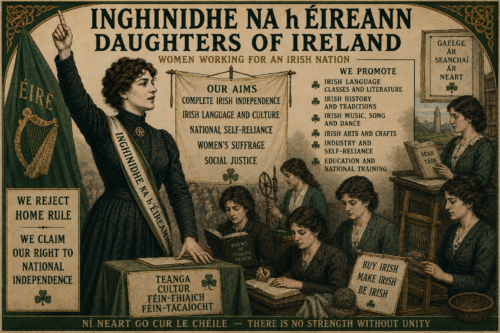
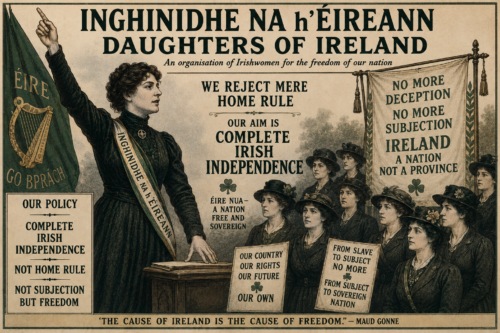
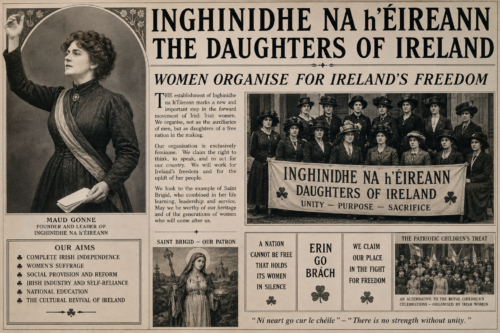
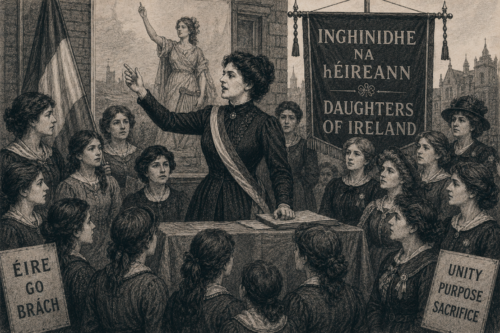
The committee’s work is expected to produce consequences extending beyond one afternoon. The women involved are establishing stronger organisational ties that will develop into Inghinidhe na hÉireann, the Daughters of Ireland, under Maud Gonne’s leadership. The new movement will promote Irish independence, language, culture and political education while giving women an autonomous place within advanced nationalism. For Limerick, the Patriotic Children’s Treat offers an important example of how public life may be shaped outside Parliament and municipal government. By organising thousands of children, nationalist women have challenged both royal pageantry and the assumption that political leadership belongs exclusively to men.
- Helena Molony, Bureau of Military History Witness Statement No. 321, describing the foundation of Inghinidhe na hÉireann and the nationalist women associated with its earliest activities.
- United Irishman, 5 May 1900, report concerning preparations for the Patriotic Children’s Treat. Exact page and column should be confirmed before formal citation.
- Irish Independent, 2 July 1900, contemporary report on the Patriotic Children’s Treat at Clonturk Park, including attendance and organisational details. Exact page and column should be confirmed before formal citation.
- Maud Gonne MacBride Papers, National Library of Ireland, documents concerning Inghinidhe na hÉireann and its children’s activities, MS 49,531/33.
- Mary Hay, “What Did Advanced Nationalists Tell Irish Children in the Early Twentieth Century?”, Éire-Ireland, vol. 47, nos. 1–2, 2012, discussion of the Patriotic Children’s Treat and nationalist education.