Archived: 28 October 2026
Abstract
In 879, Áed Findliath, northern Uí Néill ruler and king of Tara, died at Druim Inasclainn, modern Dromiskin. His death brought Murchad son of Máel Dúin to the northern kingship and Flann Sinna of Clann Cholmáin to Tara, reviving a northern-southern Uí Néill alternation. Annals also record deaths among regional chiefs and church leaders, exposing widespread succession uncertainties. Foreigners captured Armagh’s superior Máel Coba and lector Mochta, demonstrating ecclesiastical vulnerability amid Scandinavian maritime activity. Spring fodder scarcity, followed by autumn abundance, highlighted cattle’s economic importance. The year revealed decentralised politics, influential churches, local instability, and relationships renegotiated after royal change.
Read Article
Archived: 28 October 2026
Abstract
In 870, Áed Findliath, king of Tara, invaded Leinster from the Dublin region, allied with his brother-in-law Cerball of Osraige and Cennétig of Loíches. Leinster’s king Muiredach led resistance, attacking Cerball’s camp at Dún Bolg by night. Despite losses, including Cennétig’s son, the attackers retreated, leaving the wider struggle unresolved and no recorded tribute or hostages. Annals also record deaths of prominent abbots, bishops and anchorites, notably at Clonard and Kildare, illustrating ecclesiastical influence. Meanwhile Dublin’s Norse rulers Amlaíb and Ímar besieged and plundered Dumbarton Rock, demonstrating Ireland’s political and military connections across the Irish Sea during this eventful year.
Read Article
Archived: 28 October 2026
Abstract
Ireland’s history for 869 is defined by chronological uncertainty. Annalistic material aligned with AD 869 is conventionally discussed under 870, requiring caution over events including Suairlech’s death at Clonard. Áed Findliath, king of Tara, was consolidating authority after his 868 victory over opponents from Brega, Leinster and Scandinavian groups. Ireland remained tense, with Leinster, Osraige and Dublin poised for conflict. Clonard, a major religious and political centre, faced the impending loss of its influential bishop-abbot. Violence, including Amlaíb’s assault on Armagh, exposed ecclesiastical vulnerability. The following year’s Leinster campaign illuminates pressures building, while Dublin’s Scandinavian power shaped alliances and rivalries.
Read Article
Archived: 28 October 2026
Abstract
In 868, Áed Findliath, king of Tara, defeated a coalition of Brega, Leinster and Scandinavian fighters at Cell Ua nDaigri, probably near Killineer. Dated to 6 September by Chronicon Scotorum, the battle killed Flann of Brega and many allies, while Áed’s forces also suffered serious losses. It demonstrated both Tara’s contested authority and Vikings’ role as participants in Irish dynastic politics. Annals also recorded deaths of abbots and scribes, including leaders at Clonmacnoise, Glendalough and Tallaght, revealing monastic institutions’ importance. A water event in Sliab Cualann and a Martinmas windstorm completed a year marked by conflict, ecclesiastical change and uncertainty.
Read Article
Archived: 28 October 2026
Abstract
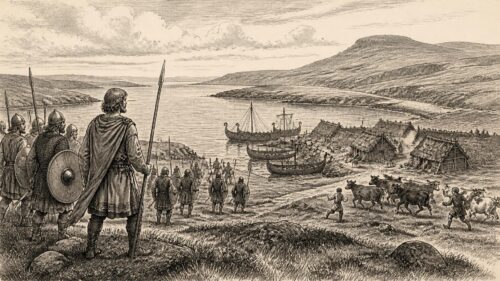
In 866, Áed Findliath, king of Tara, attacked Scandinavian longphuirt in Cenél nÉogain and Dál Araidi, defeated their forces at Lough Foyle, seized livestock and claimed 240 deaths. The campaign damaged northern maritime bases connected to wider Irish Sea networks, though its scope remains uncertain. Meanwhile, Dublin-associated rulers Amlaíb and Auisle raided Pictish Fortriu, taking hostages. In the west, jarl Tomrar plundered Clonfert, exposing monastic vulnerability despite later miraculous accounts of his death. Ecclesiastical notices underline church institutions’ importance. These events portray Ireland as a politically fragmented, interconnected maritime society, where warfare, trade, religious centres and agricultural resources shaped power.
Read Article
Archived: 28 October 2026
Abstract
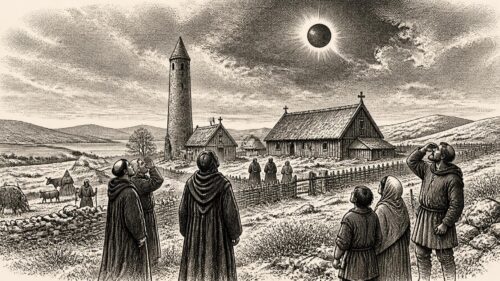
In 865 Irish annals recorded a solar eclipse on 1 January, confirmed by modern astronomy, and a lunar eclipse later that month, providing an unusually secure chronological anchor. Obituaries reveal ecclesiastical networks linking Kildare, Iona, Tallaght and Pictland: Cellach, abbot of Kildare and Iona, died among the Picts. Political instability appeared in the killing of Tadc, king of Uí Chennselaig, by his brothers and supporters, and the death of Tigernach of Loch Gabhair. Áed Findliath’s wider authority remained limited. Norse Dublin shaped the background, but Clondalkin’s burning is securely dated to 867, illustrating annalistic chronological problems within a fragmented polity.
Read Article
Archived: 28 October 2026
Abstract
In 864, Ireland’s fragmented politics were marked by coercion, shifting alliances and Scandinavian involvement. Áed Findliath consolidated authority by blinding Lorcán of Mide, while Amlaíb of Dublin drowned Conchobor at Clonard, demonstrating foreign rulers’ influence in inland dynastic struggles. Áed and Flann of Brega defeated the Ulaid, whereas Cerball of Osraige pursued raids, devastation, cattle seizures and hostages across Leinster and Munster. Annals also record ecclesiastical deaths and appointments at Louth, Terryglass and Kildare, alongside a Clare king’s death. Differing annal dates and partisan later narratives require caution, but collectively portray interconnected regional powers, churches and communities vulnerable to warfare.
Read Article





