
Archived: 26 September 2026
Abstract
In 1128 Ireland was marked by warfare, shifting alliances and ecclesiastical intervention. Toirdelbach Ua Conchobair raided Leinster, Wexford and Dublin, reaffirming Connacht’s reach after resistance to his rule. Tigernán Ua Ruairc suffered defeats amid northern and midland conflicts, while attacks on Cellach of Armagh’s entourage brought moral condemnation. Conchobar Mac Lochlainn expanded power through hostages and victories but was censured for burning Trim’s churches. Local rulers also faced violent succession struggles. Cellach negotiated a temporary Connacht–Munster peace, demonstrating Armagh’s diplomatic influence. Church offices remained politically contested, while ports, cattle wealth, monasteries and the Cross of Cong reflected Ireland’s connected culture.
Read Article

Archived: 26 September 2026
Abstract
1083 saw political change and violence across Ireland, chiefly in the north. Domnall Ua Lochlainn became king of Cenél Eógain, beginning a long career, and reinforced his position through a cattle raid into Conaille Muirtheimhne, rewarding allies from its proceeds. Áed Ua Maíl Shechnaill and several regional rulers, heirs and churchmen died or were killed, revealing fragile dynastic authority. Tairdelbach Ua Briain remained the dominant southern king, although no campaign is securely dated. Ecclesiastical obituaries highlighted churches’ learned and economic roles. Dublin’s connected bishopric contrasted with saint-centred institutions. Rural pastoral obligations coexisted with trading towns. Later annalistic claims require caution.
Read Article

Archived: 26 September 2026
Abstract
In 1065, Ireland’s fragmented kingdoms saw raids, succession struggles and reprisals. Forces led by Áed Ua Ruairc and Diarmait Ua Cellaig plundered Clonmacnoise and Clonfert, using vessels moved from the western sea to the Shannon. Áed Ua Conchobair of Connacht defeated them, recovered boats and pursued rival dynasties; church chroniclers presented this as saintly judgement. Killings in Ulster, including Donnchad Ua Mathgamna at Bangor, reflected internal conflict and contested sacred authority. In Mide and Munster, further deaths and Murchad Ua Briain’s attack at Kincora exposed political instability. Ecclesiastical obituaries, trade, farming and nut abundance reveal a connected society beyond warfare.
Read Article

Archived: 26 September 2026
Abstract
In 1043 Ireland remained politically fragmented, with Donnchad mac Briain’s prestige contested and Diarmait mac Máel na mBó consolidating Leinster. Annals record local warfare, killings and cattle raids, including violence at Glendalough, where sanctuary was breached, and fighting around the Suir. Northern conflicts involved Uí Méith, Ua Ruairc, and competing Uí Néill dynasties. Churches were both targets and political actors: Ciarán’s community ritually denounced Aed Ua Con Fhiacla, whose subsequent death was viewed as saintly vengeance. Cathal of Connacht died while pilgrim at Armagh. Despite insecurity, ecclesiastical centres sustained learning, wealth, pilgrimage and networks alongside rural farming and maritime trade.
Read Article
Archived: 26 September 2026
Abstract
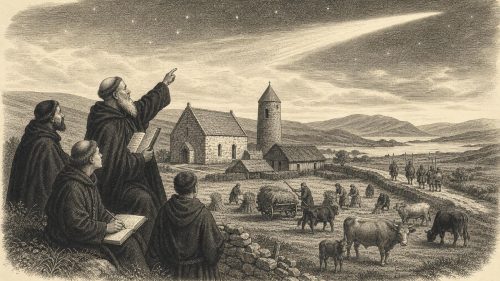
In 1018, four years after Clontarf, Ireland remained fragmented, as rival dynasties, Hiberno-Norse towns and local peoples pursued power through raiding, treachery and alliance. Máel Sechnaill’s authority in Mide was challenged when his steward and an allied king died during conflict in Fir Chell. Sitriuc Silkbeard of Dublin treacherously blinded Braen, son of Leinster’s Máel Mórda, ending his capacity to rule. Northern Uí Néill forces mobilised, while killings and plundering affected Gailenga, Tuatha Luigne and Óentreb. Ecclesiastical deaths reflected churches’ political and cultural importance; Waterford’s Norse king died. Annalists also recorded an autumn comet, revealing learned religious observation amid instability.
Read Article




