Armagh Peacemaking1128 CE
In 1128 Ireland was marked by warfare, shifting alliances and ecclesiastical intervention. Toirdelbach Ua Conchobair raided Leinster, Wexford and Dublin, reaffirming Connacht’s reach after resistance to his rule. Tigernán Ua Ruairc suffered defeats amid northern and midland conflicts, while attacks on Cellach of Armagh’s entourage brought moral condemnation. Conchobar Mac Lochlainn expanded power through hostages and victories but was censured for burning Trim’s churches. Local rulers also faced violent succession struggles. Cellach negotiated a temporary Connacht–Munster peace, demonstrating Armagh’s diplomatic influence. Church offices remained politically contested, while ports, cattle wealth, monasteries and the Cross of Cong reflected Ireland’s connected culture.
Dateline
The surviving annals make 1128 one of the more vividly recorded years of early twelfth-century Ireland. Their entries do not supply a modern, day-by-day chronology, and their order may not always represent the exact sequence of events. Nevertheless, they reveal an island shaped by ambitious overkings, mobile armies, contested ecclesiastical authority and repeated attempts to restrain violence through negotiation. Toirdelbach Ua Conchobair remained the strongest claimant to the high-kingship, but his reach depended upon hostages, campaigning and alliances rather than uncontested national government. Cellach, successor of Patrick at Armagh, exercised a different kind of authority: spiritual, diplomatic and increasingly reforming.
Toirdelbach in Leinster
A firmly recorded event was Toirdelbach’s major expedition into Leinster. The Annals of Ulster say that he raided the province, plundered Loch Garman—Wexford—and passed around Leinster to Dublin, destroying many cattle along the route before returning home. The Annals of Tigernach add that he entered Uí Chennselaig and burned extensively while keeping the sea to his right on the northward journey. The Four Masters record the death of Ua Gadhra, king of Luigne, during the campaign.
This was more than a search for portable wealth. Toirdelbach had imposed his son Conchobar upon Leinster and Dublin in 1126, but the Leinstermen and Dubliners had rejected that arrangement in 1127. The expedition of 1128 therefore demonstrated that Toirdelbach could still project Connacht power across the island and into the coastal territories of the south-east. Its route linked Uí Chennselaig, Wexford and Dublin, combining devastation of rural resources with pressure upon two commercially important Norse-Irish ports.
The chroniclers say that the expedition’s dishonour or disrepute rested upon Tigernán Ua Ruairc, king of Bréifne. They do not explain the circumstances sufficiently to assign a precise responsibility. The comment may reflect his participation, his advice or a wider political grievance. It does show that military reputation was judged morally as well as strategically. A king could gain cattle and submission yet still be condemned for the manner in which a campaign was conducted.
War in the North and Midlands
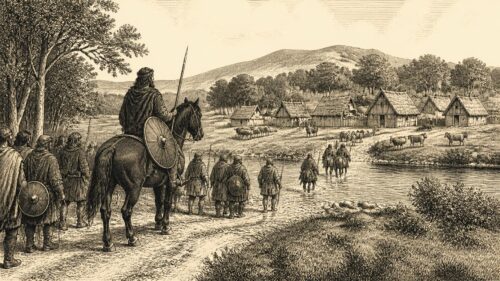
Tigernán was deeply involved in the year’s northern and midland struggles. The annals record that the cavalry of Conchobar Mac Lochlainn defeated his horsemen. Among those killed were Ua Ciarda, king of Cairbre; Cathal Ua Raghailligh; Sitriuc Ua Mael Brigte; and a son of Áed Ua Dubda, king of Uí Amalgada. The naming of these leaders suggests that Tigernán’s force drew upon a substantial coalition extending beyond Bréifne. It also provides unusually clear evidence for organised mounted contingents among the armies of major Irish rulers.
The records preserve another confrontation involving the men of Fernmag, who raided Tír Briúin and carried away a large booty. Tigernán and the Uí Briúin overtook them at Áth Fhirdiadh, modern Ardee, but suffered a severe defeat. The Annals of Ulster estimate that three or four hundred were killed, while the Annals of Loch Cé give four hundred. Such figures should not be treated as a precise battlefield count, but all accounts agree that the losses were heavy.
The chronicler interpreted Tigernán’s defeat as vengeance for an outrage against Cellach, successor of Patrick. Tigernán and the Uí Briúin had attacked or robbed Cellach’s company in his presence; members of the retinue were killed, including a young cleric of his household. The Annals of Ulster describe the deed as unprecedented and warn that no protection could remain secure until it had been avenged. This is partisan language, yet it expresses an important political principle: the recognised protection of a senior churchman was expected to restrain even kings.
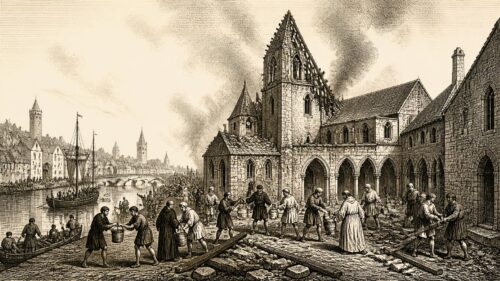
Conchobar Mac Lochlainn was not spared ecclesiastical criticism. He led the Cenél Eógain, Dál Araide and Airgialla into Mag Coba, where they took hostages from the Uí Echach. The army then turned south into Brega and burned Áth Truim—Trim—with its churches. People sheltering there were killed, and the annalist characterised them as martyrs. The campaign demonstrated Conchobar’s growing northern power, but its treatment in the record also shows that victory did not excuse violation of a sanctuary.
Local Kingship and Violent Succession
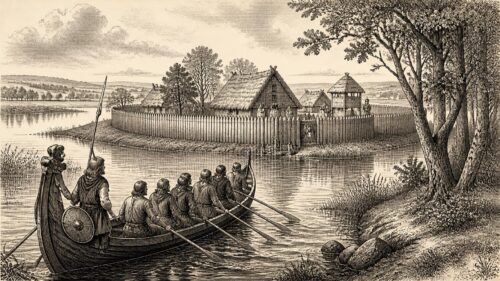
Smaller kingdoms experienced their own deadly contests. Men of Mag Ítha and Cenél Moain, led by Domnall Ua Gairmledaig, stormed a house occupied by Fáelán Ua Duibdara, king of Fir Manach. Fáelán and several nobles were killed. The action illustrates a recurring form of aristocratic violence: an enclosed residence could be attacked directly, turning a place of hospitality or refuge into a trap. Political authority remained personal, dynastic and vulnerable to sudden changes of allegiance.
Some traditions also place the killing of Magnus Mac Lochlainn, briefly king of Cenél Eógain and the North, in 1128, whereas other annalistic arrangements associate it with 1129. His death at the hands of Cenél Conaill and Cenél Moain belongs securely to this immediate period, but not to a universally agreed calendar position. The discrepancy is a reminder that medieval annalistic dates, though often invaluable, cannot always be reconciled exactly.
Cellach and the Reforming Church
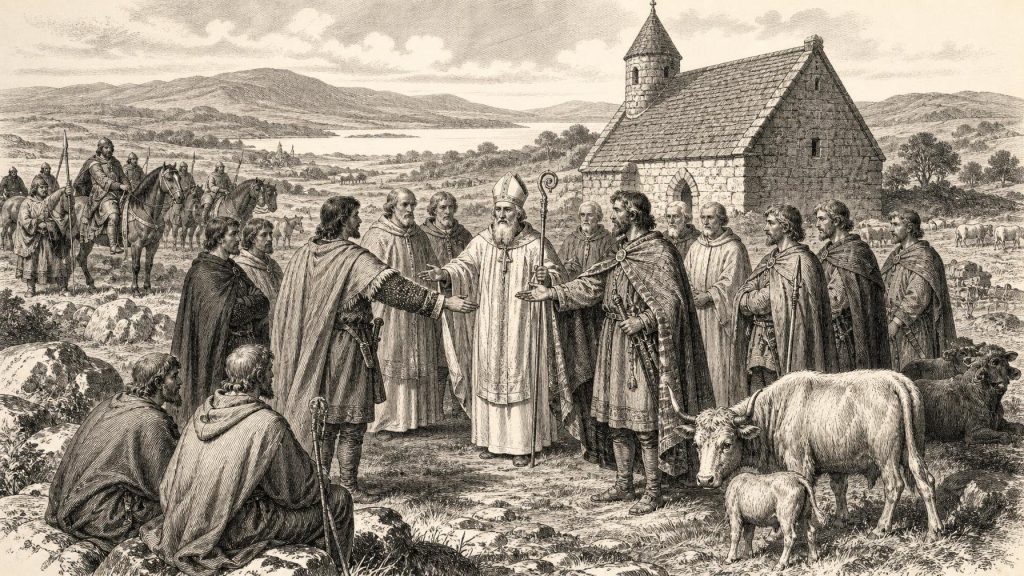
Cellach’s most constructive achievement in 1128 was a negotiated peace between Connacht and Munster. The Annals of Ulster and Loch Cé describe it as lasting about a year and a half; the Four Masters call it a year’s peace. It followed Toirdelbach’s enormous campaigns and naval operations against Munster in 1127. Cellach’s intervention gave exhausted territories a temporary respite while confirming Armagh’s claim to stand above provincial divisions. The agreement was diplomacy backed by religious prestige rather than permanent central administration.
The Church was itself entangled in local power. Gilla Pátraic Ua Cathail, successor of St Kevin at Glendalough, was killed within the great ecclesiastical settlement by Leinstermen or, in one account, the Uí Muiredaig. Glendalough was simultaneously a monastery, diocesan centre, landholder, place of pilgrimage and focus of dynastic competition. Control of its leading office brought access to property, dependants and inherited sanctity, making an abbacy politically valuable as well as religiously important.
Numerous ecclesiastical deaths recorded under 1128 reveal the density of Ireland’s church institutions. They included Conaing Ua Beigléighinn, abbot of Kells; Muirgius Ua Nioc, former superior of Tuam; office-holders associated with Roscrea, Lismore, Cong and Clonmacnoise; and Gilla an Choimded, vice-abbot of Clonmacnoise. These notices are not evidence of a single disaster. Rather, they show how annalists mapped society through churches and their hereditary or elected superiors, teachers, administrators and spiritual advisers.
Livelihoods, Settlements and Culture
For most people, the year’s wars were experienced through lost livestock, burned crops and buildings, forced service, displacement and the demands of passing armies. Cattle dominated both political accounting and much rural production, supplying dairy food, meat, hides and a recognised measure of wealth. Accordingly, annalistic “prey” usually meant herds driven away from a defeated district. To destroy cattle, as Toirdelbach’s army did in Leinster, was to damage households, lordly revenues and the ability of a community to recover.
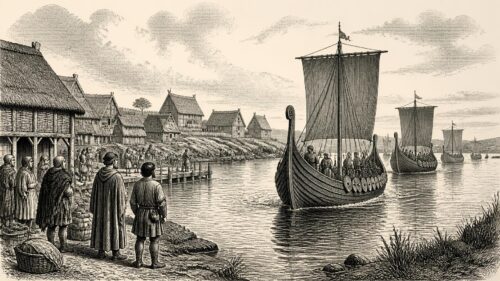
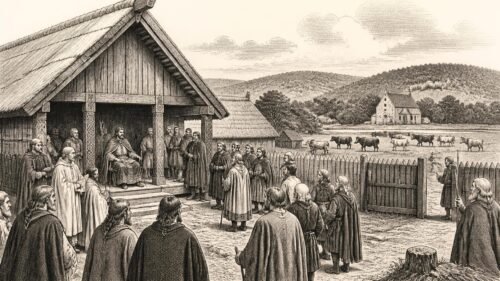
Everyday settlement remained overwhelmingly rural, organised around farmsteads, enclosed residences, church lands and small territorial kingdoms. Yet Dublin, Wexford, Waterford, Cork and Limerick connected Irish rulers and producers to maritime exchange. Toirdelbach’s use of fleets in the surrounding years and his 1128 march between Wexford and Dublin demonstrate how ports, rivers, roads and coastal corridors had become integral to warfare. Monasteries such as Clonmacnoise likewise combined worship and learning with craft production, hospitality and traffic along major waterways.
Material culture could express the same alliance of kingship and religion seen in Cellach’s diplomacy. The Cross of Cong, commissioned by Toirdelbach and made between about 1123 and 1127 to enshrine a relic of the True Cross, was still newly created in 1128. Its bronze plates, gold filigree, glass, niello and Scandinavian-derived ornament testify to highly specialised Irish craftsmanship. Its inscriptions name the royal patron, churchmen and the craftsman Máel Ísu, preserving a rare acknowledgement of the people who produced elite sacred art.
A Contested Order
No single event transformed Ireland in 1128. The year’s importance lies instead in the interaction of conquest, local resistance and ecclesiastical mediation. Toirdelbach could march from Connacht to Wexford and Dublin, but could not govern Leinster without renewed coercion. Conchobar Mac Lochlainn could collect hostages and defeat Bréifne’s cavalry, yet his army was condemned for burning churches. Tigernán Ua Ruairc remained formidable, but attacks upon Patrick’s successor damaged his standing. Cellach could not end warfare, though he could turn spiritual authority into a practical peace. Ireland in 1128 was neither politically unified nor isolated: it was a competitive, mobile and culturally accomplished society seeking order amid the ambitions of kings.
Primary Sources
- The Annals of Ulster: Year U1128
- The Annals of Ulster: Year U1126
- The Annals of Ulster: Year U1129
- The Annals of Ulster – CELT Edition
- The Annals of Tigernach, Part 21
- The Annals of Tigernach – CELT Edition
- Chronicon Scotorum – CELT Edition
- Annals of the Four Masters, Part 23
- Annals of the Four Masters – CELT Edition
- Annals of Loch Cé – CELT Edition
- Ua Conchobair, Tairdelbach (O'Conor, Turlough)
- Ua Ruairc, Tigernán
- Mac Murchada, Diarmait (MacMurrough, Dermot)
- Ua Tuathail, Muirchertach
- Derbfhorgaill
- The Cross of Cong
- Clonmacnoise, County Offaly
- Glendalough
- Prosopographica Glindelachensis: The Monastic Church of Glendalough and its Community, Sixth to Thirteenth Centuries
- The Zooarchaeology of Medieval Ireland
- The Economy of Early Medieval Ireland
- Early Medieval Dwellings and Settlements in Ireland, AD 400–1100
- ‘A Man of Great Power for a Long Time’: Tigernán Ua Ruairc and the Book of Kells