

Related Archive: Clonmel History

Clonmel’s Billeted Houses

Clonmel’s Billeted Houses

Archived: 14 October 2026

Abstract

In 1696, Williamite Ireland consolidated its post-war authority through military, fiscal and municipal controls rather than major conflict. Alarm over French-backed Jacobitism prompted proclamations against fugitives, alleged tories and absent officers, while Catholic disarmament authorised searches and deepened inequality. At Clonmel, the corporation ordered soldiers quartered in Catholic homes to prevent meetings, illustrating domestic surveillance despite continued Catholic trading. Poll and hearth taxes, regulated measures and proclamations sustained administration. Investigations into forfeited estates exposed continuing uncertainty over Catholic property rights. State-appointed fasts and thanksgivings reinforced Protestant political culture, while action against pirate Henry Every reflected Ireland’s place in imperial policing.

Read Article

Clonmel’s Empty Breach

Clonmel’s Empty Breach

Archived: 14 October 2026

Abstract

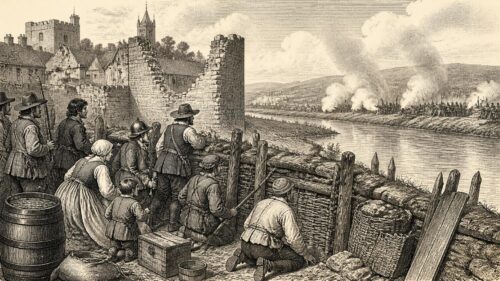
In 1650, the Cromwellian conquest advanced despite continuing resistance in Connacht, Limerick and Ulster. Cromwell’s agreement with Protestant royalists weakened Ormond’s Catholic–royalist coalition. At Clonmel, Hugh Dubh O’Neill’s improvised inner defence repelled a costly assault, although shortages enabled the garrison’s escape and the town’s surrender. Broghill defeated a relief force at Macroom, while Scarrifholis destroyed the Ulster Catholic army and led to Heber MacMahon’s execution. After Cromwell departed, Henry Ireton captured plague-stricken Waterford and Duncannon, pressured Athlone and failed before Limerick. Clergy repudiated Ormond; garrisons, blockade, disease and resource seizures established groundwork for further conquest and settlement in Ireland thereafter.

Read Article

