Archived: 29 October 2026
Abstract
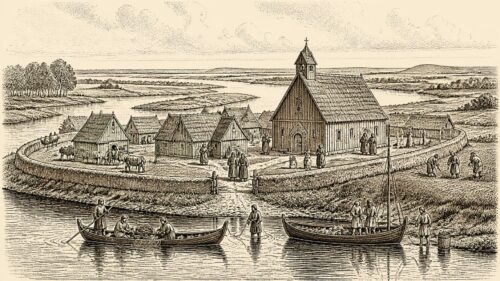
In 833, Ireland’s major churches functioned as religious centres, estates, communications hubs and political assets amid rivalry between provincial kings. Conchobar of Tara died, and Niall Caille of Cenél nÉogain succeeded him, defeating foreigners near Derry with Murchad. Feidlimid of Cashel attacked Clonmacnoise and Durrow, killing community members and burning church lands, probably targeting rival patronage networks rather than destroying churches. Kildare suffered bloodshed, while Lismore was burned amid uncertain local conflict. Viking raiders plundered Clondalkin, Druim Inasclainn and Loch Bricrenn, though Irish forces resisted. Deaths of Connacht and western Munster rulers further unsettled alliances, illustrating a connected, contested landscape.
Read Article
Archived: 30 October 2026
Abstract
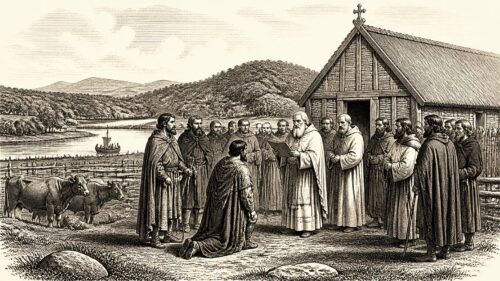
The most consequential Irish notice securely placed in 788 is not a battle or a royal accession, but a brief statement of authority: “Ciarán’s law in force in Connacht.” In an island divided among many kingdoms, dynasties and ecclesiastical federations, such a line signals a major public act. It points to the standing of the saint of Clonmacnoise, to the ability of Connacht’s rulers and clerics to cooperate, and to the practical value of religious protection in a society where cattle, tribute, land and people were vulnerable to seizure. Dating the Year Carefully Medieval Irish annals require particular care with
Read Article
Archived: 30 October 2026
Abstract
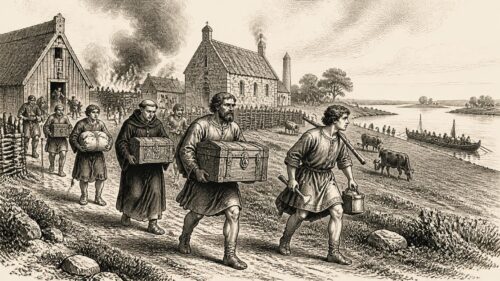
Records for 777 illustrate the difficulties of early Irish chronology. The Annals of Inisfallen report Nia son of Cú Allaid killed at Sliab Mis, the death of Connacht king Flaithrí son of Domnall, and the drowning of more than one hundred Connachta at Tír dá Glas. The Annals of Ulster's associated dossier, conventionally dated 778, describes Donnchad Midi's victory at Forchalad, Clonmacnoise's burning on 10 July, illness and cattle disease, and promulgation of Columba's law. It also notes deaths and conflict. Together the evidence depicts interconnected yet politically fragmented communities vulnerable to warfare, accidents, disease and monastic disaster across Ireland.
Read Article
Archived: 30 October 2026
Abstract
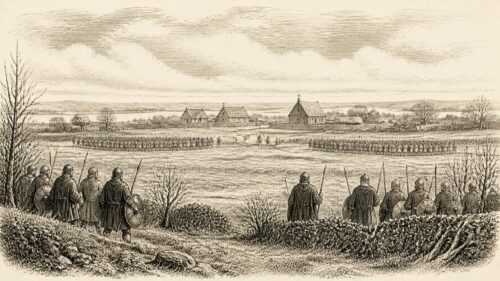
Irish annals conventionally date 764, despite chronological uncertainty, as a year of disruption. Exceptional snow, famine, drought and an intestinal sickness afflicted Ireland, though their precise effects remain unknown. The battle of Argaman saw Clonmacnoise defeat Durrow, with Durrow leaders Diarmait Dub and Diglach among 200 dead, while Bresal of Clonmacnoise was killed. The conflict reflected monasteries’ roles as wealthy, politically connected communities, not solely religious houses. Other notices record battles, deaths of abbots and kings, and Connacht’s king Ailill. Later sources add regional conflicts. A poem celebrating Niall Frossach’s miraculous showers contrasted ideal kingship and abundance with widespread privation.
Read Article
Archived: 1 November 2026
Abstract
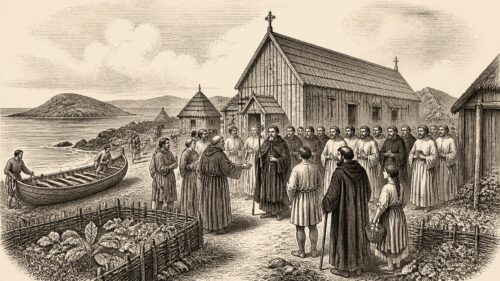
In 724, Fogartach mac Néill was killed by Cináed mac Írgalaig at Cenn Deilgden, probably in the Brega–Mide region, strengthening Cináed’s claim to paramount kingship among the southern Uí Néill. The battle reflected competitive dynastic politics rather than rule over a unified Ireland, and its military details remain unknown. Elsewhere, Fáelchú, abbot of Iona, died and Cilléne Fota succeeded, possibly reuniting contested offices. Nechtan’s withdrawal and Drust’s accession marked a Pictish change of ruler. Cuinnles of Clonmacnoise and Cáech Scúili, scribe of Derry, also died. These records illuminate interconnected political, ecclesiastical and literary authority, while leaving everyday conditions largely undocumented.
Read Article
Archived: 13 October 2026
Abstract
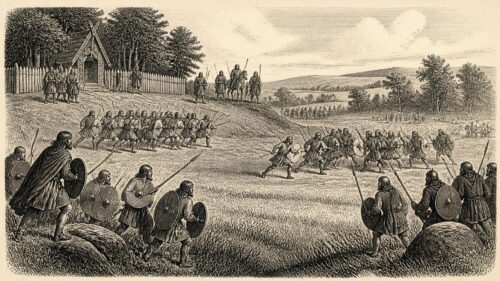
In 714, Irish annals recorded concentrated warfare, political upheaval and environmental strain. Murchad Midi of Clann Cholmáin defeated Brega rivals in two encounters at Bile Tened, while Fogartach of southern Brega was expelled to Britain and Forbassach of Uí Fhailgi was killed in Mide. Other conflicts occurred among Uí Echach and Bairche, and Munstermen killed Clárainech’s travelling religious community. Selbach rebuilt Dún Ollaig in Dál Riata, highlighting Irish Sea links. Ailén Daingen, probably a fortified lake settlement, was destroyed. A great drought and bright autumn night were also noted, revealing a fragmented society vulnerable to conflict and natural pressures alike.
Read Article
Archived: 1 November 2026
Abstract
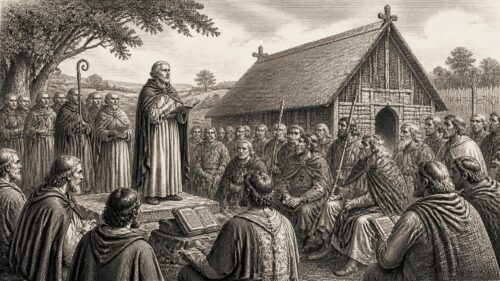
In 697 CE, the most consequential Irish development securely associated with the year was Adomnán of Iona’s promulgation of the Cáin Adomnáin, the ‘Law of Adomnán’, at Birr in what is now County Offaly. The Irish annals record tersely that Adomnán came to Ireland and gave the Lex Innocentium, or Law of Innocents, to the people. Behind that spare notice lies an unusually ambitious attempt to regulate the conduct of war across a politically divided island and, in principle, across the Irish Sea. A Year with a Chronological Caveat Early Irish annals do not always align neatly with modern calendar
Read Article





