Archived: 26 October 2026
Abstract
Annals conventionally place 993 amid a major mortality of people, cattle and bees, though its cause, scale and chronology remain uncertain. This crisis threatened subsistence, wealth and ecclesiastical resources. Political violence killed several local rulers in the midlands, Connacht and west, revealing fragmented lordship and Máel Sechnaill’s interventions. Brian of Munster led a naval expedition from Lough Ree towards Bréifne, while Mide suffered devastation and Dublin’s Norse-Gaelic politics remained unsettled. Meanwhile, Muirecán, Patrick’s successor, visited Cenél nÉogain and publicly affirmed Áed’s royal standing. The notices portray interconnected warfare, church authority, riverine mobility and vulnerable rural life throughout Ireland in 993.
Read Article
Archived: 26 October 2026
Abstract
In 971, Domnall ua Néill, Northern Uí Néill king of Tara, was expelled from Mide by Clann Cholmáin, exposing the fragility of his claimed supremacy. He swiftly returned with an army, plundering churches, forts and communities in Mide and raiding Uí Fhailgi and Fotharta to punish resistance and display power. The year also saw the death of Niall son of Áed, king of Ulaid, amid eastern Ulster instability; ecclesiastical succession changes at Ciarán’s and Cainnech’s communities; and Cellach ua Nuadat’s killing by foreigners at a refectory. These entries reveal conflict affecting rural society, churches, dynastic politics and Irish Sea connections.
Read Article
Archived: 27 October 2026
Abstract
In 952, Amlaíb Cuarán was expelled from York and, according to Irish tradition and modern scholarship, returned to Dublin, redirecting his ambitions towards Ireland. His arrival followed Dublin’s recent raids, disease and political disruption, and unsettled his alliance with Congalach Cnogba, king of Tara. Domnall son of Donnchad, Clann Cholmáin heir to Tara, died, weakening a rival midlands dynasty; Flann ua Cléirig of southern Connacht also died. Ferdomnach of Clonmacnoise and Glendalough, alongside other ecclesiastical leaders, died. Dublin remained a thriving maritime trading centre using mixed forms of wealth, not yet its own coinage. No securely dated Irish battle occurred.
Read Article
Archived: 30 October 2026
Abstract
The most consequential Irish notice securely placed in 788 is not a battle or a royal accession, but a brief statement of authority: “Ciarán’s law in force in Connacht.” In an island divided among many kingdoms, dynasties and ecclesiastical federations, such a line signals a major public act. It points to the standing of the saint of Clonmacnoise, to the ability of Connacht’s rulers and clerics to cooperate, and to the practical value of religious protection in a society where cattle, tribute, land and people were vulnerable to seizure. Dating the Year Carefully Medieval Irish annals require particular care with
Read Article
Archived: 30 October 2026
Abstract
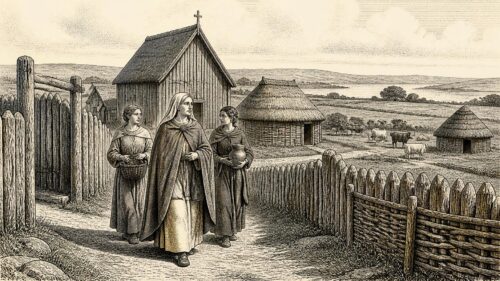
In 775, Irish annalistic evidence records deaths of ecclesiastical and learned figures, including Scannal, Maicníad, Augustin, Adarchu and Forbflaith, abbess of Clonbroney, alongside a battle at Uilleann Guaire that killed Flann son of Cellach and Scannlán son of Fínnechta. Dates and details remain uncertain because medieval annalistic chronologies differ. The year also saw Donnchad Midi, king of Tara, devastate Munster, demonstrating coercive but limited overlordship. These notices reveal interconnected political, religious and intellectual communities, in which churches held economic and social authority, women could lead religious houses, and rural households locally sustained kingdoms and monasteries through labour, rents, and service.
Read Article
Archived: 30 October 2026
Abstract
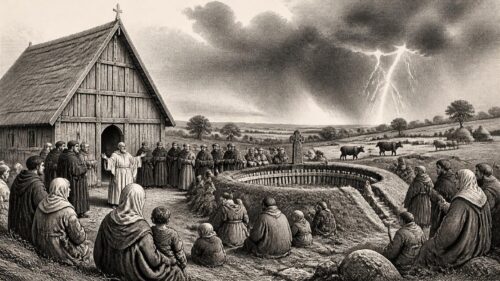
In annalistic year 771, Donnchad mac Domnaill, king of Tara, led a hosting to Cnoc Báine, probably in modern County Tyrone, demonstrating authority rather than recording a confirmed victory. The annals also note killings of Conchobor and Connacht rulers Áed Aithgein of Uí Maine and Art of Aidne. The law of saints Comán and Aedán was renewed across the three Connachts, illustrating church and secular collaboration. A severe Michaelmas thunderstorm prompted widespread fasting. Deaths included ecclesiastics from Clonard and Cluain Eidnig, and Suibne, abbot of Iona. Chronological discrepancies among later annals require caution when assigning additional events to this year.
Read Article
Archived: 30 October 2026
Abstract
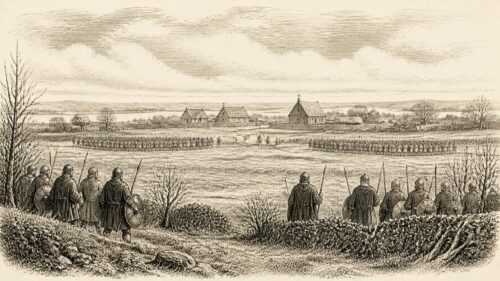
Irish annals conventionally date 764, despite chronological uncertainty, as a year of disruption. Exceptional snow, famine, drought and an intestinal sickness afflicted Ireland, though their precise effects remain unknown. The battle of Argaman saw Clonmacnoise defeat Durrow, with Durrow leaders Diarmait Dub and Diglach among 200 dead, while Bresal of Clonmacnoise was killed. The conflict reflected monasteries’ roles as wealthy, politically connected communities, not solely religious houses. Other notices record battles, deaths of abbots and kings, and Connacht’s king Ailill. Later sources add regional conflicts. A poem celebrating Niall Frossach’s miraculous showers contrasted ideal kingship and abundance with widespread privation.
Read Article
Archived: 31 October 2026
Abstract
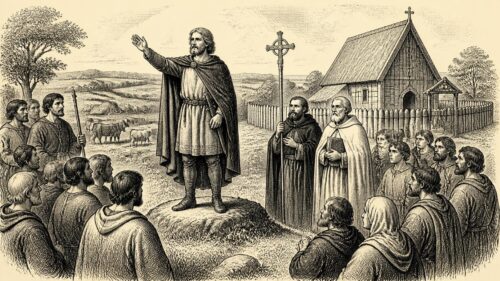
In 753 CE, Domnall Midi of Clann Cholmáin enforced the law of Colum Cille, publicly combining royal authority with the saint’s protection, privileges and ecclesiastical claims. The act reflected Ireland’s fragmented political order, where rulers, kin groups and churches negotiated power. Annals also record a solar eclipse, deaths of abbots and churchmen across Ireland, the death of Echaid, king of Uí Moccu Uais, slaughter among Connacht groups, and Ferblae’s death as a learned man. These terse notices reveal interconnected religious, political and economic communities. Chronological differences among annals require caution, although the eclipse is securely dated to 9 January 753.
Read Article





