
Archived: 9 October 2026
Abstract
In 1925, the Boundary Commission exposed the limits of Free State hopes for revision of partition. After hearings across the frontier, leaked proposals for minor exchanges prompted Eoin MacNeill’s resignation. Cosgrave, Craig and Baldwin then agreed to preserve the border, ending the commission and easing the Free State’s debt liability. Northern Ireland’s election reaffirmed Unionist control. Meanwhile, the Free State consolidated administration through local government, housing, policing, courts, defence, electoral and rural legislation. Most ambitiously, the Shannon Electricity Act enabled construction at Ardnacrusha, launched in August. The hydro-electric scheme signalled state-led modernisation, despite finances and unemployment, contrasting disappointment with ambition.
Read Article
Archived: 9 October 2026
Abstract
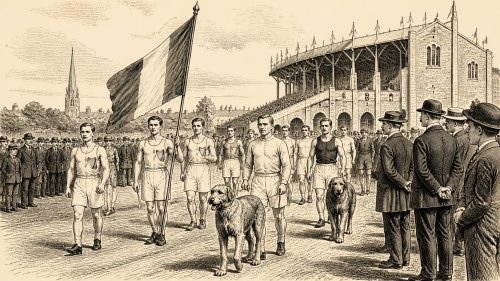
In 1924, the Irish Free State strengthened its authority after civil war. Government resistance to Liam Tobin’s Army Crisis affirmed civilian control and led towards a smaller professional army. New courts, policing and administrative laws established regular state institutions, while prosecutions for Civil War acts ended. The Boundary Commission began work amid nationalist expectations. Fiscal retrenchment, notably reduced old-age pensions, caused hardship. Railway legislation sought economic integration. Ireland competed independently at the Paris Olympics and hosted the Tailteann Games, projecting cultural confidence despite republican boycott. Irish-language education expanded. The year combined constitutional consolidation, austerity, unresolved partition and contested national self-presentation.
Read Article
Archived: 9 October 2026
Abstract
In 1913, the Third Home Rule Bill intensified conflict between constitutional nationalism and Ulster unionism, whose Volunteer Force prepared to resist self-government. Dublin’s Lockout pitted James Larkin’s ITGWU against employers led by William Martin Murphy, bringing exclusion, Bloody Sunday violence, hunger and disputes over relief for children. The collapse of Church Street tenements, killing seven, highlighted urban housing failures. Labour activists formed the Irish Citizen Army, while nationalists founded the Irish Volunteers at the Rotunda in response to unionist militarisation. Cultural debates involving Yeats and the Gaelic League reflected public identities, leaving Ireland divided, mobilised and distrustful of parliamentary solutions.
Read Article

Archived: 9 October 2026
Abstract
In 1893, Gladstone’s second Home Rule Bill proposed an Irish legislature within the Union, retaining Westminster supremacy, imperial responsibilities and Irish representation. Despite Commons approval, it was overwhelmingly rejected by the Lords, exposing constitutional limits and intensifying unionist fears. On 31 July, Douglas Hyde, Eoin MacNeill and others founded the non-sectarian Gaelic League in Dublin to revive spoken Irish through classes, publications and branches, amid language decline. The year also reflected religious and social organisation: Archbishop Michael Logue became cardinal, St Mel’s Cathedral was consecrated, Margaret Lyttle began a girls’ club, and the National Labour League highlighted rural workers’ grievances.
Read Article




