
Archived: 26 September 2026
Abstract
Ireland’s 2025 combined economic strength with social and infrastructural pressures. Micheál Martin returned as Taoiseach, leading a Fianna Fáil–Fine Gael coalition supported by independents, which prioritised housing, services, security and competitiveness. Ireland pursued prominent legal and diplomatic action concerning Gaza, while Shared Island and research funding encouraged practical north–south cooperation. Population growth, employment and tax revenues intensified demand for homes, schools and healthcare. Housing completions rose, alongside a new long-term building plan and planning reforms. Cultural and language initiatives continued. Storm Éowyn caused severe disruption, and an exceptionally warm year highlighted climate risks. Dependence on multinational corporation tax remained vulnerability.
Read Article

Archived: 26 September 2026
Abstract
In 2020, Ireland experienced political realignment, pandemic emergency and Brexit transition. February’s inconclusive election saw Sinn Féin lead first-preference votes, Fianna Fáil win most seats, and caretaker Taoiseach Leo Varadkar govern until Fianna Fáil, Fine Gael and Greens formed an unprecedented coalition under Micheál Martin in June. COVID-19 transformed daily life: closures, lockdowns, the two-kilometre exercise rule, remote work and restricted funerals accompanied 1,928 deaths. Schools adopted remote teaching and calculated Leaving Certificate grades; emergency payments addressed severe job losses amid housing pressure. Northern Ireland restored devolution; Brexit ended in EU-UK trade agreement; Ireland returned to Level 5 awaiting vaccination.
Read Article

Archived: 26 September 2026
Abstract
Ireland in 2017 faced political, social and constitutional uncertainty amid economic recovery. Leo Varadkar became Taoiseach, leading a fragile Fine Gael minority after Frances Fitzgerald’s resignation. Northern Ireland’s Executive collapsed, while Brexit negotiations elevated the border, producing commitments to avoid a hard border and protect the Belfast Agreement. Citizens’ Assembly and Oireachtas processes advanced debate on repealing the Eighth Amendment. Tuam excavations revealed infant and child remains, intensifying scrutiny of mother-and-baby homes. Growth coexisted with severe housing need and homelessness. Census profiles highlighted education and diversity; Storm Ophelia caused disruption and deaths; Creative Ireland promoted cultural participation across communities nationwide.
Read Article

Archived: 26 September 2026
Abstract
Ireland’s 2016 combined the Easter Rising centenary with political fragmentation and Brexit uncertainty. After an inconclusive election, Enda Kenny led a Fine Gael minority government sustained by Fianna Fáil confidence and supply, amid disputes over water charges, housing and public services. Inclusive commemorations at the GPO, Kilmainham and elsewhere examined 1916’s contested legacy. Britain’s EU withdrawal vote revived concerns about the border, trade, the Common Travel Area and the peace process. Economic recovery, falling unemployment and immigration coincided with homelessness and housing shortages. Ireland challenged the European Commission’s Apple tax ruling, established a Citizens’ Assembly, and joined the Paris Agreement.
Read Article
Archived: 26 September 2026
Abstract
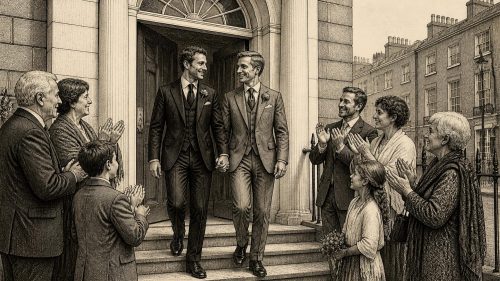
In 2015, Ireland experienced uneven recovery from the financial crash amid water-charge protests, emigration and approaching elections. Voters overwhelmingly approved marriage equality in May, followed by legislation enabling same-sex marriage, while family-law and gender-recognition reforms broadened legal recognition. The State established an inquiry into mother-and-baby homes, confronting institutional abuses. Economic growth and falling unemployment coexisted with insecurity, outward migration and misleading GDP expansion driven by multinational restructuring. Ireland expanded Mediterranean rescue and refugee commitments, supported Northern Ireland's Fresh Start Agreement, and enacted climate-governance legislation. The year combined change with disputes over austerity, historical accountability, public services, peace and international responsibility.
Read Article
Archived: 26 September 2026
Abstract
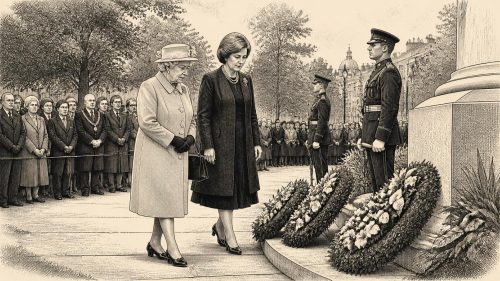
In 2011, Ireland underwent political, economic and social upheaval. Fine Gael and Labour replaced Fianna Fáil after an election dominated by the banking crisis, EU–IMF programme, austerity, unemployment and emigration. Census 2011 recorded a growing, increasingly diverse population. Civil partnership commenced, extending legal recognition to same-sex couples. Queen Elizabeth II’s State visit, including Croke Park, and Barack Obama’s visit to Moneygall symbolised reconciliation and international connection, although dissident violence persisted in Northern Ireland. The Cloyne report exposed grave failures over clerical abuse allegations, damaging institutional trust. Michael D. Higgins became President, promising ethical citizenship and solidarity amid continuing national hardship.
Read Article
Archived: 26 September 2026
Abstract
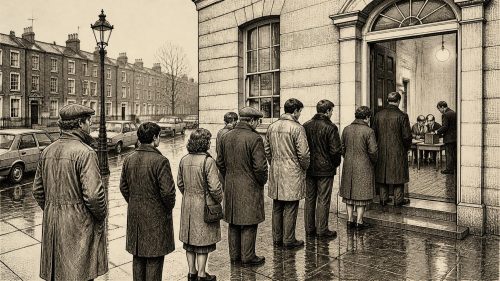
In 1982, Ireland endured two general elections, the collapse of governments and changes between Charles Haughey and Garret FitzGerald amid recession, unemployment, borrowing and tax protests. Haughey’s precarious minority relied on Tony Gregory’s inner-city development agreement before losing confidence; the MacArthur affair and telephone-tapping allegations further damaged public trust. Northern Ireland elected a Stormont Assembly, but nationalist boycotts limited its legitimacy as violence continued, including fatal bombings in London and Ballykelly. Social change included abolition of school corporal punishment and Dublin’s first crematorium. Constitutional debate on abortion intensified, while cultural, neutrality and Falklands issues underscored unresolved political divisions across Ireland.
Read Article

Archived: 8 October 2026
Abstract
In 1973, Ireland joined the European Economic Community, opening markets, agricultural supports and a less Britain-dependent future, while Irish gained limited Community status. A Fine Gael–Labour coalition replaced Fianna Fáil, and constitutional reforms lowering the voting age and removing denominational preference took effect. Troubles violence affected both jurisdictions and extended to London. Northern Ireland’s border poll, Assembly, constitutional legislation and power-sharing plans sought to replace unionist majority rule, but remained contested. December’s Sunningdale Agreement linked consent, an Executive and a Council of Ireland. Oil-driven inflation complicated European optimism. The year established principles of power-sharing and north-south co-operation amid continuing conflict.
Read Article

Archived: 8 October 2026
Abstract
Ireland in 1954 experienced political change, economic pressure, religious mass devotion and cultural innovation. Fine Gael’s John A. Costello led a minority inter-party government after Fianna Fáil’s electoral losses, amid concerns over employment, emigration, farming and housing. New legislation addressed development, land, housing and health, while Tayto and the Evening Press began trading. Marian Year pilgrimages made Knock a major national destination. The Gough Barracks arms raid signalled renewed republican militancy. Michael Manning’s execution at Mountjoy became the state’s last. Brendan Behan’s The Quare Fellow, Christy Brown’s My Left Foot and the first modern Bloomsday reflected increasingly challenging cultural voices.
Read Article

Archived: 9 October 2026
Abstract
During 1934, de Valera’s Free State confronted Blueshirt militancy by restricting political uniforms, while seeking unsuccessfully to abolish the Seanad. The Economic War strained rural Ireland, contributing to violence at Cork’s Copley Street cattle sale, though December’s cattle-and-coal agreement provided limited relief without ending the dispute. Republican Congress emerged at Athlone, linking independence with socialism, but rapidly divided. In Northern Ireland, Craigavon’s declaration of a Protestant state highlighted entrenched Unionist dominance, alongside civic developments including Belfast Zoo. Cultural life included Man of Aran, Dublin’s Theatre Royal closure, a newspaper strike, and Adolf Mahr’s National Museum directorship, reflecting contested Irish identities.
Read Article
Archived: 9 October 2026
Abstract
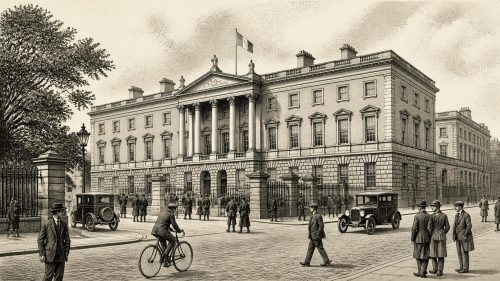
In 1933 Fianna Fáil secured a Dáil majority, enabling Éamon de Valera’s government to pursue a stronger interpretation of Irish self-government. The Constitution (Removal of Oath) Act ended compulsory parliamentary declarations involving the Crown and repealed the Treaty’s overriding constitutional status, though Ireland remained short of a republic. Anglo-Irish conflict over land annuities continued to damage agricultural exports during the Economic War. Protectionist measures promoted cereals, industrial credit and sugar production, while land reform and unemployment assistance expanded state intervention. Government suppression of Blueshirt mobilisation preceded Fine Gael’s formation. Meanwhile, Northern Ireland’s Unionist administration remained firmly entrenched, underscoring partition’s persistence.
Read Article




