


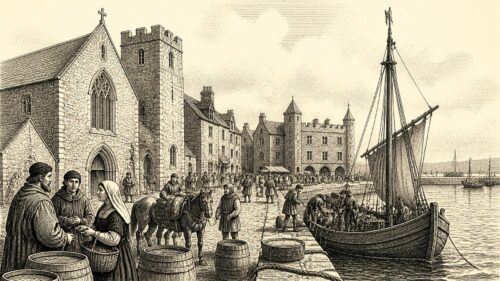
Related Archive: Galway charter

Galway Mayoralty

Galway Mayoralty

Archived: 19 October 2026

Abstract

In 1484, Ireland comprised the English lordship, autonomous towns, Anglo-Irish magnates and Gaelic dynasties, each governed through distinct but connected powers. Under Richard III, Gerald FitzGerald, earl of Kildare, dominated Dublin administration, while parliament regulated coinage, revenues, religious property, fortification and urban affairs. Galway strengthened its position when St Nicholas’s became collegiate and Richard granted the town a mayoralty. Elsewhere, insecurity persisted: northern war between O’Neill and O’Donnell coincided with a violent Maguire succession dispute in Fermanagh, involving murder, raids, captives and church attacks. Annals also record deaths, imprisonment and pastoral wealth, revealing fragmented political and social life across Ireland.
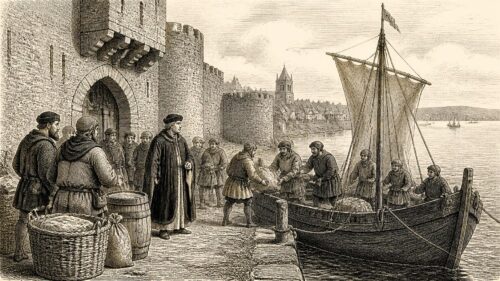

Read Article

Galway Charter

Galway Charter

Archived: 21 October 2026

Abstract

In 1396, Richard II’s charter granted Galway’s provost and burgesses annual election of a sovereign, restricted retail trade to resident burgesses, and extended Drogheda’s liberties, for £6 13s 4d. Building on 1395 murage, it strengthened defence, commerce and civic government, while preserving Roger Mortimer’s seigneurial rights. The charter reflected insecurity in Connacht, where rival dynasties raided, fought and burned Sligo, while O’Tooles defeated English forces in Leinster. Off Aran, Ó Máille raiders drowned when their plunder-laden ship sank. Church life saw Thomas Sparkford appointed to Waterford and Lismore, and scholar-herenagh Matthew Ó Luinín’s death, illustrating enduring ecclesiastical and learned traditions.

Read Article

