Archived: 2 October 2026
Abstract
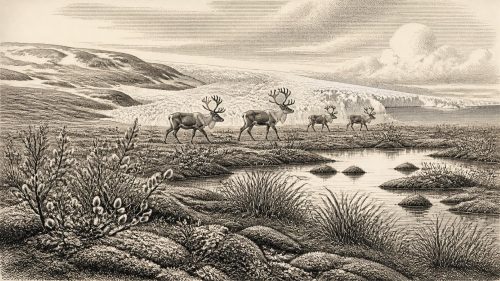
30,348 BCE is a modern label rather than a precise Irish date. Evidence from Greenagho and Derryvree in Fermanagh comprises organic lake sediments sealed beneath till, indicating cold open wetlands with freshwater plants, insects and animals before advancing ice. During Marine Isotope Stage 3, Ireland experienced severe but regionally variable glaciation; the full ice-sheet extent came later. Cave faunas, notably at Castlepook, demonstrate diverse large mammals, including reindeer, horse, mammoth and predators, though deposits are complex. A cut-marked reindeer bone tentatively suggests human butchery, not settlement. No political, cultural or economic structures are recoverable; environmental change dominates this deep past.
Read Article

Archived: 27 September 2026
Abstract
Around 30,606 BCE, Ireland lay within the unstable late-Pleistocene climate of Marine Isotope Stage 3. Derryvree, County Fermanagh, preserves freshwater sediments between glacial tills, indicating a temporary ice-free wetland with cold-adapted, open vegetation. Castlepook Cave in County Cork demonstrates that mammoth, reindeer, giant deer, predators and other cold-steppe fauna inhabited parts of Ireland during this broader period. Growing ice, permafrost, altered drainage and lower sea levels created changing routes and habitats. Possible early human visits remain unproven, despite a potentially cut-marked reindeer bone. No evidence supports permanent settlement, social institutions or cultural identities. Surviving evidence is chiefly geological and ecological.
Read Article

Archived: 20 September 2026
Abstract
At approximately 31,115 BCE, Ireland was a climatically unstable Late Pleistocene landscape rather than a society with recorded events. Derryvree, County Fermanagh, preserves freshwater sediments between glacial tills, indicating cold, open tundra wetlands during an ice-free interval; Greenagho offers comparable, earlier evidence. Sea levels were lower, but no secure land route or regular human crossing can be demonstrated. Castlepook Cave, County Cork, contains diverse cold-adapted fauna, including reindeer, mammoth and hyaena, accumulated over time. A possibly cut-marked reindeer femur may indicate brief human activity, but proves neither settlement nor resident population. Later glaciation buried, reshaped and fragmented these environmental archives.
Read Article
Archived: 17 September 2026
Abstract
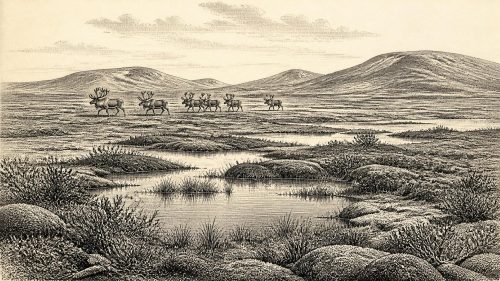
At the notional date of 31,383 BCE, Ireland was within the climatically unstable MIS 3 of the Late Pleistocene, not a historically documented society. Buried deposits at Greenagho and Derryvree in County Fermanagh indicate locally ice-free freshwater wetlands, tundra vegetation and periglacial conditions before later ice-sheet expansion. Plant, insect and sediment evidence reveals cold but productive, varied habitats. Castlepook Cave in County Cork preserves remains of mammoth, reindeer, giant deer, predators and scavengers, accumulated across long periods. A cut-marked reindeer bone suggests possible transient human activity, but cannot prove settlement. Mobile ice, changing seas and remains preclude conclusions about settlement.
Read Article
Archived: 17 September 2026
Abstract
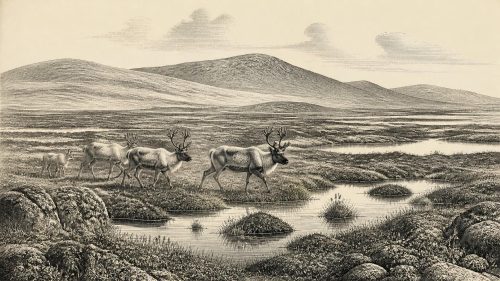
31,453 BCE is a modern reference rather than a recorded Irish year. During unstable Marine Isotope Stage 3, Ireland experienced variable, local conditions rather than uniform ice cover. Freshwater deposits at Derryvree and Greenagho indicate ice-free, treeless tundra wetlands during intervals, while Crag Cave confirms episodic milder conditions supporting flowing water. Castlepook Cave preserves remains of mammoth, giant deer, reindeer, bears and hyenas, though mixed deposits limit precise reconstruction. A cut-marked reindeer bone may indicate brief Upper Palaeolithic human activity, not settlement. No contemporary houses, tools, burials, communities, politics or culture are securely known. Ireland was a frontier for fauna.
Read Article
Archived: 15 September 2026
Abstract
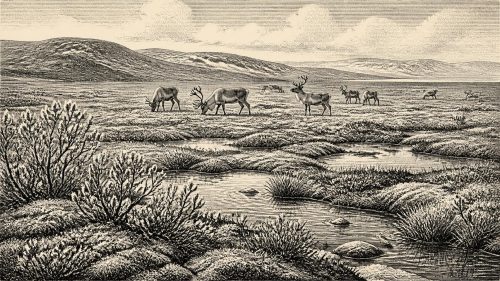
Labelled 31,666 BCE, this period belongs to the unstable later Marine Isotope Stage 3, not recorded history. Sediments beneath glacial till at Derryvree and Greenagho, County Fermanagh, preserve evidence of freshwater wetlands, cold-adapted vegetation and locally ice-free ground before expansion of the British–Irish Ice Sheet. Treeless landscapes contained sedges, mosses, dwarf willow and other plants suited to wet, open conditions. Castlepook Cave, County Cork, yields a complex pre-maximum fauna including mammoth, reindeer, giant deer, hyaena, bears and wolves. A possibly tool-marked reindeer bone suggests brief human activity, but cannot demonstrate settlement. Advancing ice later transformed habitats and destroyed earlier evidence.
Read Article

Archived: 14 September 2026
Abstract
Around 31,789 BCE, Ireland lay within a volatile later Pleistocene landscape rather than a precisely datable historical year. Ice-free phases supported treeless tundra-steppe wetlands, freshwater pools and open vegetation, as preserved beneath tills at Derryvree and Greenagho. Lower sea levels altered coasts and routes, though no simple land bridge is established. Castlepook Cave yields mammoth, reindeer, giant deer and carnivores, evidencing productive cold open country. A marked reindeer femur may indicate Upper Palaeolithic butchery, but cannot prove settlement. Later glaciation destroyed much evidence while preserving rare deposits. No evidence supports farming, political institutions, permanent communities, or identifiable societies in Ireland.
Read Article




