

Related Archive: Howth History

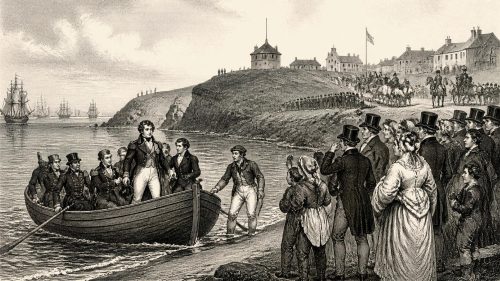
Howth’s Royal Landing

Howth’s Royal Landing

Archived: 11 October 2026

Abstract

In 1821, Ireland experienced population growth, economic hardship, political exclusion and royal pageantry. The first comprehensive census recorded about 6.8 million people, exposing dependence on insecure rural livelihoods; most detailed returns were later destroyed in 1922. Post-war depression, rents, tithes and scarce employment contributed to Munster’s emerging Rockite disturbances. Westminster’s Catholic Disability Removal Bill passed the Commons but failed in the Lords, preserving Catholic exclusion from Parliament. George IV’s August landing at Howth inspired displays of loyalty, including Daniel O’Connell’s conciliatory participation, but brought no reform. Administrative changes and cultural activity highlighted tensions between Union, equality, rural insecurity and identity.


Read Article

Robartes at Howth

Robartes at Howth

Archived: 14 October 2026

Abstract

In 1669, John, Lord Robartes replaced the duke of Ormond as lord lieutenant, reflecting English court politics and concern over Irish revenue and military administration. Arriving quietly at Howth, Robartes inherited a Protestant-led settlement founded on confiscation, unequal landholding and Catholic exclusion. Catholic leadership revived through appointments of Peter Talbot, James Lynch and Oliver Plunkett, consecrated abroad under continuing constraints. Protestant charitable education expanded through Erasmus Smith’s schools and Dublin’s proposed King’s Hospital. George Fox and William Penn documented active Quaker networks, persecution and petitioning. These developments revealed a pacified but unreconciled Ireland, divided by property, religion, power and taxation.

Read Article

