Archived: 28 October 2026
Abstract
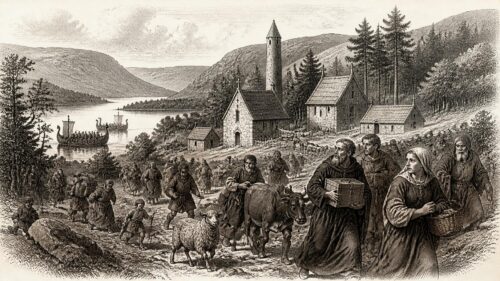
In 890, Scandinavian raiders, described in the annals as Gaill, plundered the ecclesiastical centres of Ardbraccan, Donaghpatrick, Dulane and Glendalough. Although the record supplies few details, the attacks exposed the vulnerability of wealthy, politically connected monasteries in Meath, Leinster and the Wicklow uplands. Probably operating within Dublin’s sphere, the raiders exploited river, coastal and overland routes amid shifting Irish-Scandinavian alliances. The raid occurred during Flann Sinna’s contested kingship and demonstrated limits to Tara’s influence. Plundering disrupted religious, economic and social life without proving wholesale destruction. Further raids followed in 891, while Dublin’s Scandinavian settlement was expelled in 902 by allies.
Read Article
Archived: 30 October 2026
Abstract
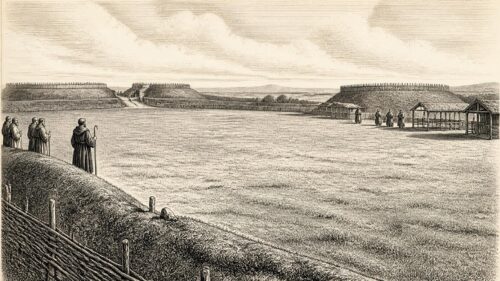
In 810, Tallaght’s monastic community prevented the royal fair at Tailtiu after the Uí Néill violated its sanctuary, leaving the assembly devoid of expected horses and chariots. Subsequent gifts to Tamlacht indicate public redress and demonstrate ecclesiastical leverage over Áed son of Niall’s kingship. Nuadu, abbot of Armagh, carried Patrick’s law and a casket to Connacht, extending Patrician claims without recorded outcome. The Ulaid defeated Scandinavian raiders, the first surviving annalistic Irish victory, though details remain unknown. Death notices recall monastic and aristocratic life, while the disrupted fair depended upon agricultural surplus and rural exchange across early medieval Irish society.
Read Article
Archived: 2 November 2026
Abstract
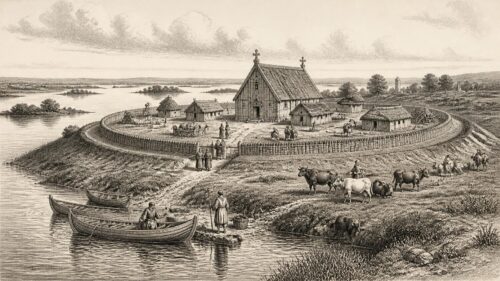
In 693 CE, Ireland’s surviving annalistic record is unusually compact but revealing. The Annals of Ulster, whose annal headed 694 is synchronised to AD 693, record the death of Crón Bec, abbot of Clonmacnoise; the deaths of ecclesiastics at Movilla and Balla; the killing of a layman named Cerball son of Máel Odar; and a siege at Dún Foither. No contemporary narrative explains how these events were connected. Yet together they show an island in which monastic communities, local lordship and fortified places formed the essential framework of public life. The year was not one of a single, island-wide turning
Read Article


