Archived: 8 October 2026
Abstract
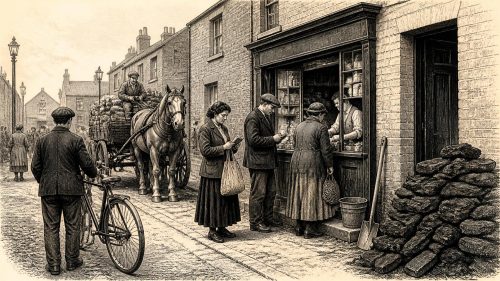
In 1945, Ireland emerged cautiously from wartime neutrality, retaining rationing, shortages and emergency powers despite Europe’s liberation. De Valera’s condolences on Hitler’s death provoked international condemnation, while VE Day renewed disputes over neutrality, partition and Allied relations. Censorship ended, but wartime administration unwound gradually. Seán T. Ó Ceallaigh became the second President after defeating Seán MacEoin, symbolising continuity and change. Legislation addressed drainage, tuberculosis and mental treatment, while supply functions returned to Industry and Commerce. Northern Ireland elections confirmed Unionist dominance, though Labour and nationalist representation exposed political divisions. Ireland entered peace facing economic constraint, institutional transition and diplomatic isolation.
Read Article
Archived: 8 October 2026
Abstract
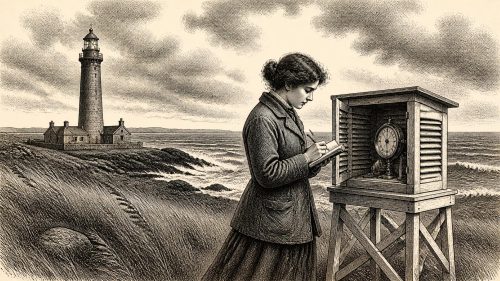
During 1944, neutral Ireland endured Emergency shortages, rationing and transport disruption while remaining strategically entangled in the war. At Blacksod Point, Maureen Flavin’s weather observations assisted Allied forecasting before the Normandy landings, illustrating neutrality’s limits. De Valera rejected Allied demands to expel Axis diplomats, defending sovereignty amid espionage concerns and partition. Fianna Fáil won a Dáil majority in May. Children’s allowances began in August, easing family pressures. December’s Transport Act prepared Córas Iompair Éireann, while the Abbey staged Joseph Tomelty’s Belfast-set play, The End House. The year combined democratic continuity, cautious social reform and preparations for postwar reconstruction across Ireland.
Read Article

Archived: 8 October 2026
Abstract
In 1943, neutral Ireland faced the Second World War’s political, economic and human pressures. A wartime election left Éamon de Valera’s Fianna Fáil governing without a majority, while Labour advanced and Oliver Flanagan’s antisemitic maiden speech exposed prejudice. Emergency legislation, censorship and diplomacy defended neutrality amid Allied pressure and partition. War reached Donegal when a mine killed eighteen at Ballymanus, and U-607 sank the marked Irish Oak, though its crew survived. Rationing, compulsory tillage and fuel shortages burdened households and commerce. In December, the coaster Kerlogue rescued 168 German sailors in the Bay of Biscay, clearly demonstrating neutrality’s humanitarian responsibilities.
Read Article

Archived: 8 October 2026
Abstract
In 1942, neutral Ireland endured the Emergency while Northern Ireland became an Allied base after American troops arrived in Belfast. De Valera’s government maintained neutrality, emergency controls and censorship, while creating the Central Bank and confronting extremist politics. Shortages of fuel, rubber, food and consumer goods reshaped work, travel and household life; labour migration to Britain remained significant. Irish merchant ships risked Atlantic attack while rescuing survivors, until the Irish Pine was torpedoed with all thirty-three crew lost. Cultural life persisted through Cavan Cathedral, Kavanagh’s The Great Hunger and folklore scholarship, alongside censorship disputes. Ireland faced constraint, danger and change.
Read Article
Archived: 8 October 2026
Abstract
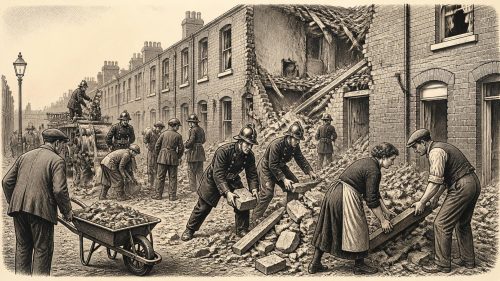
In 1941, neutral Éire faced the Second World War’s consequences despite preserving its Emergency policy. German raids devastated Belfast, a British industrial centre, killing hundreds and prompting fire brigades from Dublin and other southern towns to assist. On 31 May, German bombs killed twenty-eight people, injured over ninety and destroyed about 300 homes in Dublin’s North Strand. The attack demonstrated neutrality’s limits amid diplomatic tension over Northern Irish conscription and Churchill’s appeals for Irish participation. Shortages of food, fuel and imports led to rationing, expanded turf supplies and Irish Shipping’s creation. Maritime dangers and cross-border relief underscored Ireland’s wartime vulnerability.
Read Article

Archived: 9 October 2026
Abstract
In 1939, Ireland faced both European war and republican militancy. The Government strengthened internal security through the Offences Against the State Act, while air-raid precautions reflected fears of attack. Following Germany’s invasion of Poland, constitutional amendments and the Emergency Powers Act enabled neutral Ireland to regulate security, supplies and communications. Dublin denied belligerents use of its territory and ports, despite British pressure, asserting sovereignty after the Treaty Ports’ return. Northern Ireland entered the war with Britain, underscoring partition’s consequences. Refugee appeals highlighted Nazi persecution. The December IRA raid on Dublin’s Magazine Fort demonstrated that armed challenges to State authority persisted.
Read Article




