Archived: 5 October 2026
Abstract
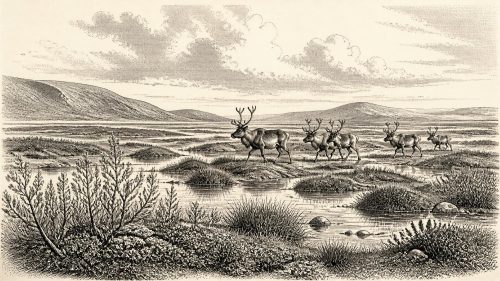
About 30,237 BCE, Ireland was a Late Pleistocene landscape undergoing climatic and glacial change, not a place identifiable through precise annual dating. Lower sea levels connected it more closely to Britain and Europe, although ice, wetlands and distance constrained movement. Inter-till sediments near Maguiresbridge preserve sedges, mosses and other tundra vegetation, indicating temporary cold wetlands later overridden by ice. Cave deposits in Cork and Waterford demonstrate recurring animal presence, including reindeer, mammoth, hyaena and bear, across millennia. No human occupation is known. A possibly cut-marked Castlepook reindeer bone suggests human activity, but remains disputed and cannot establish settlement or culture.
Read Article

Archived: 25 September 2026
Abstract
Thirty thousand seven hundred and thirteen BCE is not a meaningful precise Irish date, but broadly relates to later Marine Isotope Stage 3. At Derryvree, County Fermanagh, organic freshwater sediments between glacial tills demonstrate a local ice-free interval, preserving evidence of cold, treeless wet tundra with plants and insects. The BIRM-166 radiocarbon determination has wide calibration uncertainty. Ireland’s ice cover was dynamic before the Last Glacial Maximum. Castlepook Cave, County Cork, preserves remains of diverse Pleistocene mammals, including mammoth, giant deer and hyaena, though deposits span time. No evidence establishes human presence, society or activity in Ireland at this horizon.
Read Article
Archived: 19 September 2026
Abstract
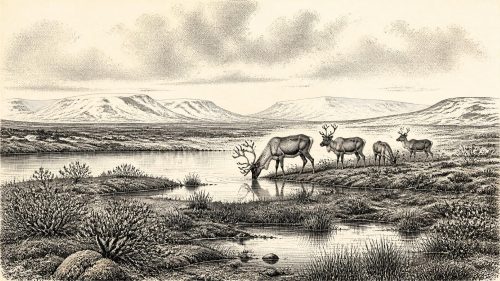
Around 31,175 BCE, Ireland lay within a changing Late Pleistocene landscape, not a recordable historical year. Derryvree in County Fermanagh preserves freshwater organic sediments between tills, dated broadly to an interval including this notional date. Its pollen, plants and insects indicate a treeless, cold wetland with tundra vegetation. Ireland was regionally varied as ice expanded towards its later maximum, while lower sea levels altered surrounding geography. Castlepook Cave yielded reindeer, mammoth, giant deer and predators, showing connections with wider European ecosystems. A possibly cut-marked reindeer bone suggests human presence, but cannot prove permanent settlement or occupation. Evidence therefore documents change.
Read Article

Archived: 19 September 2026
Abstract
31,227 BCE represents an approximate point in Marine Isotope Stage 3, when Ireland was becoming colder as the British–Irish Ice Sheet grew, but before its maximum extent. Landscapes, coastlines and routes changed with climate, ice and lower sea levels. Castlepook Cave, County Cork, preserves a cold-stage fauna including reindeer, mammoth, giant deer, bear, Arctic fox, lemmings and hyaena, indicating open tundra-like habitats. A dated reindeer bone bearing a tool mark suggests a brief human visit, but requires confirmation and cannot prove settlement. No institutions are recoverable. It remains a threshold marked by environmental change, fragmentary fauna and uncertain human presence.
Read Article

Archived: 18 September 2026
Abstract
At the notional date of 31,342 BCE, Ireland lay within climatically unstable Marine Isotope Stage 3, not a year capable of precise historical dating. Derryvree, County Fermanagh, preserves wetland sediments between glacial tills, demonstrating a locally ice-free interval with treeless tundra vegetation, freshwater and severe seasonal cold. Castlepook Cave, County Cork, contains MIS 3 fauna including reindeer, mammoth and predators. An incised reindeer femur may indicate Upper Palaeolithic butchery, but cannot establish settlement or continuous occupation. Fragmentary evidence permits no conclusions about society, beliefs or politics. These sites instead reveal changing habitats, mobile animals and a possible brief human presence.
Read Article

Archived: 17 September 2026
Abstract
31,448 BCE is a modern label for a broad Late Pleistocene interval, rather than a recordable Irish year. Sediments beneath Derryvree, County Fermanagh, document an ice-free freshwater wetland during MIS 3, later sealed by advancing ice. Mosses, pollen and insects indicate cold, open, wet, periglacial terrain with local ecological variety. Southern caves, especially Castlepook in County Cork, preserve diverse fauna including reindeer, mammoth, giant deer and predators. A cut-marked reindeer bone may indicate brief human carcass processing, but cannot prove settlement. Before the Last Glacial Maximum, Ireland's evidence chiefly reveals dynamic environments, scarce archaeological traces, and possible transient human presence.
Read Article
Archived: 15 September 2026
Abstract
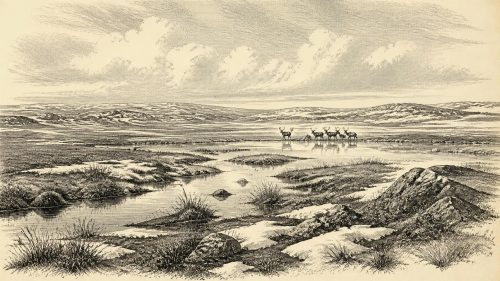
31,675 BCE is a modern label, not a datable Irish event, representing late Pleistocene Marine Isotope Stage 3 as the British–Irish Ice Sheet began sustained growth. Ireland contained ice-free tundra, wetlands and freshwater habitats, preserved beneath glacial deposits at Derryvree and Greenagho. Castlepook Cave's imperfect bone assemblage records reindeer, mammoth, giant deer and predators, indicating an ecologically active landscape. A cut-marked reindeer femur may signal Ireland's earliest human activity, but cannot prove settlement, culture or continuity. Glacial erosion, uncertain radiocarbon dates and changing sea geography limit conclusions. The period is an environmental threshold, illuminated by fragmentary evidence rather than events.
Read Article

Archived: 8 September 2026
Abstract
Around 31,968 BCE, Ireland lay in the climatically unstable Late Pleistocene, before the Last Glacial Maximum and without evidence permitting calendar-year reconstruction. Greenagho deposits indicate that parts of north-central Ireland remained ice-free until roughly 34,000 years ago, although ice, coastlines and sea levels were changing. Later glaciation created many familiar landforms. Castlepook Cave preserves evidence of diverse cold-climate fauna, including mammoth, reindeer, giant deer, bear and hyena, but accumulated remains cannot define a single moment. No secure human settlement is known. A possibly tool-marked reindeer bone suggests an uncertain brief visit. Ireland was a dynamic, ecologically connected, increasingly glaciated landscape.
Read Article
Archived: 8 September 2026
Abstract
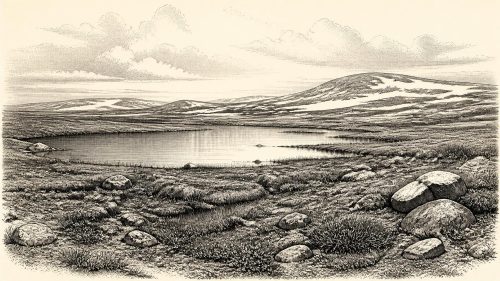
Around 31,977 BCE, or c. 34,000 cal BP, Ireland was a climatically unstable Late Pleistocene landscape approaching expansion of the last Irish Ice Sheet. Organic lake and freshwater deposits beneath till at Derryvree and Greenagho, County Fermanagh, show that parts of north-central Ireland were ice-free, supporting open tundra and periglacial environments. Offshore evidence indicates later ice advances, chiefly after this period. No archaeological evidence demonstrates human occupation: Palaeolithic and Mesolithic finds cannot be projected backwards. Glacial erosion, redeposition and subsequent sea-level rise hinder preservation. Thus this date records environmental transformation, with advancing ice, water and sediments shaping the future landscape.
Read Article





