Archived: 11 October 2026
Abstract
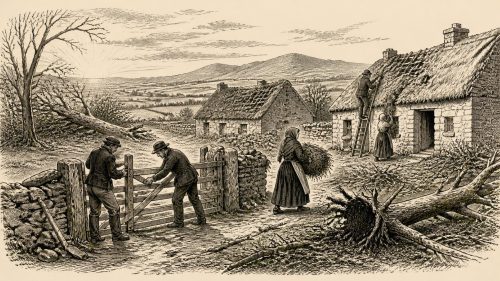
In 1839 Ireland experienced the Night of the Big Wind, a devastating storm of 6–7 January that damaged homes, farms, shipping and infrastructure, caused numerous deaths, and became a lasting marker in popular memory. Its effects intensified existing rural poverty and seasonal insecurity. Meanwhile, implementation of the 1838 Poor Law advanced through unions, guardians, rates and workhouse planning, while amendments refined administrative boundaries. Policing legislation strengthened state capacity in Dublin and nationally, amid O’Connell’s reform politics and continuing tithe disputes. National education and Griffith’s valuation expanded official knowledge. In August, the Belfast–Lisburn railway opened, signalling transport, commerce and institutional modernisation.
Read Article
Archived: 11 October 2026
Abstract
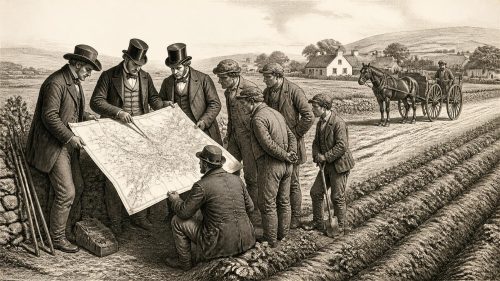
In 1838, Ireland was surveyed, classified and governed amid widespread rural insecurity. The Irish Railway Commissioners’ final report mapped population, trade and transport, advocated publicly directed railways, and warned of labourers’ heavy reliance on the nutritionally poor lumper potato, without predicting famine. The Poor Relief (Ireland) Act created poor-law unions, rates, guardians and a workhouse-centred system, reshaping local administration despite opposition. The Tithe Rentcharge Act replaced direct occupiers’ payments with a reduced landowners’ charge, easing but not ending religious grievance. Father Theobald Mathew’s Cork temperance campaign mobilised mass voluntary action. The Sirius voyage and surveys highlighted Atlantic and administrative links.
Read Article

Archived: 11 October 2026
Abstract
In 1822, Ireland endured agrarian unrest, food scarcity and emergency government. Lord Lieutenant Richard Wellesley inherited Rockite violence, chiefly in Munster, where the Insurrection Act, habeas corpus suspension, troops and special commissions produced prosecutions, transportation and executions. Poor harvests caused severe regional distress, especially in the west and south-west. Government coordinated charity and funded public works, employing labourers on roads, piers and harbours under engineers including Alexander Nimmo and Richard Griffith. Political divisions persisted over Catholic exclusion and the established Church. A new constabulary law encouraged organised policing. December's Bottle Riot, when a jar was thrown at Wellesley, symbolised conflict.
Read Article




