Civic Compromise
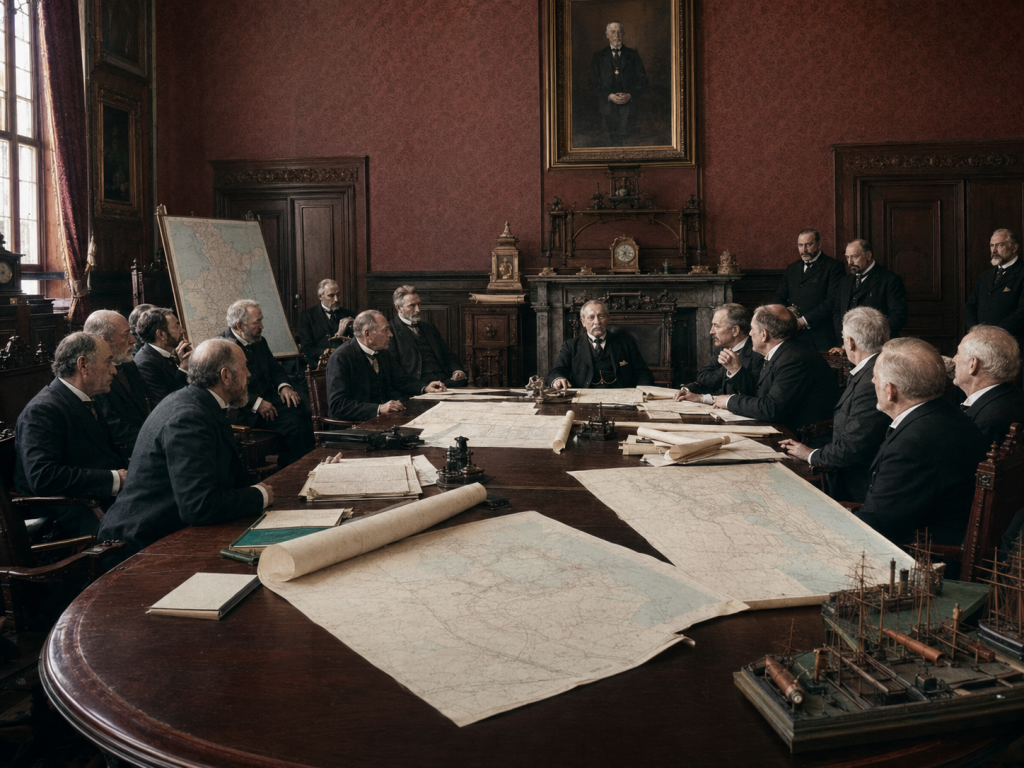
Mayor John Daly was returned unopposed when Limerick Corporation assembled for its quarterly election of civic officers. The council then proceeded to choose three qualified burgesses whose names would be submitted for appointment as City High Sheriff. The principal contest appeared likely to involve the serving sheriff, Thomas H. Cleeve, and John F. Power. Their disagreement arose from the proposed amalgamation of the Waterford, Limerick and Western Railway with the Great Southern and Western Railway, an issue that had united much of the Corporation, harbour administration and commercial community in organised opposition.
Cleeve’s position had become controversial because he had previously supported railway amalgamation, while Power presented his own candidacy as a defence of locomotive workers and citizens who feared a railway monopoly. Alderman O’Mara informed the council that a contest was no longer necessary because Cleeve had given a written undertaking. As a candidate seeking civic honour from the Corporation, Cleeve accepted that he should conform to its declared opposition to the takeover. He pledged that neither privately nor publicly would he give evidence supporting amalgamation if appointed to the shrievalty.
Power consequently withdrew his candidature after receiving the assurance. In a letter communicated to Alderman O’Mara, he stated that opposition to Cleeve had rested entirely upon the railway question and that the written guarantee had removed the reason for continuing the contest. Not every councillor accepted this interpretation. Councillor Dalton denied that Power represented the railwaymen and suggested that his support came from a small group of merchants. Councillor O’Brien objected more broadly to attaching conditions to a civic office, arguing that an honour bestowed by the Corporation should be given freely rather than through a political pledge.
Despite these objections, Cleeve’s name was placed first on the Corporation’s list by a unanimous vote. Councillors John Hayes and William Stokes occupied the second and third positions. The Corporation did not itself make the final appointment; the selection of a High Sheriff rested with the Lord Lieutenant from among the nominated burgesses. Cleeve’s leading position nevertheless made his appointment likely and resolved the immediate dispute without a divisive ballot. The settlement demonstrated that municipal honour in Limerick had become inseparable from the city’s struggle to influence railway policy and protect its commercial interests.
The council also agreed to hold a specially adjourned meeting to organise further resistance to the proposed railway sale. Mayor Daly had already given evidence against earlier amalgamation measures, and the Corporation’s continued opposition reflected fears that the disappearance of an independent railway would weaken competition, increase freight charges and redirect trade away from Limerick. Cleeve’s pledge therefore carried consequences beyond the shrievalty. A prominent industrialist who had favoured amalgamation accepted the Corporation’s contrary position, while civic leaders avoided an internal contest and presented a more united front against the railway companies promoting consolidation.
- Irish Times, “Limerick Corporation Railway Amalgamation Question,” 24 January 1900, p. 3.
- Limerick Corporation Council minute books, January 1900, Limerick Corporation Collection, Limerick Archives; exact volume and folio for the quarterly meeting not confirmed.
- Evidence of Alderman John Daly, Mayor of Limerick, opposing the proposed Railway Amalgamation Bills, 1899, Daly Papers, Special Collections and Archives, University of Limerick, P2/4/4/4.
- Great Southern and Western and Waterford, Limerick and Western Railway Companies Amalgamation Bill, Parliamentary Papers, 1900.
- Great Southern and Western and Waterford, Limerick and Western Railways Amalgamation Act 1900, 63 & 64 Vict., c. ccxlvii.
- Lawrence William White, “Cleeve, Sir Thomas Henry,” Dictionary of Irish Biography, Royal Irish Academy.
- Limerick City and County Council, A Retrospective: Limerick Local Government, 1899–2014, official list of Limerick mayors and high sheriffs.