St Mary’s Church

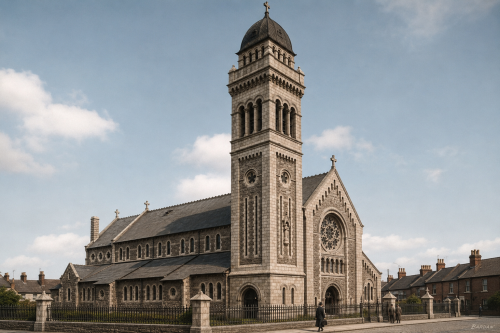
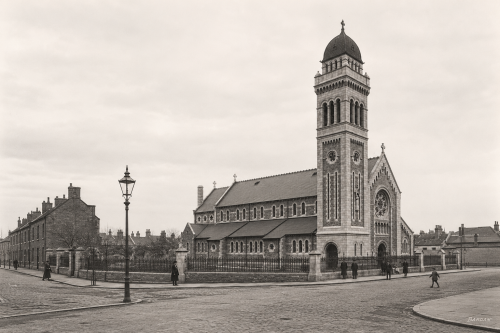
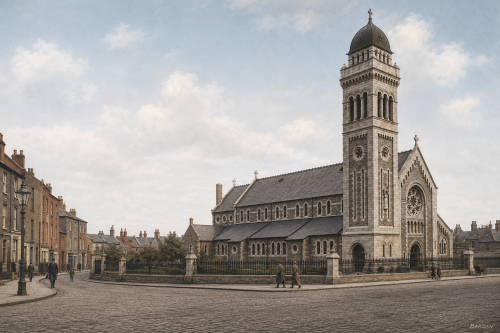
St Mary’s Church stands on Athlunkard Street in Limerick, occupying a site associated with Catholic worship since the eighteenth century. The present church opened in 1932, replacing an earlier chapel where Mass was first celebrated on December 10, 1749. Designed by Ashlin and Coleman of Dublin, the building reflects the scale and ambition of parish church architecture in early twentieth-century Limerick. Its tower, façade, railings and street setting mark an important local landmark, while the surviving holy water font from the former chapel links the modern church with the long religious history of St Mary’s parish community today.
The Heart of Edwardian Limerick

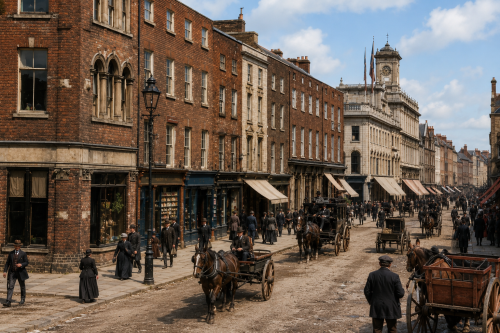
At the beginning of the twentieth century, George Street stood at the centre of commercial life in Limerick. Today known as O’Connell Street, it was bordered by impressive Georgian buildings housing hotels, shops, offices and established local businesses. Horse-drawn carts, private carriages and crowds of pedestrians moved constantly along the busy thoroughfare, while traders brought additional noise and colour to the scene. Landmarks included the Royal Hotel, MacMahon’s Temperance Hotel and firms such as O’Mahony & Company. The street’s elegant architecture and lively commerce made it one of Edwardian Limerick’s most important and recognisable urban spaces for residents and visitors.

St Mary’s Church

St Mary’s Church stands on Athlunkard Street in Limerick, occupying a site associated with Catholic worship since the eighteenth century. The present church opened in 1932, replacing an earlier chapel where Mass was first celebrated on December 10, 1749. Designed by Ashlin and Coleman of Dublin, the building reflects the scale and ambition of parish church architecture in early twentieth-century Limerick. Its tower, façade, railings and street setting mark an important local landmark, while the surviving holy water font from the former chapel links the modern church with the long religious history of St Mary’s parish community today.
Adare Manor Colour Print

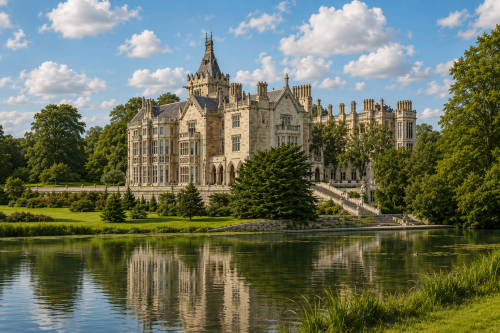
This variation of a colour print depicts Adare Manor beside the River Maigue in Adare, County Limerick. The imposing Gothic Revival residence is shown within landscaped grounds, reflected in the calm water and framed by mature trees. Often described as a calendar house, the manor is associated with 365 windows and 52 chimneys, representing the days and weeks of the year. Published in Francis Orpen Morris’s A Series of Picturesque Views of Seats of the Noblemen and Gentlemen of Great Britain and Ireland, the image celebrates the architecture, setting, and aristocratic character of one of County Limerick’s most recognisable historic estates and landmarks.

Unionists Hold

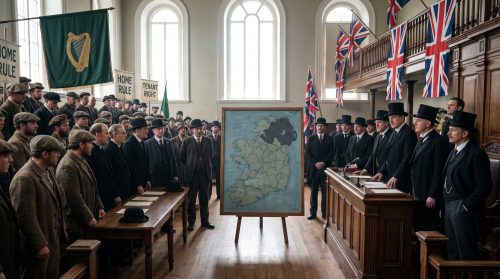
The Irish Unionist Alliance has retained eighteen of Ireland’s 103 Westminster seats as the general election concludes, preserving its principal strength in Ulster despite the overwhelming national victory of the reunited Irish Parliamentary Party. The result will interest Limerick voters because it confirms that Ireland remains divided between two sharply opposed constitutional programmes. Nationalists demand an Irish legislature and land reform, while unionists insist that the political and economic union with Great Britain must remain intact. Although unionist representation is comparatively small across Ireland, its concentration in the north-east gives the movement considerable organisation, confidence and parliamentary influence.

St Mary’s Church

St Mary’s Church stands on Athlunkard Street in Limerick, occupying a site associated with Catholic worship since the eighteenth century. The present church opened in 1932, replacing an earlier chapel where Mass was first celebrated on December 10, 1749. Designed by Ashlin and Coleman of Dublin, the building reflects the scale and ambition of parish church architecture in early twentieth-century Limerick. Its tower, façade, railings and street setting mark an important local landmark, while the surviving holy water font from the former chapel links the modern church with the long religious history of St Mary’s parish community today.
Shannon Rowing Club

Shannon Rowing Club is Limerick City’s oldest sporting institution. Founded in 1866 by entrepreneur and mayor Sir Peter Tait, the club has long been identified by its royal blue and white colours. Its historic headquarters on Wellesley Pier beside Sarsfield Bridge opened in 1905. Designed by William Clifford Smith, the listed Edwardian Arts and Crafts building remains one of the city’s most distinctive sporting landmarks. The clubhouse supports dry training through gym equipment, static bicycles and rowing machines, while also providing space for snooker and chess. It continues to represent Limerick’s rowing tradition and community spirit.

Monasteranenagh Abbey, 1148

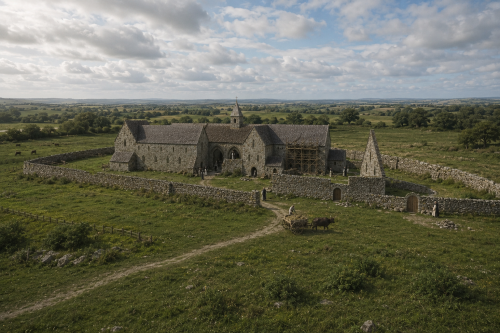
Founded in 1148 by Toirdelbhach mac Diarmaida Ua Briain, Monasteranenagh Abbey became one of County Limerick’s most important Cistercian foundations. This reconstruction imagines the monastery during its earliest years, with newly completed stone buildings, steep roofs, narrow lancet windows, timber doors, and monks moving quietly through the surrounding grounds. The austere architecture reflects the Cistercian ideals of simplicity, discipline, prayer, and communal labour. Supported by the O’Brien dynasty, the abbey later expanded under Domnall Mór Ua Briain. Though centuries of conflict and collapse reduced it to ruins, its surviving walls remain a powerful monument to medieval Irish faith and craftsmanship.

Monasteranenagh Abbey, 1148

Founded in 1148 by Toirdelbhach mac Diarmaida Ua Briain, Monasteranenagh Abbey became one of County Limerick’s most important Cistercian foundations. This reconstruction imagines the monastery during its earliest years, with newly completed stone buildings, steep roofs, narrow lancet windows, timber doors, and monks moving quietly through the surrounding grounds. The austere architecture reflects the Cistercian ideals of simplicity, discipline, prayer, and communal labour. Supported by the O’Brien dynasty, the abbey later expanded under Domnall Mór Ua Briain. Though centuries of conflict and collapse reduced it to ruins, its surviving walls remain a powerful monument to medieval Irish faith and craftsmanship.

The Carnegie Library

The Carnegie Library on Pery Square is one of Limerick’s most distinctive civic buildings. Funded by a £7,000 donation from Scottish-American philanthropist Andrew Carnegie, its foundation stone was laid by Carnegie himself in October 1903. Designed by Dublin architect George Patrick Sheridan, the limestone building opened in 1908 as a combined free library and museum. It later housed Limerick Museum and the growing Limerick City Collection of Art. After the library and museum relocated in 1985, the building became home to Limerick City Gallery of Art. Modern extensions have expanded its exhibition spaces while preserving its historic Neo-Hiberno-Romanesque character today.

Now Sharing: Articles (154) Images (578) Total Items Archived (732)
Our Mission: 100,000 Items Total Percentage Achieved (0.73%)