The Heart of Edwardian Limerick

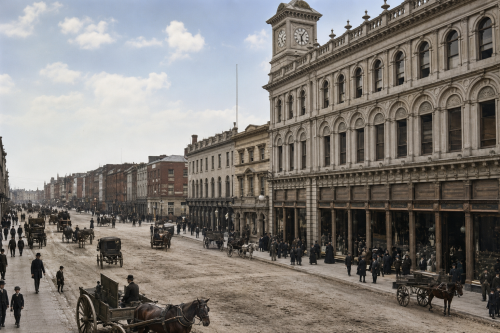
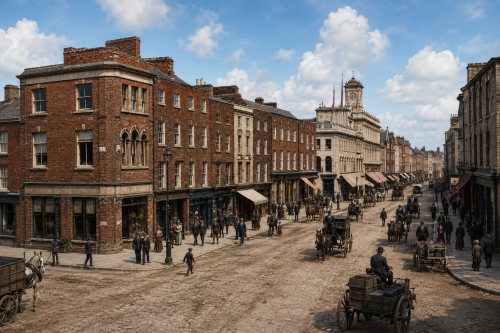
At the beginning of the twentieth century, George Street stood at the centre of commercial life in Limerick. Today known as O’Connell Street, it was bordered by impressive Georgian buildings housing hotels, shops, offices and established local businesses. Horse-drawn carts, private carriages and crowds of pedestrians moved constantly along the busy thoroughfare, while traders brought additional noise and colour to the scene. Landmarks included the Royal Hotel, MacMahon’s Temperance Hotel and firms such as O’Mahony & Company. The street’s elegant architecture and lively commerce made it one of Edwardian Limerick’s most important and recognisable urban spaces for residents and visitors.
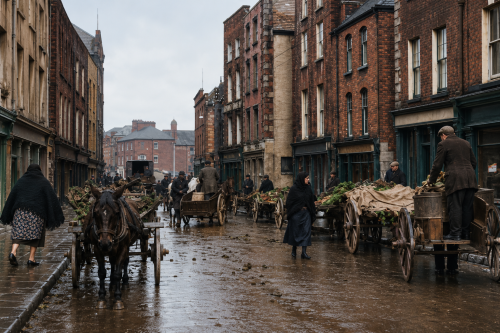
Limerick Market Day, 1937

This photograph, dated 1 March 1937, captures a busy market day in Limerick city. Horse-drawn carts, traders, shoppers, and farmers crowd the wet street, creating a vivid picture of everyday commercial life. On the right, a man drives a horse and trap, a form of transport commonly associated with more prosperous Irish farmers. Market goods are displayed on carts and stalls, while pedestrians move between the buildings lining the street. The scene records the importance of markets to Limerick’s economy, bringing rural producers and urban customers together during a period when horses remained central to transport and trade throughout Ireland.

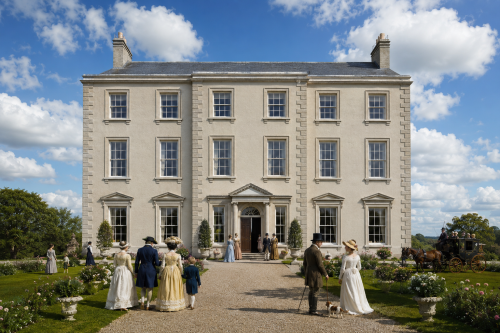
Grange House And Georgian Estate Life

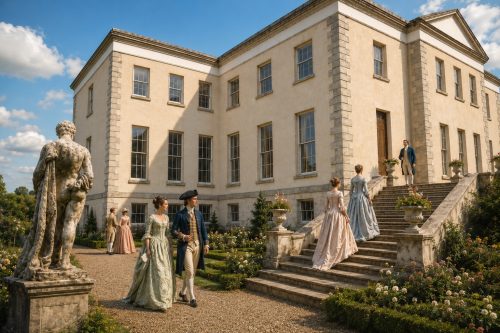
This reconstructed scene evokes the life of a prosperous Georgian country estate around the turn of the nineteenth century. The imposing house, formal gardens and gravel approach reflect the architectural taste and social order of the period. Elegantly dressed visitors, household servants, gardeners and horse-drawn carriages suggest activity surrounding such residences, where family life, hospitality and estate management met. Although idealised, the image offers a vivid historical impression of how the property may once have appeared when newly built, occupied and maintained, before decline altered its character and left only fragments of its former grandeur for future generations to study.

I Doubt It, Says Croker

Built in 1774 for John Croker, Ballynagarde House near Ballyneety was once among County Limerick’s grand Georgian residences. The five-bay mansion stood over a raised basement, with a central breakfront, cut limestone detailing, extensive outbuildings, walled gardens and classical statues. Raised on the site of an earlier stronghold, it remained the Croker family seat for generations. Financial mismanagement during the late nineteenth century began its decline, and the estate was divided by the Land Commission in the 1930s. Now ruined, the house survives in local folklore through tales of “Doubt It Hall” and a mysterious visitor allegedly possessing cloven hooves.

Cannocks, George Street

Before becoming Cannocks, the premises at 134 George Street, now O’Connell Street, housed a successful drapery business dating from around 1814. By the mid-nineteenth century, the shop was operated by Cumine and Mitchell and was regarded as a high-class retail establishment. In 1850, Scottish businessmen George Cannock and John Arnott purchased the property, establishing Cannocks and Company, which developed into one of Limerick’s best-known department stores. The business remained a prominent feature of the city’s commercial life for generations. In 1980, the store was sold to Penneys, which continues to occupy the historic site today on O’Connell Street in Limerick.

Divided Allegiance

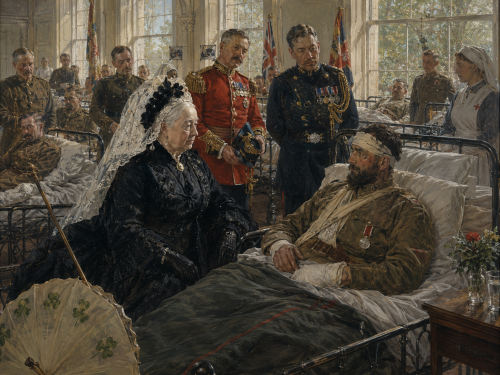
Queen Victoria’s final visit has intensified argument across Ireland over loyalty, national identity and the country’s constitutional position within the United Kingdom. Unionist organisations and public institutions have treated the royal ceremonies as evidence that attachment to the Crown remains strong, while nationalist critics insist that cheering crowds cannot settle Ireland’s demand for self-government. Limerick residents are following the dispute through newspapers, political clubs and public conversation. The same procession may appear to one observer as a dignified expression of loyalty and to another as an imperial display staged by a government lacking democratic authority in Ireland.

Pery Square

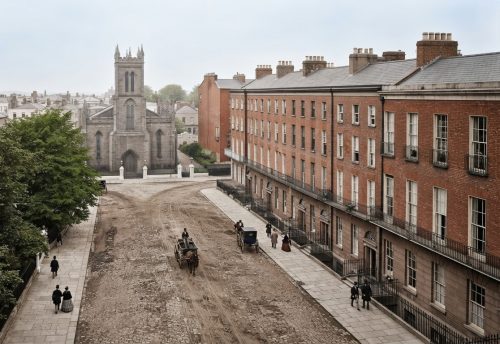
Pery Square stands as the finest surviving expression of Limerick’s Georgian ambition. Built between 1835 and 1838, its elegant western terrace was designed as part of a larger development, but the Great Famine prevented completion. Construction was financed through an unusual tontine scheme, in which ownership depended upon the survival of nominated individuals. The adjoining residents’ garden later became the People’s Park in 1877, opening the landscaped space to the public. Today, the square remains an important cultural and architectural landmark, home to the People’s Museum, Limerick City Gallery of Art and the beautifully restored No. 1 Pery Square Hotel.

Shannon Bridge Under Construction (1987)

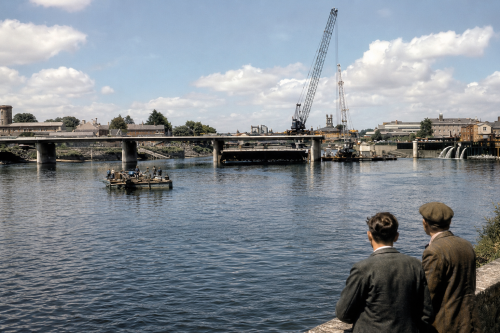
Shannon Bridge, opened on 30 May 1988, remains widely known in Limerick as the “New Bridge”, despite now being several decades old. This four-lane concrete girder crossing connects the Dock Road and Mallow Street area with the North Circular Road and Clancy Strand, providing an important inner-city relief route across the River Shannon. Soon after opening, it acquired another memorable nickname, the “Whistling Bridge”. Strong winds travelling up the Shannon Estuary passed through gaps in the original railings, producing a loud, eerie shrill sound. The problem was later reduced by fitting mesh grilles over the railings along the exposed crossing.

Shannon Rowing Club

Shannon Rowing Club is Limerick City’s oldest sporting institution. Founded in 1866 by entrepreneur and mayor Sir Peter Tait, the club has long been identified by its royal blue and white colours. Its historic headquarters on Wellesley Pier beside Sarsfield Bridge opened in 1905. Designed by William Clifford Smith, the listed Edwardian Arts and Crafts building remains one of the city’s most distinctive sporting landmarks. The clubhouse supports dry training through gym equipment, static bicycles and rowing machines, while also providing space for snooker and chess. It continues to represent Limerick’s rowing tradition and community spirit.

Dutch Billy Houses, Mary Street

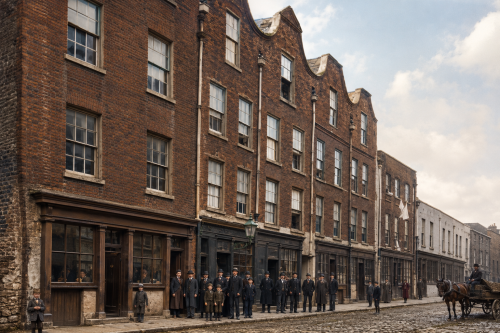
Dutch Billy houses were once a distinctive feature of Limerick’s Englishtown and Irishtown districts. Characterised by narrow brick façades, steeply pitched gables and tall windows, the style developed in Irish towns during the late seventeenth and early eighteenth centuries. Many examples survived along Mary Street into the early twentieth century, preserving the appearance of Limerick’s merchant quarters. Their name is traditionally associated with King William III, although the term was applied broadly to gabled urban houses of the period. By around 1900, these buildings stood as reminders of the city’s commercial growth, architectural character and changing streetscape across previous centuries.

Now Sharing: Articles (154) Images (578) Total Items Archived (732)
Our Mission: 100,000 Items Total Percentage Achieved (0.73%)