Archived: 3 November 2026
Abstract
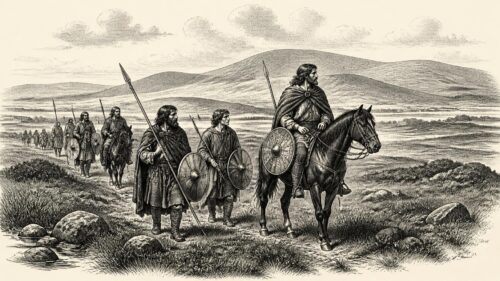
In 649 CE, Irish annalistic tradition places two violent political reversals in Connacht: the killing of Raghallach mac Uatach, described as king of Connacht, and the defeat of Guaire of Aidne by Diarmait mac Áedo Sláine at the battle of Carn Conaill. These were not incidents in the history of a unified Irish state. Ireland was divided among numerous peoples, dynasties and client kingdoms, while ambitious rulers sought influence through raiding, alliance, tribute and control of ecclesiastical centres. Yet the events associated with this year reveal how quickly local conflict could draw in rulers from across the island, and how
Read Article
Archived: 3 November 2026
Abstract
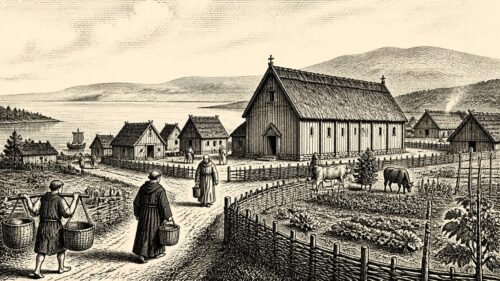
In 646, the Annals of Ulster record the killing of Scannal son of Béc, styled king of the Cruithin, and the death of Mac Laisre, abbot of Bangor. Scannal’s violent death reflects continuing political competition in north-east Ulaid after the battle of Mag Roth, though the annals name neither his killer nor location. Mac Laisre’s obituary marks a leadership change at Bangor, an important monastery beside Belfast Lough with wider Irish Sea connections. Sparse sources reveal little else about the year, but these notices illuminate the coexistence of vulnerable secular rulership and enduring ecclesiastical institutions within a predominantly rural society.
Read Article
Archived: 3 November 2026
Abstract
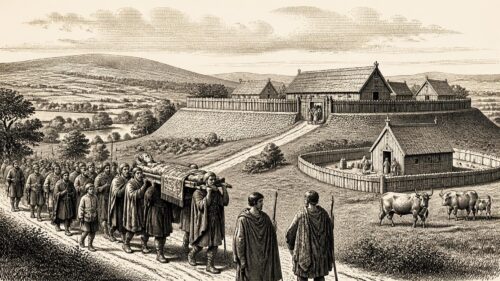
In 641 CE, the securely dateable Irish development is the death of Cúán mac Amalgado, a king of Munster from the Eóganacht Áine branch of the Eóganachta. The surviving annalistic notice is brief: it records his death without a place, cause, successor’s inauguration or account of public reaction. Yet the loss of a provincial overking mattered. In a country of many small kingdoms, Munster’s ruler stood within a dense hierarchy of client peoples, churches, kin-groups and rival royal lines. Cúán’s death therefore marks a real, if sparsely described, transition in the political life of southern Ireland. A Death in the
Read Article
Archived: 4 November 2026
Abstract
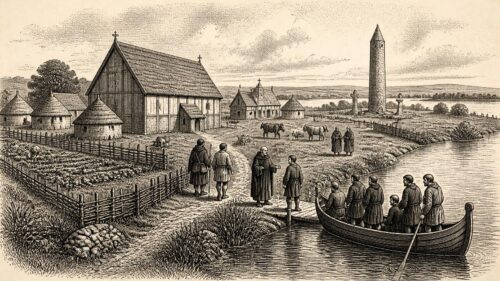
In 640 CE, the clearest securely reconstructed Irish annalistic notices are not of a decisive battle within Ireland or a change of high kingship, but of deaths in the ecclesiastical world. Crónán moccu Loégde, abbot of Clonmacnoise, died, and the annals also record the death of Mochua of Balla in Connacht. These brief notices are valuable precisely because they reveal what early medieval record-keepers considered worth preserving: the passing of men who led important religious communities. They also place Ireland in a year of wider Gaelic political tension, for a battle and siege involving the following of Domnall Brecc of
Read Article
