Archived: 2 November 2026
Abstract
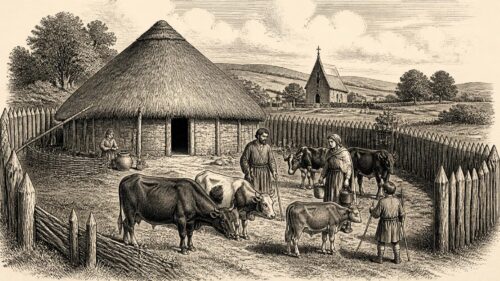
In 656 CE, the surviving Irish annals place a small but revealing cluster of deaths, a battle and an extraordinary report from the countryside within the year. None amounts to a narrative of a united Irish kingdom: Ireland was divided among many dynasties and petty kingdoms, while churches and monasteries exercised influence across political frontiers. Yet the entries for this year illuminate several connected worlds: the Columban community of Iona, the ecclesiastical landscape of Meath and Munster, local violence, cattle-centred rural life, and Ireland’s close relationship with northern Britain. The evidence is terse and must be handled cautiously, but it
Read Article
Archived: 2 November 2026
Abstract
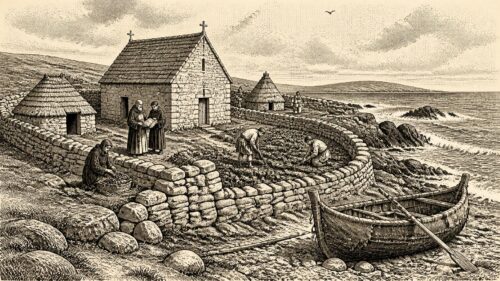
In 655 CE, Ireland’s historical record is unusually thin, and its dating is unusually difficult. No contemporary Irish chronicle survives in an original seventh-century manuscript, while later annals sometimes assign the same occurrence to different years. The most defensible approach is therefore to treat 655 as a cautiously reconstructed point in a sequence rather than as a year illuminated by a full narrative. A cluster of annalistic notices connected with this date nevertheless reveals a political landscape of small but ambitious kingdoms, a church embedded in regional society, and an island whose learned communities kept Ireland’s affairs in view alongside
Read Article
Archived: 2 November 2026
Abstract
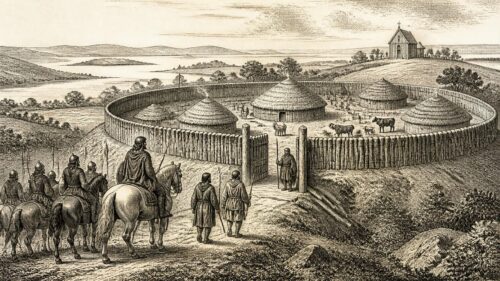
In 654 CE, a violent change at the summit of the Uí Néill reshaped the balance of power in Ireland. Conall Cóel, son of Máel Coba of Cenél Conaill, was killed by Diarmait mac Áedo Sláine. The notice is brief, but its implications were substantial: a northern claimant to the pre-eminent kingship had been removed by a member of the southern Uí Néill line rooted in Brega and associated with Tara. Other annalistic notices connected with this year record killings in Connacht, the deaths of senior clerics at Clonard, and a battle in northern Britain involving Dál Riata. Together they
Read Article
Archived: 3 November 2026
Abstract
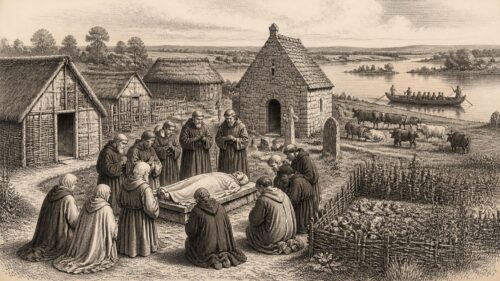
In 652 CE, the Irish annalistic record conventionally places a striking cluster of deaths among leading churchmen alongside a local dynastic battle in the midlands. Yet this is also a year that demands unusual chronological care. The surviving Annals of Ulster group these notices under U652, but their own kalend entry identifies the year as AD 651; related chronicles and later compilations distribute some of the same material under different years. The safest conclusion is not that every event can be fixed to a modern 1 January–31 December 652, but that these events belong to the narrowly defined historical horizon
Read Article
Archived: 3 November 2026
Abstract
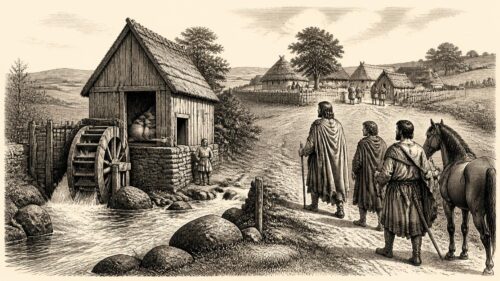
In 651 CE, the Irish annals associate one striking episode with the year: the killing of Dúnchad and Conall, sons of Blathmac son of Áed Sláine, at or beside the mill of Máel Odhrán. The surviving accounts are terse, poetic and chronologically complicated, so the event should not be treated as a securely dated incident on a modern calendar day. Yet it is firmly lodged in the annalistic sequence conventionally discussed under 651. The deaths mattered because the victims belonged to the powerful Síl nÁedo Sláine of Brega, a leading southern branch of the Uí Néill. Their violent end, remembered
Read Article
Archived: 3 November 2026
Abstract
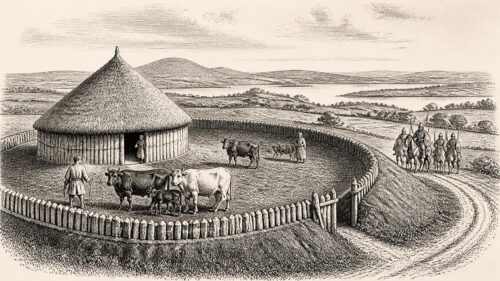
In 650 CE, Ireland’s surviving historical record centres on a violent dispute within the northern Uí Néill, but it also offers unusually revealing glimpses of the island’s fragmented political world. The annals place a battle at Dún Cremthainn in this year, in which Óengus, son of Domnall, was killed by Cellach and Conall Cóel, sons of Máel Coba. Yet early Irish chronology requires care. The Annals of Ulster labels this as its entry U650 while its calendrical heading equates that annal-number with AD 649; modern reference works conventionally place the battle in 650. Other annalistic compilations assign different Irish events
Read Article


