Archived: 30 October 2026
Abstract
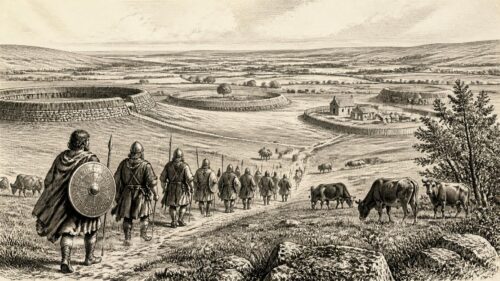
Conventionally dated to 808, the annals record a short-lived Connacht–Mide challenge to Áed Oirdnide, king of Tara. Led by Conchobar of Mide with Muirgius of Connacht’s support, a force occupied Tír ind Aenaig near Tailtiu for three nights before retreating; Áed retaliated by burning Mide’s borders. The episode illustrates contested kingship, strategic assembly sites and coercion through agricultural devastation. Other notices record the death at Kildare of the deposed Leinster king Fínnechta, and deaths of leading churchmen at Armagh, Linn Duachail and Cell Achaid. They also note Cinaed’s killing in Mag Cobo, thus revealing local violence alongside wider political rivalry.
Read Article
Archived: 30 October 2026
Abstract
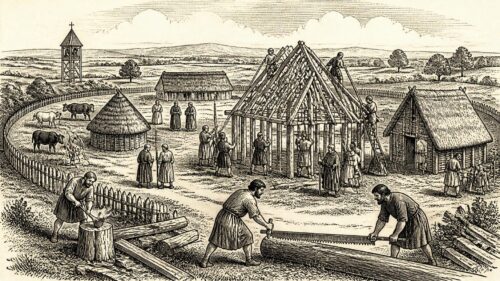
In 807, annalistic sources record the construction of a new Columban monastery at Cenannas, later Kells, probably strengthening Iona’s Irish connections after attacks on its community. Raiders described as gentiles burned Inis Muiredaig and attacked another site, possibly coastal Roscam, demonstrating monastic vulnerability to seaborne violence. Conflict also erupted between Cork and Clonfert, causing heavy losses among ecclesiastics. Deaths included Armagh’s abbot Connmach, regional rulers Artgal and Murchad, and the anchorite-scribe Elarius. Killings in Airthir and Kintyre underline political instability. Under Áed Oirdnide’s overlordship, Ireland remained fragmented. A blood-red moon was also noted, while chronology differs among annals in transmission.
Read Article
Archived: 30 October 2026
Abstract
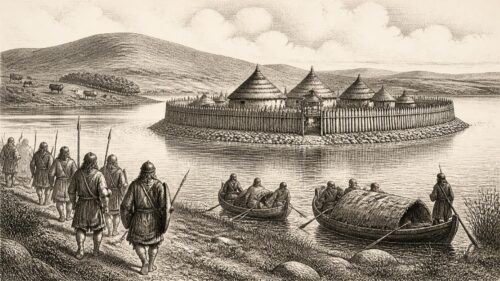
In 802, annalistic records reveal interconnected political, military and ecclesiastical pressures across Ireland and the Irish Sea. After Muiredach of Mide died, Áed Oirdnide, king of Tara, led an armed hosting into Mide and divided its rule between Conchobar and Ailill, sons of Donnchad Midi. In Connacht, Muirgius destroyed the crannóg fortress at Loch Riach, demonstrating power near Uí Maine. Heathens burned Iona, a major Columban centre linking Ireland and Scotland. Deaths included Queen Euginis, rulers of Osraige and Mugdorna, and prominent abbots and churchmen. These events show authority dispersed among dynasties, local kingdoms and monasteries, not one unified state.
Read Article
Archived: 30 October 2026
Abstract
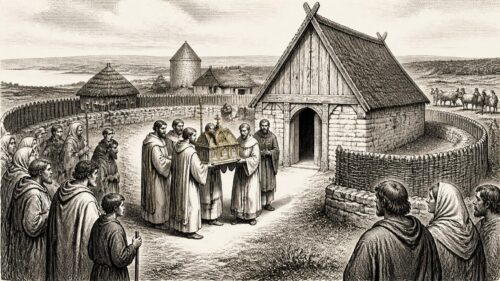
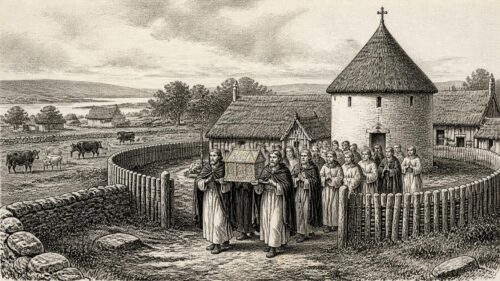
In 801, Irish annals record the enshrinement of relics of Rónán son of Berach at Dromiskin in a gold-and-silver casket, demonstrating monastic wealth, patronage and saintly prestige. Bresal son of Ségéne died after thirty-one years as abbot of Iona, a major Columban centre linked to Ireland; no raid there is attested that year. Warfare between the Ulaid and Uí Echach Coba killed Echu son of Ailill and Cairell son of Cathal, although Cairell’s force won. Obits included abbots, nobles, Be Fáil and the anchorite Ninnid. Bresal of Cenél Loégairi was murdered by kinsmen. Rainy summer affected society reliant on farming.
Read Article
Archived: 30 October 2026
Abstract
In 800, the Annals of Ulster record a battle between the Ulaid and Uí Echach Cobha, in which Echu, king of Cobha, died and Cairell’s force prevailed. Bresal of Cenél Loégairi was killed by his brothers, illustrating dynastic rivalry. Rónán’s relics were placed in a gold and silver casket, showing ecclesiastical resources and devotion. Deaths included abbots of Clondalkin, Domnach Sechnaill and Iona, linking Ireland to Columban networks across the Irish Sea. A rainy summer affected rural conditions without recorded disaster. Together, these selective notices reveal contested kingship, influential churches, maritime connections, and an agrarian society closely dependent on weather.
Read Article


